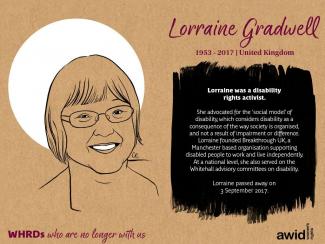
Lorraine Gradwell
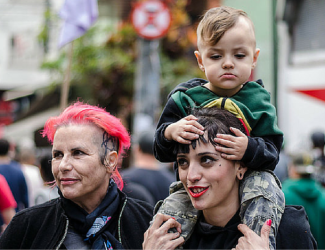
Over the past few years, a troubling new trend at the international human rights level is being observed, where discourses on ‘protecting the family’ are being employed to defend violations committed against family members, to bolster and justify impunity, and to restrict equal rights within and to family life.
The campaign to "Protect the Family" is driven by ultra-conservative efforts to impose "traditional" and patriarchal interpretations of the family, and to move rights out of the hands of family members and into the institution of ‘the family’.
Since 2014, a group of states have been operating as a bloc in human rights spaces under the name “Group of Friends of the Family”, and resolutions on “Protection of the Family” have been successfully passed every year since 2014.
This agenda has spread beyond the Human Rights Council. We have seen regressive language on “the family” being introduced at the Commission on the Status of Women, and attempts made to introduce it in negotiations on the Sustainable Development Goals.
AWID works with partners and allies to jointly resist “Protection of the Family” and other regressive agendas, and to uphold the universality of human rights.
In response to the increased influence of regressive actors in human rights spaces, AWID joined allies to form the Observatory on the Universality of Rights (OURs). OURs is a collaborative project that monitors, analyzes, and shares information on anti-rights initiatives like “Protection of the Family”.
Rights at Risk, the first OURs report, charts a map of the actors making up the global anti-rights lobby, identifies their key discourses and strategies, and the effect they are having on our human rights.
The report outlines “Protection of the Family” as an agenda that has fostered collaboration across a broad range of regressive actors at the UN. It describes it as: “a strategic framework that houses “multiple patriarchal and anti-rights positions, where the framework, in turn, aims to justify and institutionalize these positions.”

Nous avons redoublé d’efforts pour préparer le 13e Forum de l’AWID ; nous avons consacré une grande partie de notre énergie au Programme de développement pour l’après-2015 et aux processus des Nations Unies relatifs au financement du développement. Nous avons poursuivi le travail de fond que nous menons dans nos domaines de prédilection.
En réaction, nous avons choisi de sortir de nos cloisonnements.
De plus en plus, et dans le monde entier, les mouvements de défense des droits des femmes s’allient avec d’autres mouvements pour exprimer la nature systémique et intersectionnelle des problèmes précédemment évoqués et d’autres problématiques.

El 11 de julio de 2024, tuvimos una conversación increíble con grandes feministas sobre el estado del ecosistema de financiación y el poder de la investigación "¿Dónde está el dinero?".
Le agradecemos de manera especial a Cindy Clark (Thousand Currents), Sachini Perera (RESURJ), Vanessa Thomas (Black Feminist Fund), Lisa Mossberg (SIDA) y Althea Anderson (Hewlett Foundation).
Recuerda: ¡la encuesta permanecerá abierta hasta el 31 de agosto de 2024!
 La Couverture
|
 La puissante
|
 Le lierre
|
 Le hurlement
|
Production et entrepreneuriat |
 L’Artisan·e
|
Notre rapport annuel 2010 souligne nos réalisations et l’impact de notre travail durant l'année.
Vous pouvez lire comment nous traduisons notre vision et mission en stratégies et en activités entreprises en collaboration avec les membres, partenaires et allié-e-s de l’AWID pour faire la promotion des droits des femmes et de l’égalité de genre à l’échelle mondiale.
Ce rapport comprend égalment des liens vers nos dernières publications.
No. Valoramos tu trabajo, pero no estamos buscando respuestas de personas a título individual por el momento.
The AWID International Forum is both a global community event and a space of radical personal transformation. A one-of-a-kind convening, the Forum brings together feminist, women’s rights, gender justice, LBTQI+ and allied movements, in all our diversity and humanity, to connect, heal and thrive.
The Forum theme – Rising Together – is an invitation to engage with our whole selves, to connect with each other in focused, caring and brave ways, so that we can feel the heartbeat of global movements and rise together to meet the challenges of these times.
For the first time, the AWID Forum offered three modes of participation:
 |
 |
 |
|
In Person at the Queen Sirikit National Convention Centre in Bangkok, Thailand. |
Online in Virtual Space (Capacity: 3000 participants). |
Hubs Connected in Cross Border Space. |
With over 4,000 participants, 15th AWID International Forum in 2024 created a sweeping force to resist oppression towards collective healing and liberation. Keep watching this space for more forum stories and future forums updates!
The past Forums
In December 2020, the AWID board took the difficult decision to cancel the 14th AWID International Forum which had been scheduled to take place from September 20-23, 2021, in the City of Taipei.
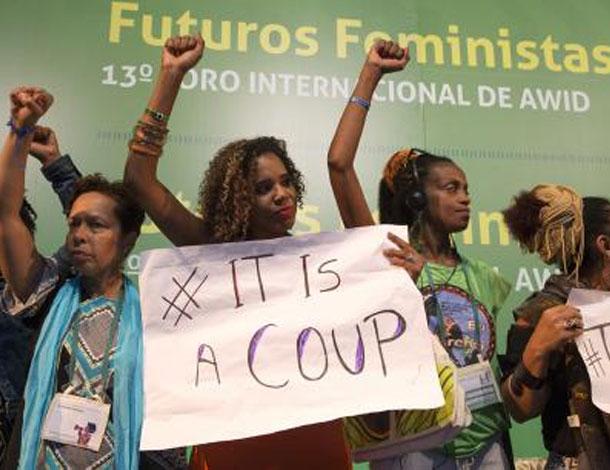
Given the complex world that we face today, the 2016 AWID Forum did not focus on a particular “issue”, but rather on creating more effective ways of working together!
Despite the challenging contexts in which the 2016 Forum took place (the Zika epidemic, a strike by Brazilian foreign-service workers, the impeachment of President Dilma Rousseff and subsequent turmoil), it succeeded in bringing together over 1800 participants from 120 countries and territories across all regions of the world.
For 96% of participants who responded to the post Forum evaluation survey, the Forum was a major source of inspiration and energy.
98% of participants considered it an important convening space for feminist movements and expressed hope that AWID continues to organize forums.
59% of Forum evaluation survey respondents declared to be very satisfied with the Forum and 34% somewhat satisfied.
Over 150 sessions were delivered in different formats on a variety of topics ranging from bodily integrity and freedoms, to gender-based violence in the workplace, to strategies for building collective power.
The first-time Black Feminisms Forum (BFF), held just before the main AWID Forum, brought together 250 Black feminists from all over the world to co-create a powerful space to build and strengthen ongoing, intergenerational, transnational connections
Download the Forum evaluation report
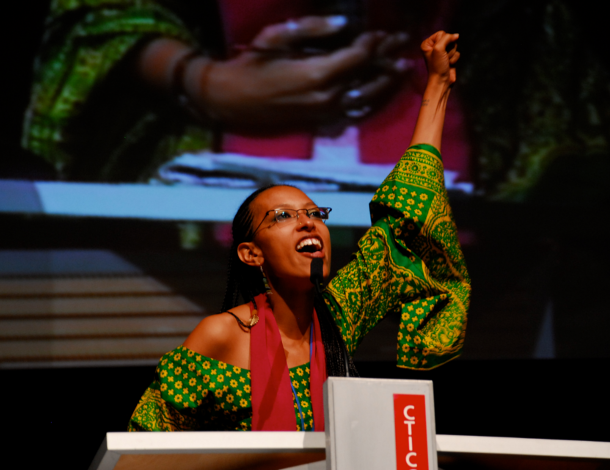
The 12th AWID Forum was the largest and most diverse AWID Forum to date, bringing together 2239 women’s rights activists from 141 countries. Of these participants, around 65% were from the Global South and close to 15% were young women under 30, and 75% attended an AWID Forum for their first time.
The Forum program focused on transforming economic power to advance women’s rights and justice and featured over 170 different kinds of sessions including feminist economics toolbox skills-building sessions, breakout sessions representing all 10 Forum themes, in-depth sessions, and solidarity roundtables.
Building on the momentum of the 2012 Forum, we transformed the website into a resource and learning Hub, which builds on the content generated by participants by featuring multi-media resources on all Forum components.
Visit the 2012 Forum web archive
Every three to four years, AWID hosts its flagship international event. It is the world’s largest event that wholeheartedly centers feminist and gender justice movements in all their diversity. It is a global gathering of feminist activists, allied movements, scholars, funders and policymakers. The Forums rotate between different regions and countries in the global South.
“Nous Sommes la Solution has a vision of an Africa where, in solidarity, rural women involved in decision-making can grow, process, sell and consume family farming products while preserving the environment, for a harmonious and sustainable development.”
Margarita est une militante féministe et LGBTIQA d'Amérique latine. Elle est passionnée de transformation sociale et de bien-être collectif. Elle est titulaire de diplômes en psychologie, communication et en administration publique, ainsi que de certificats en politiques publiques, leadership, gestion et prise de décision. Durant son parcours professionnel, Margarita a acquis une vaste expérience auprès d'organisations de terrain, d'ONG nationales et régionales, d'universités et du secteur public, développant la facilitation, le renforcement des capacités, le plaidoyer politique, la communication et l'évaluation des politiques.
L’enquête est disponible sur KOBO, une plateforme en source libre de collecte, gestion et visualisation de données. Pour y participer, il vous suffit de cliquer ici sur le lien de l’enquête et de suivre les indications pour répondre aux questions.