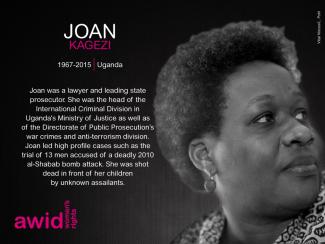
Joan Kagezi
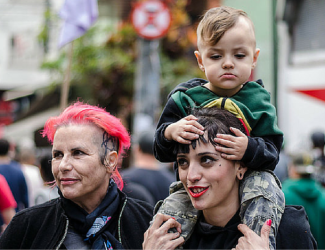
Over the past few years, a troubling new trend at the international human rights level is being observed, where discourses on ‘protecting the family’ are being employed to defend violations committed against family members, to bolster and justify impunity, and to restrict equal rights within and to family life.
The campaign to "Protect the Family" is driven by ultra-conservative efforts to impose "traditional" and patriarchal interpretations of the family, and to move rights out of the hands of family members and into the institution of ‘the family’.
Since 2014, a group of states have been operating as a bloc in human rights spaces under the name “Group of Friends of the Family”, and resolutions on “Protection of the Family” have been successfully passed every year since 2014.
This agenda has spread beyond the Human Rights Council. We have seen regressive language on “the family” being introduced at the Commission on the Status of Women, and attempts made to introduce it in negotiations on the Sustainable Development Goals.
AWID works with partners and allies to jointly resist “Protection of the Family” and other regressive agendas, and to uphold the universality of human rights.
In response to the increased influence of regressive actors in human rights spaces, AWID joined allies to form the Observatory on the Universality of Rights (OURs). OURs is a collaborative project that monitors, analyzes, and shares information on anti-rights initiatives like “Protection of the Family”.
Rights at Risk, the first OURs report, charts a map of the actors making up the global anti-rights lobby, identifies their key discourses and strategies, and the effect they are having on our human rights.
The report outlines “Protection of the Family” as an agenda that has fostered collaboration across a broad range of regressive actors at the UN. It describes it as: “a strategic framework that houses “multiple patriarchal and anti-rights positions, where the framework, in turn, aims to justify and institutionalize these positions.”
par Siufung Law
« 97...! 98…! Où est 98? 98! Veuillez revenir dans la queue!... 99! 100...! » La gérante des coulisses a demandé sans relâche à chaque athlète de faire la queue dans les coulisses humides, en sueur et surpeuplées. (...)
< illustration : « Quand iels nous verront », par Lame Dilotsotlhe
Janet Benshoof était une avocate des droits humains oeuvrant aux États-Unis et défenseure de l’égalité des femmes et de leurs droits sexuels et reproductifs.
Elle a milité pour l’élargissement de l’accès à la contraception et à l’avortement dans le monde entier, et s’est battue contre des décisions anti-avortement dans le territoire américain de Guam. Arrêtée en 1990 pour son opposition à la loi anti-avortement la plus restrictive de son pays, elle a remporté une mise en demeure [MB1] au tribunal local à Guam qui a bloqué la loi, pour ensuite remporter l’affaire devant la Cour d’Appel de Ninth Circuit, décision qui devait supprimer définitivement celle-ci.
« Les femmes à Guam sont dans une situation absolument dramatique. Je n’ai nullement l’intention d’arrêter d’en parler », Janet Benshoof pour People Magazine
Janet a créé plusieurs précédents juridiques, dont l’approbation par l’US Food and Drug Administration de la contraception d’urgence, ainsi que l’application du droit international afin de garantir leurs droits aux victimes de viol lors des poursuites pour crimes de guerre de l’époque de Saddam Hussein, devant la Cour Suprême iraqienne.
Janet était présidente et fondatrice du Global Justice Center, ainsi que fondatrice du Center for Reproductive Rights, la première organisation internationale pour les droits humains, centrée sur le choix reproductif et l’égalité. Elle a siégé pendant 15 ans en tant que directrice du projet pour les droits reproductifs de l’American Civil Liberties Union, où elle a mené de nombreuses procédures juridiques qui ont contribué à façonner la loi constitutionnelle des États-Unis sur l’égalité de genre, la liberté d’expression et les droits reproductifs.
« Janet était connue pour son brillant esprit juridique, son sens de l’humour vif et son courage face à l’injustice », Anthony D. Romero.
Nommée l’une des « 100 avocat·e·s les plus influent·e·s d’Amérique » par le National Law Journal, Janet a reçu de nombreux prix et distinctions.
Née en mai 1947, Janet est décédée en décembre 2017.
Le cinquième Dialogue de haut niveau sur le financement du développement, organisé les 7 et 8 décembre 2011, a marqué le début des discussions relatives au programme de développement de l’après-2015 et aux liens entre ce programme et le financement du développement. La conférence a accordé une attention particulière à la question de l’accroissement de l’aide au financement des OMD. Dans ses observations finales, le Secrétaire général a appelé les membres à commencer à réfléchir sur le cadre de développement de l’après-2015.
✉️ Sur inscription uniquement. Inscrivez-vous ici
📅 Mercredi 12 mars 2025
🕒 17.00h-19.00h EST
🏢 Chef's Kitchen Loft with Terrace, 216 East 45th St 13th Floor New York
Organisé par : Women Enabled International et AWID
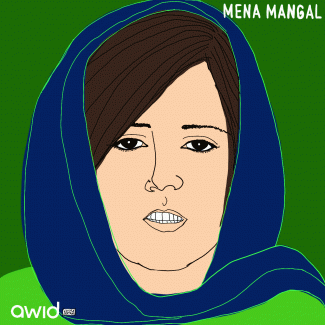
Mena Mangal was a prominent TV journalist, women’s rights advocate and cultural adviser to Wolesi Jirga, the lower house of Afghanistan's national parliament.
For more than a decade, she worked for Ariana TV, Tolo TV's Pashto-language channel Lamar, and the private Afghan national television broadcaster Shamshad TV. As a presenter, Mena focused on women’s rights and cultural talk shows.
"Women's rights activist Wazhma Frogh said Mangal "had a loud voice" and actively spoke out as an advocate for her people."
Off-screen, she also ran popular social media pages that advocated for the rights of Afghan girls and women to education and work. In terms of her private life, Mena wrote extensively about being forced into an arranged marriage in 2017 and the process she had to go through to finally obtain a divorce.
In a Facebook post, Mena wrote she was receiving death threats from unknown sources but would continue to carry out her work.
On 11 May 2019, she was attacked by unknown gunmen and shot dead in broad daylight in a public space in Southeast Kabul.
"We are concerned about the situation because it has a direct impact on women who work outside their homes...Female journalists are changing their professions due to the increasing risks they are facing." - Robina Hamdard, Kabul-based women’s rights activist.
Additional consultation sessions on the Draft Outcome Document
Our collective presence disrupts institutional practices of exclusion in such spaces while supporting movements to organize around feminist alternatives to systems of oppression.
Join the conversations from March 10-21, 2025, as we collectively transform CSW69 into spaces for and about resistance and solidarity.
All our change processes rely on the relationships we build at spaces like the AWID Forums where you dance together, your humour comes through, your real self, you tell stories. That is what makes the difference.
- Nicky Mcintyre, USA
Una investigación personal sobre la misteriosa vida de Sally (la tía de la directora), una aristócrata etíope que se convirtió en rebelde comunista y desapareció luego de la revolución que llevó al derrocamiento del Emperador Haile Selassie.
23 de junio a las 12:30 pm EST en IG Live
«Quiero transmitir el siguiente mensaje a todos los tunecinos y tunecinas: Tenemos que unirnos para decir no a la censura y a los juicios contra el derecho a opinar.» - Lina Ben Mhenni (entrevista de 2013)
«Es cierto que la información y la Internet son importantes, pero para hacer una revolución es crucial estar en el territorio. Algunas personas aquí en Túnez piensan que el cambio se dará mediante un simple “me gusta” en Internet. Yo creo que hay que estar activxs en el terreno. Y, por supuesto, que hay que combinar las acciones en el terreno con la acción en las redes.» - Lina Ben Mhenni (entrevista en POCIT)
En 2010 co-organizó una protesta que desafió la decisión gubernamental de suprimir medios de comunicación e instalar la censura de Internet. Lina era muy conocida por su blog «A Tunisian Girl», y por su trabajo durante la revolución tunecina de 2011. En su blog, difundió la información sobre el levantamiento, compartió imágenes que documentaban las protestas, y fue una de las pocas voces que hablaron sobre los asesinatos y la represión de lxs manifestantes de Sidi Bouzid. Lina publicaba en su blog utilizando su nombre real en lugar de un seudónimo que protegiera su identidad, y fue una de lxs pocxs bloguerxs en hacerlo.
«Nuestra libertad de expresión corre verdadero peligro. Me temo que estamos perdiendo los extraordinarios frutos de la revolución: la desaparición del miedo y nuestra libertad de expresión. Tenemos que seguir luchando para proteger y preservar este derecho.» - Lina Ben Mhenni (entrevista de 2013)
Lina tenía solamente 36 años cuando falleció, el 27 de enero de 2020, debido a complicaciones derivadas de una enfermedad autoinmune.
«Libertad, mejor educación y mejor salud—eso era lo que todxs queríamos. Cuando fracasábamos, ella nos empujaba.» - Hala, maestra de Lina
Súmate al Women’s Working Group on Financing for Development [Grupo de Trabajo de Mujeres sobre Financiación para el Desarrollo, WWG on FfD en inglés] y entérate de cuáles son sus aportes al proceso de la FpD (también puedes enviar un mensaje electrónico a: [email protected]).
Únete al Grupo de las OSC en la Conferencia Internacional sobre la FpD (en inglés) o envía un mensaje electrónico a [email protected] pidiendo sumarte: https://groups.google.com/forum/#!forum/global-social-economy).
Otros enlaces importantes para mantenerse informada/o:
Cada Foro se lleva a cabo en una región diferente, ¡y es hora de que el Foro de AWID regrese a Asia! Visitamos muchos países de la región, consultamos a los movimientos feministas y realizamos evaluaciones detalladas de logística, accesibilidad, seguridad, visas y más. Finalmente, la Junta Directiva de AWID aprobó con entusiasmo Bangkok, Tailandia, como la mejor opción. Nos sentimos muy emocionadxs de volver a Bangkok, donde celebramos el Foro de AWID en 2005.
Today, a complex and evolving network of anti-rights actors is exerting more influence in international and regional spaces as well as domestic politics. Anti-rights actors are entering multilateral spaces (spaces where multiple countries come together for international collaboration) to transform and undermine them from the inside out. They employ a range of persuasive discourses to gain legitimacy, often co-opting the language of rights and justice to hide their true agendas.
This report is the second in a series on human rights trends reports produced by the Observatory on the Universality of Rights (OURs). As well as analysis of key anti-rights actors, discourses, strategies, and impacts, the report features inspiring short stories of feminist action, and knowledge-building exercises to help strengthen our collective resistance.
The effect on our rights has already been grave, but this is not a done deal. We can all play a part in resisting anti-rights agendas and reclaiming our rights.
Join the collective call-to-action today!