Related content
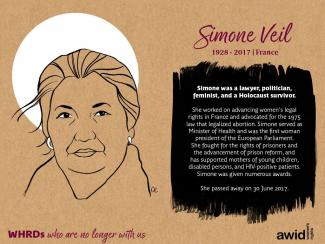
The Guardian: Simone Veil, Auschwitz survivor and abortion pioneer, dies aged 89
BBC: Simone Veil: French politician and Holocaust survivor dies
Reuters: French Holocaust survivor and pro-abortion campaigner Simone Veil dies at 89
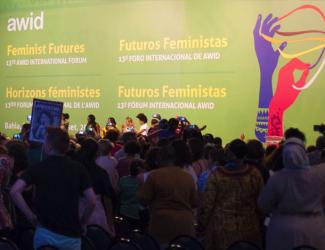
In September 2016, the 13th AWID international Forum brought together in Brazil over 1800 feminists and women’s rights advocates in a spirit of resistance and resilience.
This section highlights the gains, learnings and resources that came out of our rich conversations. We invite you to explore, share and comment!
One of the key takeaways from the 2016 Forum was the need to broaden and deepen our cross-movement work to address rising fascisms, fundamentalisms, corporate greed and climate change.
With this in mind, we have been working with multiple allies to grow these seeds of resistance:
And through our next strategic plan and Forum process, we are committed to keep developing ideas and deepen the learnings ignited at the 2016 Forum.
AWID Forums started in 1983, in Washington DC. Since then, the event has grown to become many things to many peoples: an iterative process of sharpening our analyses, vision and actions; a watershed moment that reinvigorates participants’ feminisms and energizes their organizing; and a political home for women human rights defenders to find sanctuary and solidarity.
Related content
The Guardian: Simone Veil, Auschwitz survivor and abortion pioneer, dies aged 89
BBC: Simone Veil: French politician and Holocaust survivor dies
Reuters: French Holocaust survivor and pro-abortion campaigner Simone Veil dies at 89
Today, many community knowledge systems are at risk.
Fast-paced economic, political, and cultural changes are bulldozing environments, practices and livelihoods. Various forms of knowledge are being erased from practice, commodified and colonized in the massive swallow of globalisation and in the promise of short-term gains or band aid solutions.
Buen Vivir, a concept adapted from Andean Indigenous peoples’ knowledges, is described as the collective achievement of a life in fulfillment, based on harmonic and balanced relations among human beings and all living beings, in reciprocity and complementarity. It means acknowledging that human beings are a part of nature, we depend on nature and are inter-dependent among ourselves.
Inherent in Buen Vivir is a vision that integrates production and reproduction as inseparable processes of the economy, of wealth production and living conditions.
In this sense, a broad understanding of Buen vivir from a feminist lens values relationships and resources mobilized in production and reproduction cycles—favouring equilibrium of not just the market kind—to guarantee continuity and changes as long as they are compatible with economic justice and life sustainability.
From a feminist perspective there have also been criticisms of the binary conceptions of gender and complementary of men and women. Binary conceptions leave little space for a deeper discussion on heteropatriarchy and non-conforming gender relationships.
Nevertheless, one of the main contributions of centralizing the principle of Buen Vivir to political, economic and social frameworks, is that equality is no longer the paradigm of individual rights, but the transformation of society as a whole.


1 de cada 3 personas trans y travesti en Argentina vive en un hogar de bajos ingresos.

Опрос доступен на английском, арабском, испанском, португальском, русском и французском языках!

As feminists many of us feel frustrated as we lurch from one political ‘moment’ to another; our work constrained by the parameters of organisational mandates, funding trends or political agendas, our time spent arguing over the need for gender analysis rather than building alliances for change.
The Gender & Development Network’s project on Feminist Alternatives provides space to consider what is important, to listen deeply to others and to accept challenges to our assumptions. Transformative progress towards feminist societies requires fundamental change that is context-specific, recognising intersectionality, the multiplicity of feminism, and the pivotal role of women’s collective action.

Rather than attempt to write a single paper, we have therefore produced a collection of thought pieces from academics, activists and practitioners around the world – not to suggest that we have the answers, but rather to encourage and provoke debate with the hope that more articles can be added in the future.
LE QUOTA D'EMPLOI TRANS
n'est pas respecté par les entreprises
Глобальный опрос «Где деньги для феминистских объединений?» является ключевым элементом третьего этапа нашего исследования, ориентированного на конкретные действия: «Где деньги для феминистских объединений» (короткое название – «Где деньги?»). Результаты опроса будут доработаны и обстоятельно изучены в ходе бесед с активистами и донорами, а также сопоставлены с другими имеющимися аналитическими материалами и исследованиями о состоянии ресурсов феминистских движений и инициатив по достижению гендерного равенства во всем мире.
Полный отчет организации «Где деньги для феминистских объединений?» будет опубликован в 2026 году.
 Чтобы узнать больше о том, как AWID освещает вопросы финансирования феминистских движений, ознакомьтесь с историей инициативы «Где деньги?» и нашими предыдущими отчетами здесь.
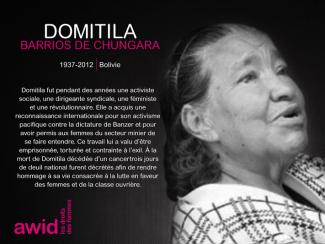
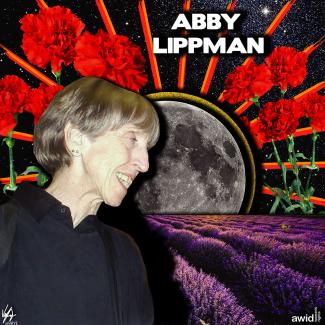
Abby était une féministe pionnière, militante des droits humains.
Ancienne épidémiologiste de l'Université McGill, Abby était réputée pour défendre les causes sociales et pour ses critiques perspicaces concernant les technologies de procréation humaine assistée et d'autres sujets médicaux. Plus précisément, elle a fait campagne contre ce qu'elle a appelé la « généticisation » des technologies de procréation, contre l'hormonothérapie substitutive et pour des recherches plus qualitatives et plus longues avant l'approbation de nouveaux vaccins comme celui contre le papillomavirus humain.
À la nouvelle de son décès, ses ami-e-s et collègues l'ont décrite avec affection comme une « ardente défenseure » de la santé des femmes.
Estamos presenciando un nivel de participación sin precedentes de actores anti-derechos en los espacios internacionales de derechos humanos. Para reforzar su impacto y amplificar sus voces, estxs actores se dedican cada vez más a la construcción de alianzas tácticas que atraviesan sectores, fronteras regionales y nacionales y credos religiosos.
Esta «alianza non-santa» conformada por actores conservadores de tradición religiosa católica, evangélica, mormona, ortodoxa rusa y musulmana, ha encontrado una causa común en una serie de discursos compartidos y acciones de incidencia que intentan hacer retroceder los logros de lxs feministas y del movimiento de derechos sexuales a nivel internacional.
Actividades principales: La «Santa Sede», como gobierno de la iglesia católica romana, utiliza su condición singular de estado Observador Permanente en la ONU para ejercer presión a favor de nociones conservadoras, patriarcales y heteronormativas de la feminidad, las identidades de género o «la familia» y para difundir políticas contra el aborto y la anticoncepción.
Sede: Ciudad del Vaticano, Roma, Italia.
Afiliación religiosa: Católica
Actividades principales: Se describe a sí misma como la «voz colectiva del mundo musulmán» y actúa como un bloque de estados en los escenarios de la ONU. La OIC intenta crear lagunas en la protección de los derechos humanos a partir de referencias a la religión, la cultura o la soberanía nacional. También propaga el concepto de «familia tradicional», y contribuye a un régimen de derechos humanos paralelo pero restrictivo (ver como ejemplos la Declaración de los Derechos Humanos en el Islam o la Declaración de El Cairo de 1990).
Sede: Yeda, Arabia Saudita
Afiliación religiosa: Musulmana
Conexiones con otrxs actores anti-derechos: Representaciones de estados ultra conservadores (como Rusia) ante la ONU.
Actividades principales: Conferencias internacionales y regionales; investigación, producción y difusión de conocimiento; cabildeo en las Naciones Unidas «para defender la vida, la fe y la familia»
Sede: Rockford, Illinois, Estados Unidos
Afiliación religiosa: Predominantemente católica y cristiana evangélica
Conexiones con otrxs actores anti-derechos: Sutherland Institute, un grupo de expertxs conservador; Iglesia de los Santos de los Últimos Días; Departamento para la Familia y la Vida de la iglesia ortodoxa rusa; Sacerdotes por la Vida (anti-abortistas); Foundation for African Culture and Heritage [Fundación para la Cultura y el Patrimonio Africano]; Polish Federation of Pro-Life Movements [Federación Polaca de Movimientos Pro-vida]; European Federation of Catholic Family Associations [Federación Europea de Asociaciones de Familias Católicas]; Comité de las organizaciones no gubernamentales sobre la familia ante Naciones Unidas; Red Política por los Valores; Georgian Demographic Society [Sociedad Demográfica Georgiana]; parlamentarioxs de Polonia, Moldavia y otros países; FamilyPolicy [Instituto de Políticas de la Familia]; Russian Institute for Strategic Studies [Instituto Ruso de Estudios Estratégicos]; Hatze Oír y C-Fam; entre otrxs.
Actividades principales: Cabildeo en las Naciones Unidas, en particular ante la Comisión de la Condición Jurídica y Social de las Mujeres, para «defender la vida y la familia»; difusión de información en medios (boletín Friday Fax); construcción de movimientos; formación para activistas conservadorxs.
Sede: Nueva York y Washington D.C., Estados Unidos
Afiliación religiosa: Católica
Conexiones con otrxs actores anti-derechos: International Youth Coalition [Coalición Internacional de Jóvenes]; Alianza Mundial de la Juventud; Human Life Internacional [Vida Humana internacional]; Santa Sede; Sociedad Civil para la Familia (la coordina); Family Research Council (Estados Unidos) [Comité de investigación sobre la familia] y otras OSC cristianas/católicas anti-derechos; delegación de los Estados Unidos ante la CSW.

Actividades principales: Cabildeo en favor de políticas por «la familia», anti-LGBTQ y anti-ESI (educación sexual integral) en escenarios internacionales de derechos humanos; capacitación para sociedad civil y representantes de Estados (por ejemplo, una guía de recursos sobre lenguaje consensuado de las Naciones Unidas en torno a la familia); difusión de información; producción y análisis de conocimiento; campañas en línea.
Sede: Gilbert, Arizona, Estados Unidos.
Afiliación religiosa: Mormón
Conexiones con otrxs actores anti-derechos: líder del UN Family Rights Caucus [Grupo de incidencia por los derechos de la familia ante la ONU]; C - Fam; Jews Offering New Alternatives to Homosexuality [Judíos ofreciendo nuevas alternativas a la homosexualidad, JONAH]; National Association for Research and Therapy of Homosexuality [Asociación Nacional de Investigación y Terapia de la Homosexualidad, NARTH]; Congreso Mundial de las Familias; CitizenGo; Magdalen Institute [Instituto Magdalena]; Asociación La Familia Importa; Group of Friends of the Family [Grupo de Amigos de la Familia], que es un bloque de 25 Estados.
Actividades principales: Incidencia en espacios políticos internacionales, entre ellos Naciones Unidas, la Unión Europea y la Organización de Estados Americanos por «la familia», y contra los derechos sexuales y los derechos reproductivos; capacitación a sus jóvenes integrantes en el uso de la diplomacia y la negociación, relaciones internacionales, actividades de grupos de base y creación de mensajes; programa de pasantías para fomentar la participación de lxs jóvenes en su trabajo; Emerging Leaders Conference [Conferencia de Líderes Emergentes] que tiene lugar en forma regular; producción y difusión de conocimiento.
Sede: Nueva York (Estados Unidos) y oficinas regionales en Nairobi (Kenia), Quezon City (Filipinas), Bruselas (Bélgica), Ciudad de México (México) y Beirut (Líbano).
Afiliaciones religiosas: Principalmente católica pero tiene como objetivo lograr una membresía pluriconfesional.
Conexiones con otrxs actores anti-derechos: C-Fam; Vida Humana Internacional; Santa Sede; Campaign Life coalition [Coalición Campaña por la Vida].
Есть много причин, по которым ваше участие в опросе очень важно. Это возможность поделиться своим опытом привлечения финансирования для деятельности вашей организации; заявить о себе как об эксперте в вопросах движения денежных средств и их получателей; внести свой вклад в коллективную и последовательную адвокацию среди доноров, чтобы привлечь более объемное и эффективное финансирование. За последние два десятилетия исследования AWID в этой области зарекомендовали себя как ключевой ресурс для активисток(-тов) и доноров. Мы приглашаем вас присоединиться к нам в реализации третьей части инициативы «Где деньги?», чтобы осветить реальное состояние ресурсного обеспечения, оспорить ошибочные решения и указать на то, как необходимо изменить финансирование, чтобы движения процветали и реагировали на сложные вызовы нашего времени.
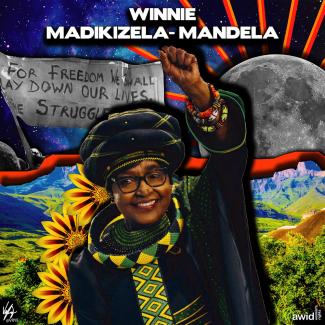
Winnie has been described as a “militant firebrand activist” who fought the apartheid regime in South Africa.
She was imprisoned multiple times, and on many occasions placed in solitary confinement.
Ma’Winnie, as she is affectionately remembered, was known for being outspoken about the challenges Black women faced during and after apartheid, having been on the receiving end of these brutalities herself as a mother, wife and activist during the struggle. She transcended the misconception that leadership is gender, class or race-based. Despite being a controversial figure, she is remembered by many by her Xhosa name, “ Nomzamo”, which means "She who endures trials".
Ma’Winnie continues to be an inspiration to many, particularly young South African women for whom her death has spurred a burgeoning movement, with the mantra: "She didn't die, she multiplied."