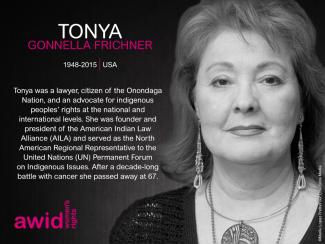
Tonya Gonella Frichner
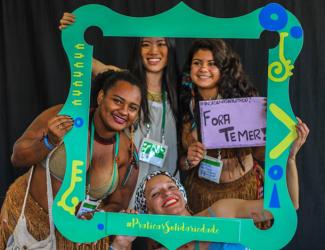
Young feminist activists play a critical role in women’s rights organizations and movements worldwide by bringing up new issues that feminists face today. Their strength, creativity and adaptability are vital to the sustainability of feminist organizing.
At the same time, they face specific impediments to their activism such as limited access to funding and support, lack of capacity-building opportunities, and a significant increase of attacks on young women human rights defenders. This creates a lack of visibility that makes more difficult their inclusion and effective participation within women’s rights movements.
AWID’s young feminist activism program was created to make sure the voices of young women are heard and reflected in feminist discourse. We want to ensure that young feminists have better access to funding, capacity-building opportunities and international processes. In addition to supporting young feminists directly, we are also working with women’s rights activists of all ages on practical models and strategies for effective multigenerational organizing.
We want young feminist activists to play a role in decision-making affecting their rights by:
Fostering community and sharing information through the Young Feminist Wire. Recognizing the importance of online media for the work of young feminists, our team launched the Young Feminist Wire in May 2010 to share information, build capacity through online webinars and e-discussions, and encourage community building.
Researching and building knowledge on young feminist activism, to increase the visibility and impact of young feminist activism within and across women’s rights movements and other key actors such as donors.
Promoting more effective multigenerational organizing, exploring better ways to work together.
Supporting young feminists to engage in global development processes such as those within the United Nations
Collaboration across all of AWID’s priority areas, including the Forum, to ensure young feminists’ key contributions, perspectives, needs and activism are reflected in debates, policies and programs affecting them.
"We believe that this is the time for us to continue to organize from a place of solidarity, hope and radical imaginations."
- Beijing+30 & CSW: Feminist meaning-making at a time of polycrisis
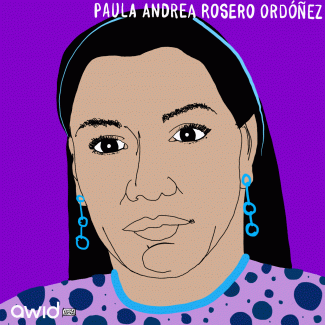
“[She] was a person who was characterized by her hard work in favor of the defense of human rights and the construction of peace in Nariño, especially in the municipality of Samaniego-Nariño.”
- Jorge Luis Congacha Yunda for Página10
She focused on civil and political rights, issues of impunity and justice, and contributed to uncovering the abuse of power, including corruption. She also participated in peacebuilding projects in her hometown Samaniego, such as the Municipal Peace Council and the Municipal Women’s Board.
Paula received death threats after exposing the irregular handling of resources and complaining about acts of corruption at the Lorencita Villegas Hospital in the Nariñense municipality. She was murdered on 20 May 2019, when two men approached and shot her at close range.
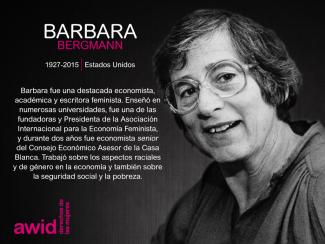
✉️ By invitation only
📅 Tuesday, March 11, 2025
🕒 2.00-4.00pm EST
🏢 Chef's Kitchen Loft with Terrace, 216 East 45th St 13th Floor New York
Organizer: Observatory on the Universality of Rights (OURs) Consortium
Carol Thomas fue una pionera en el trabajo por los derechos sexuales y reproductivos de las mujeres en Sudáfrica. Fue una ginecóloga de gran talento y la fundadora del WomenSpace [EspacioDeMujeres].
No sólo las empleó en su práctica, sino que también abogó por proporcionar formas no tradicionales de asistencia sanitaria a las mujeres, ofreciendo servicios de alta calidad, empáticos y accesibles.
"Ella recibió no sólo la alegría de los embarazos y la llegada de nuevxs bebés, sino también la ansiedad que puede generar la infertilidad, un parto prematuro, el cáncer femenino, así como también la angustia de los abortos espontáneos y lxs mortinatxs". Helen Moffett
Carol pensó en nuevos paradigmas cuyo centro de atención fuesen las necesidades de las mujeres con menor acceso a los servicios y derechos que puede aportar una sociedad:
"El entorno socioeconómico imperante en el que nos encontramos hoy se traduce en una carga desproporcionada de enfermedades y desempleo que las mujeres tienen que soportar... Como mujer negra, desfavorecida en el pasado, tengo una idea clara de lo que está sucediendo en nuestras comunidades". - Carol Thomas
La innovadora y multipremiada empresa social de Carol, "“iMobiMaMa”, utilizaba los quioscos móviles y la tecnología interactiva para conectar directamente a las mujeres con servicios de salud prenatal y reproductiva, información y apoyo en las comunidades de toda Sudáfrica.
Carol apoyó a las mujeres tanto en los embarazos deseados como en los no deseados, y fue mentora de muchxs enfermerxs y doctorxs a lo largo de su vida.
Fue calificada, además, como ginecóloga de referencia "para las personas trans que podían recibir de ella una atención afirmativa. Ella supo cómo manejarse cuando muchas personas no tenían todavía en claro el lenguaje o los pronombres. Sus mantas calientes, su capacidad para escuchar y decir lo que necesitabas oír eran muy reconfortantes." -Marion Lynn Stevens.
Carol Thomas falleció el 12 de abril de 2019 a causa de una serie de complicaciones tras un doble trasplante de pulmón, en el punto más álgido de su carrera profesional.
Los homenajes que llegaron después de su muerte inesperada se refieren a ella de muchas formas: como " modelo a seguir, mujer guerrera, innovadora, líder dinámica, rompe-moldes, dínamo, científica brillante, doctora compasiva".
Sin duda, Carol Thomas será recordada y honrada por ser todo esto y mucho más.

Ester Lopes est une danseuse et une écrivaine dont les recherches portent sur le corps, le genre, la race et les rapports de classe. Elle est professeure de Pilates et enseigne l’art. Ester est diplômée en théâtre contemporain – processus créatifs (à la FAINC) et en danse et conscience du corps (à l’USCS). Parmi ses spécialisations musicales figurent le chant populaire et les percussions. Elle a suivi une formation à Novos Brincantes avec Flaira Ferro, Mateus Prado et Antonio Meira à l’Institut Brincante en 2015 et 2016.
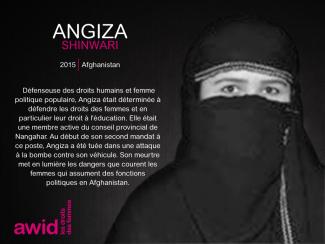
Mereani Naisua Senebici, que l’on appelait aussi « Sua », a été membre de l’Association des jeunes femmes chrétiennes (YWCA) des Fidji pendant de longues années.
En plus d’avoir travaillé avec divers groupes de femmes dans des contextes multiraciaux, ruraux et urbains, elle s’est impliquée dans le soutien et la promotion des droits des femmes et des jeunes femmes.
Au YWCA de Lautoka, elle travaillait avec des femmes d’origine indienne et comptait parmi les pionnières du développement de la pratique sportive et la participation des femmes et athlètes trans localement.
« Les membres du YWCA des Fidji ont profondément aimé Sua pour son dévouement et son soutien inébranlable envers tous les efforts déployés par l’organisation » – Tupou Vere
Mereani faisait partie de la House of Sarah (HoS), une initiative de l’Association of Anglican Women (AAW) lancée en 2009, un organisme de sensibilisation autour des violences basées sur le genre et de soutien des femmes victimes de violence. Ayant commencé sa pratique en tant que bénévole dévouée, elle offrait notamment son soutien aux femmes dans tout le Pacifique.
Mereani s’est éteinte en 2019.
« Une personne qui aimait les gens, qui était présente sur tous les fronts de l’autonomisation des femmes et du travail du mouvement au niveau communautaire. Repose en paix, Sua. » – Tupou Vere

Activists reflection & solidarity circle
✉️ By registration only. Register here
📅 Friday, March 14, 2025
🕒 12.00-2.00pm EST
🏢 Blue Gallery, The Blue Building, 222 East 46th Street
🎙️Facilitated by: Gopika Bashi, AWID Director of Programs
Organizer: Count Me In! Consortium
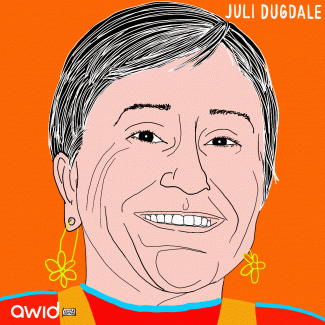
Juli Dugdale was an Australian feminist who practiced intergenerational leadership rooted in principles of feminism, inclusion and equality. She was a leader, peer and mentor for many women and especially young women around the world.
Juli was a dedicated staff member, volunteer and fervent advocate for young women’s leadership with the Young Women's Christian Association (YWCA) movement for over 30 years.
She offered a strong link between the Australian movement and the World YWCA Office. Her trust in the leadership capacity of young women led to a multi-year partnership with the Australian Department of Foreign Affairs and Trade and the creation of the Rise Up manual, a global guide for young women’s transformative leadership, launched in 2018.
Juli passed away in Geneva on 12 August 2019.
“For those who got to work with Juli, it was a privilege. For those who didn’t, be assured that her legacy continues in the work we do every day and in the mission of the YWCA movement.” - YWCA Australia
“Juli Dugdale will forever hold a deep place in many people's hearts in the YWCA movement, especially here in Aotearoa and across the Pacific. Juli had a special relationship with the Pacific and was an incredible supporter of the young women there. She was humble, gracious, loving, caring, dedicated, passionate and had a generous heart. She embodied the YWCA's vision of 'transformative leadership' with extraordinary vision and foresight, and helped empower generations of young women leaders around the world.” - YWCA New Zealand
“Now might be a good time to rethink what a revolution can look like. Perhaps it doesn’t look like a march of angry, abled bodies in the streets. Perhaps it looks something more like the world standing still because all the bodies in it are exhausted—because care has to be prioritized before it’s too late.”
- Johanna Hedva (https://getwellsoon.labr.io/)
Hospitals are institutions, living sites of capitalism, and what gets played out when somebody is supposed to be resting is a microcosm of the larger system itself.
Institutions are set out to separate us from our care systems – we find ourselves isolated in structures that are rigidly hierarchical, and it often feels as if care is something done to us rather than given/taken as part of a conversation. Institutional care, because of its integration into capitalist demand, is silo-ed: one person is treating your leg and only your leg, another is treating your blood pressure, etc.
Photographer Mariam Mekiwi had to have surgery last month and documented the process. Her portraits of sanitized environments – neon white lights, rows after rows of repetitive structures – in a washed-out color palette reflect a place that was drained of life and movement. This was one of the ways Mariam kept her own spirit alive. It was a form of protest from within the confines of an institution she had to engage with.
The photos form a portrait of something incredibly vulnerable, because watching someone live through their own body’s breakdown is always a sacred reminder of our own fragility. It is also a reminder of the fragility of these care systems, which can be denied to us for a variety of reasons – from not having money to not being in a body that’s considered valuable enough, one that’s maybe too feminine, too queer or too brown.
Care experienced as disembodied and solitary, that is subject to revocation at any moment, doesn’t help us thrive. And it is very different from how human beings actually behave when they take care of each other. How different would our world look like if we committed to dismantling the current capitalist structures around our health? What would it look like if we radically reimagined it?

Filter for funders that support initiatives in your geographical area.
«No adhiero al concepto de “Tercer Mundo”. Hago películas para que las personas (no importa de qué raza o color sean) puedan entenderlas. Para mí, solamente existen explotadores y explotadxs, eso es todo. Hacer una película significa tomar una posición.» - Sarah Maldoror
La innovadora Sambizanga (1972), su «película revolucionaria», sigue la lucha de liberación anticolonial de lxs militantes de Angola y capta la perspectiva de una mujer en el momento histórico en que se encuentra.
«Para muchxs cineastas africanxs, el cine es una herramienta revolucionaria, una educación política para crear consciencia. Se inscribe en la evolución de un Tercer Cine, que se orienta a descolonizar el pensamiento y promover cambios radicales en la sociedad.» - Sarah Maldoror
A lo largo de su carrera, Sarah (junto con otrxs artistas africanxs y caribeñxs) cofundó, en 1956, la primera troupe de teatro negra de Francia. Realizó alrededor de cuarenta películas, incluidos importantes documentales que difundieron la vida y la obra de artistas negrxs, entre lxs cuales se encuentra su amigo y poeta, Aimé Césaire, quien le escribió:
«A Sarah Maldo
que, cámara en mano,
lucha contra la opresión, la alienación
y se planta de cara
frente a la estupidez humana.»
Sarah estaba también dedicada a lograr que las mujeres africanas se apropiaran más del proceso de filmación. En una entrevista, señaló:
«Las mujeres africanas deben estar en todos lados. Deben estar en las imágenes, detrás de la cámara, en la sala de edición, y participar en todas las etapas de la realización de una película. Ellas deben ser quienes hablen sobre sus problemas.»
Sarah dejó un legado formidable para que sea continuado.
Nacida el 19 de julio de 1929, Sarah falleció el 13 de abril de 2020 debido a complicaciones por el coronavirus.
Mira Sambizanga y lee una reseña de la película en un artículo del New York Times de 1973 (solo en ingles)