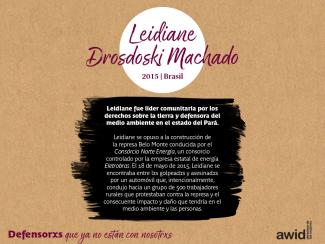
Leidiane Drosdoski Machado
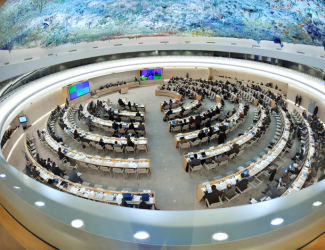
The Human Rights Council (HRC) is the key intergovernmental body within the United Nations system responsible for the promotion and protection of all human rights around the globe. It holds three regular sessions a year: in March, June and September. The Office of the UN High Commissioner for Human Rights (OHCHR) is the secretariat for the HRC.
Debating and passing resolutions on global human rights issues and human rights situations in particular countries
Examining complaints from victims of human rights violations or activist organizations on behalf of victims of human rights violations
Appointing independent experts (known as “Special Procedures”) to review human rights violations in specific countries and examine and further global human rights issues
Engaging in discussions with experts and governments on human rights issues
Assessing the human rights records of all UN Member States every four and a half years through the Universal Periodic Review
AWID works with feminist, progressive and human rights partners to share key knowledge, convene civil society dialogues and events, and influence negotiations and outcomes of the session.
Votre participation à l’enquête WITM est importante à plusieurs égards. Vous aurez, notamment, l’occasion de faire part de votre expérience vécue de la mobilisation de fonds pour soutenir votre organisation, de réclamer votre autorité en tant qu’experte sur la manière dont l’argent est transféré et qui il atteint réellement, et de contribuer à un plaidoyer collectif et cohérent auprès de financeurs afin que les fonds circulent davantage et soient de meilleure qualité. Au cours des deux dernières décennies, la recherche WITM de l’AWID s’est révélée être une ressource clé pour les activistes et les financeurs. Nous vous invitons chaleureusement à participer à sa troisième édition pour souligner la situation actuelle des ressources, remettre en question les fausses solutions, et identifier les modifications nécessaires dans le financement afin que les mouvements s’épanouissent et relèvent les défis complexes de notre époque.

Dre. Margo Okazawa-Rey est titulaire de la Chaire Barbara Lee pour le leadership des femmes et professeure invitée en études sur les femmes, le genre et la sexualité et en politique publique au Mills College à Oakland, en Californie. Elle est également professeure émérite à la San Francisco State University.
Ses principaux domaines de recherche et d’activisme au cours des 25 dernières années sont le militarisme, les conflits armés et la violence à l’égard des femmes, analysés de manière intersectionelle. Professeure Okazawa-Rey siège au conseil consultatif international de Du Re Bang à Uijongbu en Corée du Sud, au Conseil international de PeaceWomen Across the Globe à Berne, en Suisse, et est co-présidente du conseil du Highlander Research and Education Centre à New Market, Tennessee aux États-Unis.
Ses publications récentes incluent « Nation-izing » Coalition and Solidarity Politics for US Anti-militarist Feminists (en presse) ; « No Freedom without Connections: Envisioning Sustainable Feminist Solidarities » (2018) dans Feminist Freedom Warriors : Genealogies, Justice, Politics, and Hope, Chandra Talpade Mohanty et Linda Carty (ed.) ; Between a Rock and Hard Place: Southeast Asian Women Confront Extractivism, Militarism, and Religious Fundamentalisms (2018) ; à « Liberal Arts Colleges Partnering with Highlander Research and Education Center : Intergenerational Learning for Student Campus Activism and Personal Transformation, » numéro spéciale de Feminist Formations (Feminist Social Justice Pedagogy, (2018).
Yes! We recognize and appreciate different reasons why feminists, in their respective contexts, don’t have external funding: from being ineligible to apply for grants and/or receive money from abroad, to relying on resources generated autonomously as a political strategy in its own right. We want to hear from you regardless of your experience with external funding.
Salome is a feminist activist from Tbilisi, Georgia, devoted to social and gender justice. She holds a Master's degree in gender studies, and has been engaged in feminist, queer and green movements for over twelve years, working amongst others on issues of gender based violence, domestic violence, sexual and reproductive health and rights, LGBTIQ rights, [women’s] Labor Rights, Healing Justice and holistic and digital security and rights.
Since 2014 she has been actively working on safety and security issues of activists and Women Human Rights Defenders, providing integrated security and digital security workshops specifically for activists from under-privileged groups (queer persons, ethnic and religious minorities, rural women and girls, etc) as well as bigger feminist organisations. Salome is a member of the Independent Group of Feminists - a non-formal, non-hierarchical and non-registered initiative that unites feminists with diverse backgrounds in Georgia. Currently, she is the Executive Director of the Women's Fund in Georgia, fully engaged in women's/feminist movement building, providing feminist funding, and encouraging local feminist philanthropy.
Por el momento, la encuesta en KOBO está disponible en árabe, español, francés, inglés, portugués y ruso. Tendrás oportunidad de seleccionar el idioma de preferencia al inicio de la encuesta.
Escucha esta historia aquí:
Michelle es una feminista de Sudeste Asiático que disfruta de conspirar para congregar a las personas y suscitar conversaciones para el cambio social y el intercambio de conocimientos feministas, a través del arte, la poesía, la música y el juego. Con experiencia en promoción digital y desarrollo de estrategias de comunicación, ha contribuido a iniciativas de derechos digitales, investigaciones en derechos humanos y a la construcción de coaliciones de la sociedad civil a lo largo y ancho del Sudeste Asiático. Posee una licenciatura en Derecho de la Universidad Nacional de Singapur, disfruta de pasear al azar por las calles de la ciudad y le gusta un poquito demasiado el café.
L’enquête WITM portant sur les réalités du financement des organisations féministes, la plupart des questions traitent du financement de votre groupe entre 2021 et 2023. Vous aurez besoin de disposer de ces informations pendant que vous répondez aux questions de l’enquête (vos budgets annuels et principales sources de financement, par exemple)
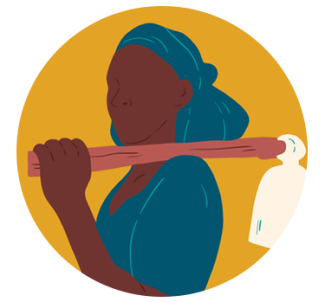
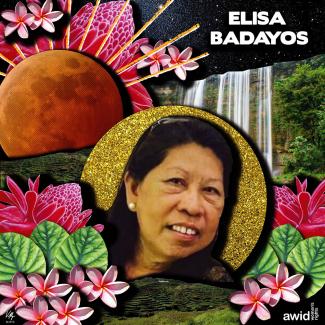
También era organizadora de comunidades urbanas empobrecidas de la Provincia de Cebú, y trabajaba con Desaparecidos, una organización de familiares de personas desaparecidas.
Elisa y dos de sus colegas fueron asesinadxs el 28 de noviembre de 2017 por dos hombres no identificados en Barangay San Ramón, en la ciudad de Bayawan de la Provincia de Negros Oriental, durante una misión que investigaba presuntas violaciones de derechos territoriales en la zona.
La sobreviven cuatro hijxs.
Absolutely. Your responses will be deleted at the end of data processing and analysis, and used for research purposes only. Data will NEVER be shared outside of AWID and will be only processed by AWID staff and consultants working on the WITM project. We prioritize your privacy and security. Our detailed privacy policy is available here.