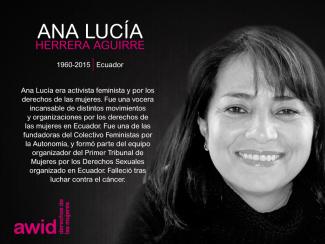
Ana Lucia Herrera Aguirre
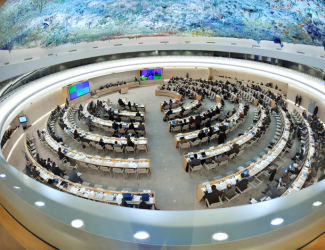
The Human Rights Council (HRC) is the key intergovernmental body within the United Nations system responsible for the promotion and protection of all human rights around the globe. It holds three regular sessions a year: in March, June and September. The Office of the UN High Commissioner for Human Rights (OHCHR) is the secretariat for the HRC.
Debating and passing resolutions on global human rights issues and human rights situations in particular countries
Examining complaints from victims of human rights violations or activist organizations on behalf of victims of human rights violations
Appointing independent experts (known as “Special Procedures”) to review human rights violations in specific countries and examine and further global human rights issues
Engaging in discussions with experts and governments on human rights issues
Assessing the human rights records of all UN Member States every four and a half years through the Universal Periodic Review
AWID works with feminist, progressive and human rights partners to share key knowledge, convene civil society dialogues and events, and influence negotiations and outcomes of the session.
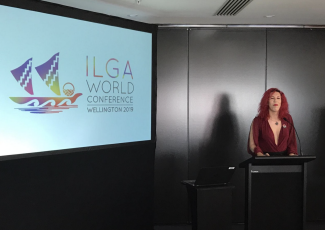
En participant à une activité exclusive pour les membres, j'ai été particulièrement touchée de voir que chacun·e y avait sa place et qu’il n’y avait pas le moindre jugement. Toute la session a été dynamique et vivante.- Kirthi Jayakumar, Fondatrice, The Gender Security Project, Inde
Welcome to Crear | Résister | Transform: a festival for feminist movements!
AWID is committed to creating an online space that invites and challenges us all to operate from a place of courage, curiosity, generosity and shared responsibility.
We invite you to co-create spaces with us that are free of harassment and violence, where everyone is respected in their gender identity and expression, race, ability, class, religion, language, ethnicity, age, occupation, type of education, sexuality, body size, and physical appearance. Spaces where we recognize inequalities in our world and strive to transform them in our own interactions with each other.
This means that we are able to listen, understand and relate to each other. To feel close, in spite of it all being virtual. For this, we will make interpretation available and open channels (like chat and other tools) for you to react and share. To hear each other better, we invite you to wear headphones during the conversation. If it is possible for you , we suggest that you close your email and any other likely source of distraction while you are in the conversation.
Let us celebrate the multiple ways in which knowledge shows up in our lives. We invite you to approach the conversation with curiosity and openness to learn from others, allowing ourselves to unlearn and relearn through the exchange, as a way to start collectively building knowledge.
We are committed to holistically approaching accessibility by being mindful of different physical, language, mental and safety needs. We want a space that is welcoming of folks from various backgrounds, beliefs, abilities and experiences. We will be proactive but we also ask that you communicate your needs with us, and we will do our best within our capacity to address these needs.
We all commit individually and collectively to respect each other’s privacy and to seek people’s consent before sharing any images or content generated during the conversation that involves them.
Creating a safer, respectful and enjoyable environment for the conversations, is everybody's responsibility.
If you notice that someone is behaving in a discriminatory or offensive manner, please contact the reference person who will be indicated at the beginning of the session.
Any participants that express oppressive language or images, will be removed from the call and will not be readmitted. We will not engage with them in any way.
Là où les organisations de terrain pilotent et les multinationales sont tenues responsables.
📅 Mardi 11 novembre 2025
📍 En ligne et à l'Universidade Federal do Pará, Belém
Do you have questions regarding the AWID Forum or related activities? We have answers!
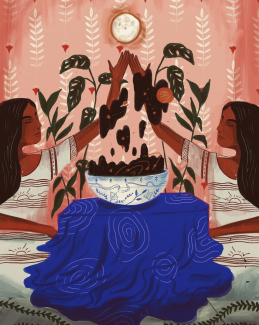
*Website in French
Las Realidades Feministas son una invitación cálida y afectuosa, una suerte de acto de cuidado y preservación colectivo (en oposición al autocuidado), una invitación a atesorar, a hacer inventario de toda la labor realizada para que no desaparezca. (...)
Bien plus de la moitié de la population mondiale est aujourd’hui dirigée par l’extrême droite. C’est sur cette toile de fond que défenseur·e·s des droits humains et féministes luttent pour « tenir bon », protéger le multilatéralisme et le système international des droits humains, alors que leurs engagements les exposent à de violentes répressions. Ces institutions sont cependant de plus en plus soumises aux intérêts du secteur privé. Les grandes entreprises, surtout les sociétés transnationales, siègent à la table des négociations et occupent des fonctions de leadership dans plusieurs institutions multilatérales, l’ONU notamment. Le lien entre ultranationalisme, restriction de l’espace civique et emprise des entreprises a un impact considérable sur la réalisation ou non des droits humains pour tout le monde.
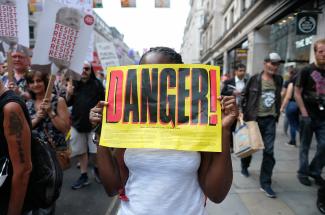
A hands-on deckgame for collectives to explore feminist economic alternatives and systems of care as crisis response. This deckgame is for all movements navigating global climate crises through play and strategy based on real-life scenarios. A creative avenue to strategize in meetings, workshops, and community gatherings!
par Amal Amer
Je prie en famille pour la première fois en six ans, recouvert.e d’un keffieh que j’ai déniché dans une poubelle. (...)
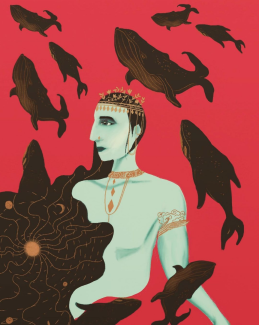
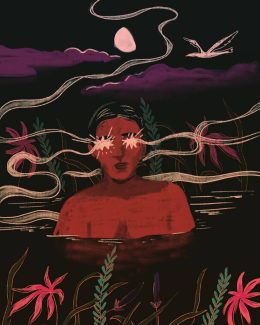
illustration : « Les anges aussi sortent la nuit », par Chloé Luu >