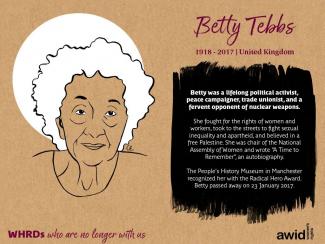
Betty Tebbs
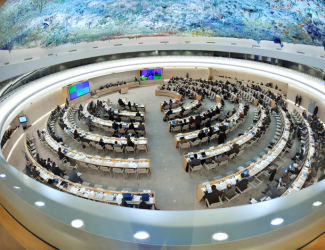
The Human Rights Council (HRC) is the key intergovernmental body within the United Nations system responsible for the promotion and protection of all human rights around the globe. It holds three regular sessions a year: in March, June and September. The Office of the UN High Commissioner for Human Rights (OHCHR) is the secretariat for the HRC.
Debating and passing resolutions on global human rights issues and human rights situations in particular countries
Examining complaints from victims of human rights violations or activist organizations on behalf of victims of human rights violations
Appointing independent experts (known as “Special Procedures”) to review human rights violations in specific countries and examine and further global human rights issues
Engaging in discussions with experts and governments on human rights issues
Assessing the human rights records of all UN Member States every four and a half years through the Universal Periodic Review
AWID works with feminist, progressive and human rights partners to share key knowledge, convene civil society dialogues and events, and influence negotiations and outcomes of the session.
During her 38-year career, Debbie Stothard, has worked with diverse communities and activists to engage states, IGOs and other stakeholders throughout Asia, Africa, Europe, and the Americas on human rights and justice. Her work is focused on the thematic priorities of business and human rights, atrocity prevention, and women’s leadership. Accordingly, she has either facilitated or been a resource person at nearly 300 training events in the past 15 years. Most of these were grassroots-oriented workshops delivered in the field, focused on human rights advocacy, economic literacy and business and human rights, and transitional justice and atrocity prevention. Her work in transitional justice and atrocity prevention has mainly focused on Burma/Myanmar, however she has provided advice on responses to other country situations around the world.
During 1981 – 1996, Debbie worked as a crime reporter, student organizer, policy analyst, academic, government advisor and food caterer in Malaysia and Australia while volunteering for human rights causes. In 1996, she founded ALTSEAN-Burma which spearheaded a range of innovative and empowering human rights programs. This includes ALTSEAN’s ongoing intensive leadership program for diverse young women from Burma, which in the past 22 years, has helped strengthen and expand women’s leadership in conflict-affected zones. She served as a member of the Board of the International Federation for Human Rights (FIDH) for 9 years as Deputy Secretary-General (2010-2013) and Secretary-General (2013 – 2019) during which she promoted the mission and profile of FIDH at approximately 100 meetings and conferences per year.

¡Sí! Reconocemos y valoramos las distintas razones por las que los feminismos en sus contextos respectivos no cuentan con financiamiento externo, ya sea por no reunir los requisitos para solicitar donaciones o para recibir dinero del exterior, o bien porque se financian con recursos generados de manera autónoma como estrategia política en sí misma. Deseamos saber de ustedes con independencia de su experiencia de financiamiento externo.

Jemimah Naburri-Kaheru est une stratège internationale accomplie en matière de ressources humaines à impact profond dans la région de la Corne de l'Afrique. Jemimah était auparavant responsable régionale des ressources humaines et du bureau de l'Initiative stratégique pour les femmes dans la Corne de l'Afrique (SIHA) . Son influence s’est étendue jusqu’à la direction des ressources humaines de plus de 70 employé·e·s régionaux·ales, alors que l'organisation connaissait une croissance rapide, avec une augmentation de 40 % de ses revenus annuels. Tout au long de sa carrière, Jemimah a orchestré avec succès des efforts de recrutement, introduit des systèmes de performance basés sur le mérite, de même que supervisé les relations avec les employé·e·s et les politiques RH. Elle a joué un rôle central dans le soutien aux stratégies mondiales de personnel. Avec une formation universitaire en Études de Développement de l'Université de Makerere (Ouganda) et un Master en Gestion des Ressources Humaines, Jemimah est évidemment engagée envers le développement professionnel. Sa contribution à des effectifs hautement performants et à un leadership international en matière de ressources humaines la positionne comme un atout inestimable dans toute entreprise mondiale.
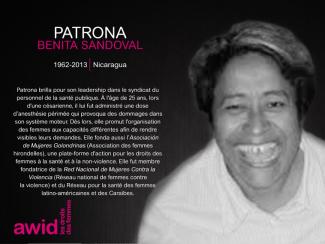
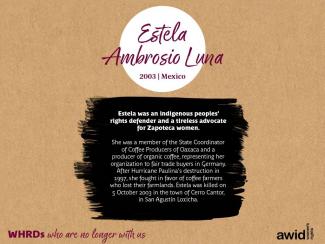
Estudiantes, escritoras, lideresas, activistas. Cada una de las cuatro mujeres que honramos a continuación encaró el activismo a su manera. Sin embargo, todas tuvieron en común la promoción y defensa de los derechos de lesbianas, gays, personas bisexuales, trans*, queer e intersex. Únete a nosotras para recordar y honrar a estas defensoras de derechos humanos, su trabajo y su legado, compartiendo los memes aquí incluidos con tus colegas, amistades y redes; y tuiteando las etiquetas #WHRDTribute y #16Días.
Por favor, haz click en cada imagen de abajo para ver una versión más grande y para descargar como un archivo.


À l’heure actuelle, l’enquête est disponible sur KOBO en français, anglais, arabe, espagnol, portugais et russe. Vous pouvez choisir votre langue au début du questionnaire.
Argentina tiene una larga historia de cooperativas autogestionadas y lugares de trabajo controlados por lxs trabajadorxs.
En 2001, el país vivió una de las peores crisis económicas de su historia.
Como respuesta a la recesión y como forma de resistencia y resiliencia, lxs trabajadorxs de todo el país comenzaron a ocupar sus lugares de trabajo.
La Cooperativa Textil Nadia Echazú fue la primera cooperativa creada por y para personas trans y travesti en busca de autonomía económica y condiciones de vida dignas.
Proporciona oportunidades de trabajo, acceso a la seguridad social, ingresos sostenibles y derechos económicos para las comunidades a las que sirve.
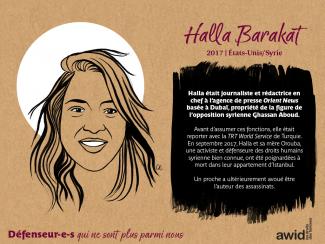
Khaoula Ksiksi is a passionate advocate for justice, equity, and liberation. As a Gender, Equality, Diversity, and Inclusion (GEDI) Advisor, she works to make inclusivity a lived reality, not just a policy, across humanitarian programs and crisis contexts. She collaborates with teams to challenge structural oppression using bold, transformative tools rooted in lived experience.
Her activism began on the frontlines of Tunisia’s anti-racism movement. With Mnemty, she helped push through the country’s first anti-discrimination law, forcing a national reckoning with racial injustice. She later co-founded Voices of Black Tunisian Women to amplify Black women’s leadership, build solidarity networks, and demand visibility in a society that often silences them.
Khaoula is also a founding member of Falgatna, a radical queer-feminist movement fighting for SOGIESC rights and supporting LGBTQI+ communities through direct action, digital resistance, and survivor-centered advocacy.
Previously, she led regional feminist and climate justice projects at the Rosa Luxemburg Foundation in North and West Africa.
At the heart of her work is a deep belief: no one is free until we all are. Her activism is both a fight and a love letter to her people, her communities, and the world we deserve.
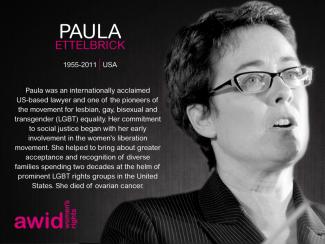
Ces femmes transgenres ont été assassinées en raison de leur activisme et de leur identité de genre. Les lois reconnaissant les droits des personnes trans* sont insuffisantes et, lorsqu’elles existent, les mesures prises pour protéger les droits de ces personnes sont quasi inexistantes. Nous vous invitons à vous joindre à nous pour honorer la mémoire de ces défenseuses, leur activisme et l’héritage qu’elles nous ont laissé. Faites circuler ces mèmes auprès de vos collègues et amis ainsi que dans vos réseaux et twittez en utilisant les hashtags #WHRDTribute et #16Jours.
S'il vous plaît cliquez sur chaque image ci-dessous pour voir une version plus grande et pour télécharger comme un fichier


Yes, we still want to hear from you regardless of whether you received funding in all three, two or only one of the years between 2021 and 2023.
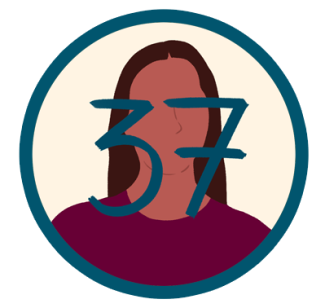
L'espérance de vie d'une personne trans et travesti en Argentine est de 37 ans - l'âge moyen de la population générale est de 77 ans.
We work to achieve gender justice and women’s human rights by strengthening the collective voice, impact and influence of global women’s rights advocates, organizations and movements.