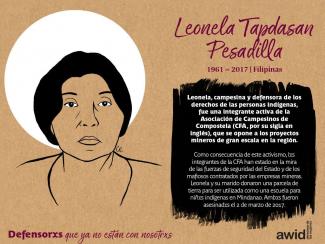
Leonela Tapdasan Pesadilla
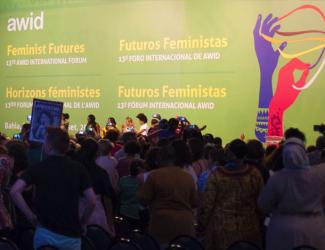
In September 2016, the 13th AWID international Forum brought together in Brazil over 1800 feminists and women’s rights advocates in a spirit of resistance and resilience.
This section highlights the gains, learnings and resources that came out of our rich conversations. We invite you to explore, share and comment!
One of the key takeaways from the 2016 Forum was the need to broaden and deepen our cross-movement work to address rising fascisms, fundamentalisms, corporate greed and climate change.
With this in mind, we have been working with multiple allies to grow these seeds of resistance:
And through our next strategic plan and Forum process, we are committed to keep developing ideas and deepen the learnings ignited at the 2016 Forum.
AWID Forums started in 1983, in Washington DC. Since then, the event has grown to become many things to many peoples: an iterative process of sharpening our analyses, vision and actions; a watershed moment that reinvigorates participants’ feminisms and energizes their organizing; and a political home for women human rights defenders to find sanctuary and solidarity.
Como podrás o no saber, AWID está celebrando su 40º aniversario en 2022 y, para festejarlo, se eligieron los lemas «Reunir, sembrar e irrumpir». En honor a esta ocasión, hemos invitado a lxs afiliadxs, aliadxs y al personal de AWID a escribir sus propias «Cartas de Amor a los Movimientos Feministas». En conjunto, hemos encendido una constelación de movimientos feministas. Nos mantengamos cerca mientras forjamos el viaje y seguimos reuniéndonos, sembrando y desmantelando.
Nota sobre nuestra Colección de Cartas de Amor
Todas estas cartas de amor fueron escritas por activistas que están compartiendo sus diversas experiencias en los movimientos feministas. Algunas pueden incluir contenido delicado o complejo sobre abuso sexual, violencia sexual, conflictos, exclusión, entre otras piezas potencialmente perturbadoras o provocadoras. Aunque las cartas están llenas de amor, cuídate al leerlas.
Día 1
Et si nous ré-imaginons différentes manières de prendre soin de nos communautés?
Et si l'économie n'était pas basée sur le profit d’une petite élite mais sur notre bien-être individuel et collectif, et celui de la Nature?
Les histoires que vous allez découvrir portent sur les collectifs créés par et pour les personnes historiquement et actuellement exclues, privées de leurs droits et déshumanisées par l'État et la société.
Voici les histoires des féministes qui centrent les soins dans l’économie.
(¡con invitades especiales!)
📅Martes 12 de marzo
🕒6:00 p. m. - 9:30 p. m. EST
🏢 Blue Gallery, 222 E 46th St, New York
Entrada solo con confirmación previa

We ramped up preparations for the 13th AWID international Forum, focused a lot of energy on the Post 2015 Development Agenda and Financing for Development processes, and continued the core work of our priority areas:
In response, we are moving out of our silos.
Increasingly, women’s rights and other movements worldwide are articulating the systemic and intersectional nature of these and other problems. We are making better connections with the agendas of other social and environmental movements for solidarity, alliance building and collective responses. We are also seeing greater visibility of these movements fighting for justice on the ground.

It is a community hub, where one can take courses and train in creative income-generation activities like local hairdressing, cooking and artmaking. Children can also enjoy cultural and educational activities. The MSTC doesn't work alone. It collaborates with institutions and art collectives to produce cultural, athletic and educational experiences, alongside critical access to health care. Since its inception, this participatory project has been led and carried out by mostly women, under the leadership of Afro-Brazilian activist Carmen Silva, who was once a homeless person herself.
L’enquête s’adresse aux groupes, organisations et mouvements qui travaillent spécifiquement, ou principalement, à la défense des droits des femmes, des personnes LBTQI+ et pour la justice de genre dans tous les contextes, à tous les niveaux, dans toutes les régions. Si c’est un des principaux piliers du travail de votre groupe, collectif, réseau ou tout autre type d’organisation, que votre structure soit déclarée ou non, récemment constituée ou plus ancienne, nous vous invitons à participer à cette enquête.

*Nous ne collectons pas les réponses à titre individuel ou de fonds féministes et pour les femmes à l’heure actuelle.
En savoir plus sur l'enquête :
Consultez la foire aux questions
Contenido relacionado
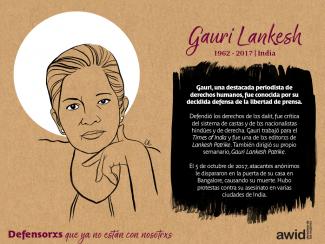
Reporteros sin Fronteras: India: Asesinada la periodista Gauri Lankesh
Global Voices: Asesinan a Gauri Lankesh, periodista crítica con la derecha india, a la entrada de su casa
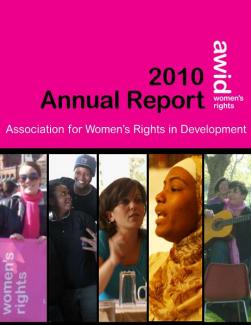
Our 2010 Annual Report highlights the major accomplishments of each of our strategic initiatives during the year.
Along with activity highlights, we include a brief analysis of the impact of our initiatives as well as reflections from our members and partners that further illustrate the relevance of AWID’s work and its connection to broader women’s rights movements.
This interactive document is complete with links to our websites and recent publications with in-depth information on the issues we address in the report.
La organización comunitaria de mujeres negras en la región del Norte del Cauca en Colombia se remonta al pasado colonial del país, que está marcado por el racismo, el patriarcado y el capitalismo que sustentaron la esclavitud como un medio para explotar los ricos suelos de la región.
Estas organizadoras son las heroínas de un amplio movimiento por la autonomía negra, que lucha por el uso sostenible de los bosques y los recursos naturales de la región como elementos vitales para su cultura y sustento.
Durante 25 años, la Asociación de Mujeres Afrodescendientes del Norte del Cauca (ASOM) se ha dedicado a impulsar la organización de mujeres afrocolombianas en el Norte del Cauca. Se establecieron en 1997 como respuesta a las continuas violaciones de derechos humanos, la ausencia de políticas públicas, el manejo inadecuado de los recursos naturales y la falta de oportunidades para las mujeres en el territorio.
Han forjado la lucha para asegurar los derechos étnico-territoriales, para poner fin a la violencia contra las mujeres y obtener el reconocimiento del papel de las mujeres en la construcción de la paz en Colombia.

Pour revendiquer votre pouvoir en tant qu’experte sur la situation du financement des mouvements féministes.
Contenu lié
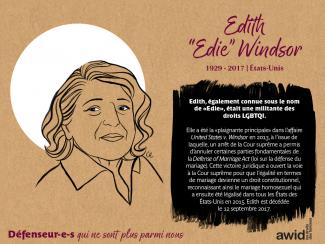
Rolling Stone Magazine: Décès d’Edith Windsor: la communauté LGBT pleure une icône
Le Monde: L’Américaine Edith Windsor, figure LGBT, est morte