None On Record

Young Feminist Activism

Organizing creatively, facing an increasing threat

Young feminist activists play a critical role in women’s rights organizations and movements worldwide by bringing up new issues that feminists face today. Their strength, creativity and adaptability are vital to the sustainability of feminist organizing.

At the same time, they face specific impediments to their activism such as limited access to funding and support, lack of capacity-building opportunities, and a significant increase of attacks on young women human rights defenders. This creates a lack of visibility that makes more difficult their inclusion and effective participation within women’s rights movements.

A multigenerational approach

AWID’s young feminist activism program was created to make sure the voices of young women are heard and reflected in feminist discourse. We want to ensure that young feminists have better access to funding, capacity-building opportunities and international processes. In addition to supporting young feminists directly, we are also working with women’s rights activists of all ages on practical models and strategies for effective multigenerational organizing.

Our Actions

We want young feminist activists to play a role in decision-making affecting their rights by:

  • Fostering community and sharing information through the Young Feminist Wire. Recognizing the importance of online media for the work of young feminists, our team launched the Young Feminist Wire in May 2010 to share information, build capacity through online webinars and e-discussions, and encourage community building.

  • Researching and building knowledge on young feminist activism, to increase the visibility and impact of young feminist activism within and across women’s rights movements and other key actors such as donors.

  • Promoting more effective multigenerational organizing, exploring better ways to work together.

  • Supporting young feminists to engage in global development processes such as those within the United Nations

  • Collaboration across all of AWID’s priority areas, including the Forum, to ensure young feminists’ key contributions, perspectives, needs and activism are reflected in debates, policies and programs affecting them.

Related Content

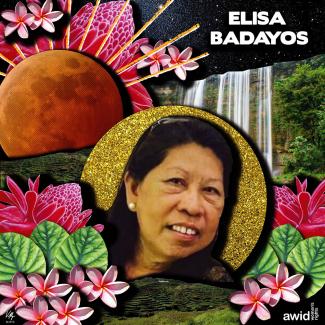
Elisa Badayos

Elisa was the coordinator for the human rights organization Karapatan in Negros Oriental Province in the Philippines.

She also served as an organiser of urban poor communities in Cebu Province, and worked with Desaparecidos, an organization of families of the disappeared.

Elisa and two of her colleagues were killed on November 28, 2017 by two unidentified men at Barangay San Ramon, Bayawan city in the Negros Oriental province during a mission to investigate alleged land rights abuses in the area.

She is survived by four children.


Elisa Badayos, Philippines

Quelle est l’origine de ce projet?

Nous croyons que l'économie, le marché, le système financier et les prémisses sur lesquelles ils reposent sont des domaines critiques pour la lutte féministe.


Ainsi, notre vision pour une économie juste dépasse la promotion des droits et de l'autonomisation des femmes sur le marché. Elle propose d'évaluer le rôle des oppressions liées au genre lors de l'élaboration de mesures économiques, afin de les modifier pour favoriser l'égalité de genre et la justice économique.

Processus

Nous ne partons pas de zéro et nous ne sommes pas seules à tenter de mettre en avant des propositions féministes pour une économie juste. Beaucoup des propositions formulées dans ce document existaient déjà en théorie et aussi dans la pratique, au sein de diverses communautés qui défient et résistent face aux systèmes économiques fondés sur la croissance et le marché.
 
Il est également très important de noter qu'il y a une prise de conscience croissante du fait que les micros solutions n’apportent pas toujours de réponses aux problèmes macros, même si elles représentent des espaces importants pour la construction de la résistance et des mouvements. Certaines alternatives spécifiques peuvent ne pas être en mesure de remédier aux injustices du système capitaliste actuel à l'échelle mondiale.

Objectifs

Cela dit, les alternatives féministes pour une économie juste sont essentielles pour ouvrir des brèches dans le système et pouvoir en tirer des leçons, en faveur d’un changement systémique transformateur. Nous n’avons pas la prétention de proposer un compte-rendu complet et exhaustif sur la manière de créer un modèle économique qui soit juste d’un point de vue féministe, ou même des modèles.

À partir d’un dialogue inter-mouvements avec des syndicats, des mouvements ruraux et paysans et des mouvements environnementaux, nous pouvons néanmoins formuler une série de propositions pour cheminer vers cette vision.

Que voulons-nous changer?

Le modèle néolibéral qui domine l'économie mondiale a démontré à maintes reprises son incapacité à traiter les causes profondes de la pauvreté, des inégalités et de l'exclusion. En réalité, le néolibéralisme a même contribué à provoquer et à exacerber ces injustices.
 
Caractérisées par la mondialisation, la libéralisation, la privatisation, la financiarisation et l'aide conditionnelle, les politiques générales de développement de ces trois dernières décennies ont fait des ravages dans la vie et les moyens de subsistance de tous et toutes. Ces politiques ont également contribué sans faillir à creuser le fossé des inégalités, aux injustices de genre et à une destruction de l'environnement que le monde ne peut plus se permettre de supporter.
 
Il y a encore des personnes qui affirment qu’en donnant carte blanche aux sociétés et aux entreprises pour favoriser la croissance économique, le vent finira par atteindre les voiles de tous les navires.
 
Cependant, la notion du développement dominante au cours des dernières décennies,  qui repose en grande partie sur le principe d’une croissance économique illimitée, traverse actuellement une crise idéologique.
 
Le mythe de la croissance économique en tant que panacée capable de résoudre tous nos problèmes prend l’eau.


Voir également

Notre vision

5 menaces principales

Snippet FEA Georgia this is only the beginning (ES)

Georgia

Sindicato Red de Solidaridad


Este es sólo

EL COMIENZO

Snippet - WITM Our objectives - RU

Задачи исследования «Где деньги?»:

1

Предоставить членам AWID, партнерам и донорам обновленный, мощный, основанный на фактических данных и ориентированный на конкретные действия анализ ресурсных реалий феминистских движений, а также текущего состояния экосистемы финансирования феминистских инициатив.

2

Выявить и продемонстрировать возможности для увеличения и улучшения финансирования феминистских организаций, выявить ошибочные решения и препятствовать тенденциям, приводящим к нехватке финансирования и/или противоречащим гендерной справедливости и межсекторальным феминистским повесткам.

3

Сформулировать феминистское видение, предложения и программы по обеспечению ресурсами.

Пройти опрос!

Christine Hayhurst

Biography

Con más de 30 años de experiencia en finanzas, Christine ha dedicado su carrera a fomentar misiones sin fines de lucro en todo el mundo. Sus contribuciones incluyen desempeñarse como tesorera en la junta de una ONG . Se sumó a AWID en 2007 como Fiscalizadora y, en 2023, asumió el rol de Directora de Finanzas. En su tiempo libre, disfruta de viajar, la jardinería y el senderismo.

Position
Directora de Finanzas
Add to stories
Off

Agroecology and Food Sovereignty

Context

The search for alternative means of food production based on environmental sustainability is gaining ground across regions. This worldwide search comes with a common characteristic: the need to involve rural people and particularly women, building on their local priorities and knowledge by employing the principle of agroecology.

Definition

Agroecology is a way of practicing agriculture or using technologies that do not harm the environment. It proposes breaking with the hegemonic rural development model based on large landed estates and single-crop plantations that benefit mostly agricultural businesses and entrenches social exclusion.   

In family farming, agroecology manifests as a resistance to the current development model and its social, cultural, environmental, and economic problems. It opposes the lack of the farmer’s financial capital autonomy; and it symbolizes a resistance to the current agribusiness model.

Feminist perspective

Efforts based solely on agroecology may not be sufficient to solve all problems of women’s marginalization and invisibility. A feminist perspective is then crucial to analyze the norms associated with the idea of family as currently constituted as the perfect institution, as well as with the condition of women’s subordination.

In simpler terms, it is important to include in this debate a reflection on socially constructed gender roles to advance the emancipatory potential of agroecology.


Learn more about this proposition

Part of our series of


  Feminist Propositions for a Just Economy

Snippet FEA Georgia's minimum wage (FR)

Le salaire minimum en Géorgie est l’un des plus bas dans le monde. Cette réalité touche surtout les femmes.

Non seulement le pays a un écart de rémunération important entre les genres, mais les femmes travaillent également des heures plus longues et moins réglementées avant de rentrer chez elles pour s'occuper des tâches ménagères et de leur famille. Il n'y a pas de congé de maternité, pas d'augmentation de salaire pour les heures supplémentaires, pas d'assurance-chômage, et pas de congé de maladie ou d'autre protection sociale. Sous la pression d’organisations occidentales, les partis politiques oligarchiques géorgiens ont mis en œuvre des réformes qui détruisent l'État-providence, augmentent les mesures d'austérité et aggravent l'exploitation des travailleur·euses, le tout au profit des grandes entreprises qui applaudissent le pays pour sa «facilité à faire des affaires». Les médias, cooptés par des intérêts privés et corporatifs, sont partiaux sur ces questions ou les réduisent au silence. L'organisation syndicale reste l'une des rares options pour lutter pour les droits humains fondamentaux et pour tenir l'État et les entreprises responsables des violations et persécutions quotidiennes et généralisées contre les travailleur·euses, et en particulier les femmes.

Source: Minimum-Wage et entretien avec Sopo Japaridze dans Open Democracy

ما هو الهدف من استطلاع "أين المال"؟

الهدف الأساسي من وراء استطلاع "أين المال" هو تسليط الضوء على على وقائع التمويل المتنوّعة والمركّبة للحركات النسوية، حركات النساء، حركات العدالة الجندرية وحركات مجتمع الميم - عين والحركات الحليفة لها على المستوى العالمي. بناءاً على هذا، وبناءً على ذلك - تعزيز قضية تحويل أموال أكثر وأفضل وتحويل السلطة باتجاه الحركات النسوية.

Alexandra Lamb Guevara

Biography

Alexandra is an anglo-colombian feminist with over 20 years of experience in local, national and international HIV and sexual and reproductive health and rights programming. She has extensive experience in resource mobilization and donor relations with private philanthropic foundations and multilateral agencies on behalf of international, national and local NGOs, predominantly in Latin America and the Caribbean. Prior to AWID, Alexandra worked at Fundación Si Mujer, a feminist abortion provider and educator in Colombia, RedTraSex and the International HIV/AIDS Alliance.

Alexandra has a BA in International Relations and Development Studies from Sussex University and a MSc in Public Health from the London School of Hygiene and Tropical Medicine. In rare moments when she is not working or parenting, she loves to swim, eat and has recently begun to play Zelda: Breath of the Wild with her son.

Position
Resource Mobilization Lead
Add to stories
Off

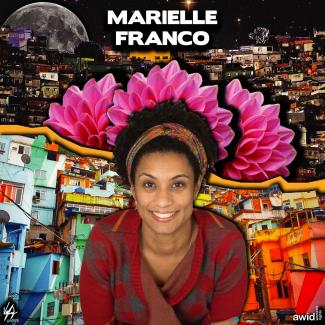
Marielle Franco

Marielle était une femme politique brésilienne, féministe lesbienne et militante des droits humains.

Marielle était une critique virulente de la brutalité policière et des exécutions extrajudiciaires. Sa politique, ouvertement féministe, centrée sur les personnes noires et les favelas était une source d’espoir pour les groupes marginalisés de Rio de Janeiro, actuellement gouvernée par un gouvernement conservateur et un maire évangélique.

Le 14 mars 2018, après avoir prononcé un discours à Rio de Janeiro, Marielle Franco et son chauffeur ont été assassinés, abattus par balles. Suite à la nouvelle de leur mort, les foules sont descendues dans les rues en criant « Marielle presente! » (Marielle est ici !) et ont exigé que justice soit faite.

En savoir plus sur Marielle et la situation au Brésil


Marielle Franco, Brasil

AWID Members Engaging at CSW61

Member states and women's rights advocates and organisations are gathering at the United Nations Headquarters in New York from 13 - 24 March for the 61st Commission on the Status of Women to address ‘women’s economic empowerment’ in the context of Sustainable Development Goal 5.

Whilst AWID is looking forward to physically meeting those of you who will be in New York, we want to engage with all those who cannot attend CSW, and as much as possible, amplify your voices in relevant spaces.

Continue reading to find out how to engage with AWID around CSW, whether you are attending physically or not.


Participate in an artistic takeover!

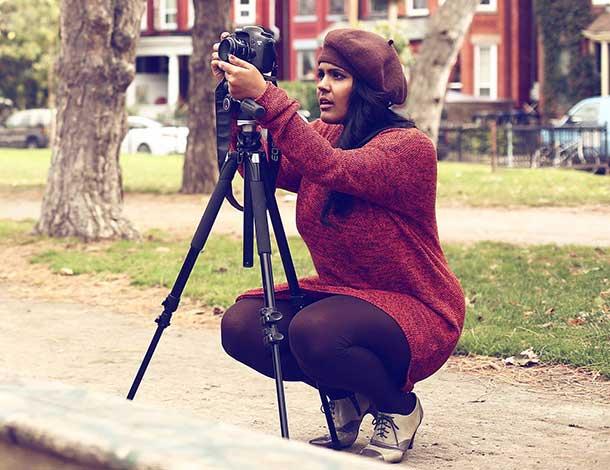
We are thrilled that AWID member Nayani Thiyagarajah is attending CSW this year and will take over the AWID Instagram. She will be available onsite to connect with other members for a possible feature on our Instagram. She will also explore possibilities of including some AWID members in a short film on the theme, ‘The personal is political’, a story of Nayani’s participation in this year’s CSW.

Nayani Thiyagarajah

Who is Nayani?

Nayani Thiyagarajah is a director, producer, and writer, dedicated to stories for the screen. A daughter of the Tamil diaspora, she calls Toronto home. For over 10 years, Nayani has worked in the arts and cultural industries. Her first independent feature documentary Shadeism: Digging Deeper (2015) had its World Premiere at the 2015 Zanzibar International Film Festival, where it won a Special Jury Prize. Nayani recently launched [RE]FRAME, with her producing partner Camaro West, a production company based out of Atlanta and Toronto, focused on re-framing the narratives around Black, Indigenous, and other people of colour through storytelling on screen.

On a more serious note, it should be noted that Nayani has a strange laugh, she's quite awkward, and her head is always in the clouds. She feels blessed beyond belief to create stories for the screen and play make believe for a living. Above all else, she believes in love.

(Biography submitted by Nayani)

Interested in meeting Nayani and being considered for inclusion in the film?

  • Send an email to [email protected] with the subject line “CSW Artistic Takeover”

  • By 13 March 2017

  • Please include your full name and country information.


Can't attend? Voice it!

If you are not able to attend CSW61 because of a travel ban, either due to the one imposed by the Trump administration or one you are facing from your own government, please share your story with us.

Send us messages you want heard in the United Nations spaces concerning funding, the impact of the reinstatement of the Global Gag Rule, and the need to push back against all types of religious fundamentalisms. You can send these in the following formats:

  • Video: no longer than two minutes and sent through a file sharing folder (for example dropbox, google drive) 

  • Audio: no longer than two minutes and sent through a file sharing folder (for example dropbox, google drive)

  • Image: you can share a photo or a poster of your message 

  • Text: no longer than 200 words and sent in the body of an email or in a word document

Share your message with us


Meet other members @CSW61

AWID members tell us that connecting with other members at CSW is valuable. In such a huge advocacy space, it is useful to connect with others including activists working on similar issues, or originating from the same country or region. Recognising the importance of connecting for movement building, we invite you to:

Interested in connecting with other members @CSW61?

  • Email [email protected] with the subject line “CSW AWID Members

  • NOTE: Please let us know your full name and country, and if we can share your email address with other members interested in meeting at CSW. 

Meet current AWID members


Take a picture!

If you are attending the CSW, we’d love to see what’s going on through your eyes!

Show us by capturing a moment you find speaks to the energy in the CSW space, be it on or off site. We hope to publish some of your ‘images’ on our social media channels and share on awid.org

You can send us: 

  • colour and/ or black and white photographs with a title (if you wish) and 

  • a caption (no longer than 100 words) about the story your image tells.

​Please also include:

  • your full name and country of origin and

  • let us know if we can publish the information you shared (in part or in full).

Send your images:

  • Email [email protected] with the subject line “CSW: Take a Picture!

  • During the whole CSW or shortly after until Tuesday 28 March 2017. 

Snippet FEA collaborator and allies Photo 5 (EN)

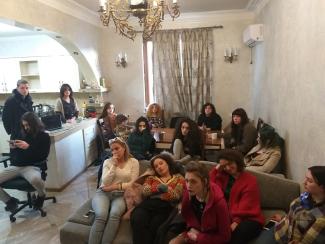
This photo represents a group of 15 workers sitting together in a living room with white walls. Some are sleeping, others are standing, talking with each other, or watching their phones.

Мы распределяем деньги среди наших грантополучающих партнерок(-ров) и являемся феминистским и/или женским фондом – можем ли мы участвовать в опросе?

Нет, мы высоко ценим вашу работу, но в данный момент мы не просим откликов от женских и феминистских фондов. Мы будем рады, если вы поделитесь информацией об опросе со своими партнерками(-рами) и контактами внутри феминистской сети.

Jemutai Mercy

Biography

Jemutai is a passionate plant lover who finds inspiration in the natural world and its intricate web of interconnections. This fascination with the universe's interrelatedness is mirrored in their approach to work, community building, care and support. 
She believes in the vibrant presence of their ancestors within them and lives to experience, remember, uphold, appreciate and celebrate their struggles, triumphs and values.

As an intersectional queer feminist and human rights activist, Jemutai has dedicated their career to advocating for equity and inclusivity. They are passionate about Organizational Development, with a background in Grants Making and Administration, and now pursuing a path in creating impactful experiences for convenings and providing operational leadership and support, ensuring that spaces are inclusive, safe and curated with precision and care.

Jemutai is also a strong believer in the philosophy of Ubuntu – the idea that "I am because we are." This belief in our shared humanity and mutual interdependence informs their collaborative approach and commitment to fostering a supportive, inclusive environment for all, especially structurally silenced and marginalized people.

Position
Logistics & Administrative Coordinator
Add to stories
Off

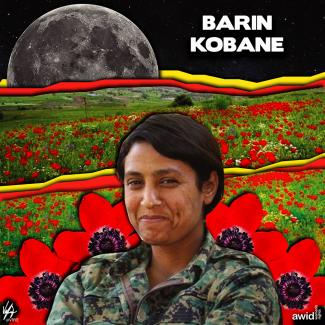
Barin Kobane

Barin was a member of the all-women fighting unit of the Kurdish People’s Protection Unit (YPG)

She was killed while on active duty.

Lebanese journalist Hifaa Zuaiter wrote: “Barin represents everything we have heard about the courage of the Kurdish female fighters, and her death is far more than the killing of a rival, or the result of a political or ethnic struggle. The horror of displaying her body only because she is a woman stems from the fact that she dared to threaten male hegemony by becoming a female fighter on a battlefield meant for men”.


Barin Kobane, Kurdistan

Background

Why this resource?

While active participants on the front lines of protests and uprisings in the Middle East and North Africa (MENA), women became invisible, absent from processes of formation of the new states, and excluded from decision-making roles, responsibilities, and positions in the aftermath of the uprisings. Except in rare cases, men dominated leadership positions in transitional structures, including the constitutional reform and electoral committees[i]. Subsequent elections brought very few women to parliamentary and ministerial positions.

Additionally, a strong and immediate backlash against women and women’s rights has clearly emerged in the aftermath. The rise of new religious fundamentalist groups with renewed patriarchal agendas aiming to obliterate previous gains of the women’s movements even in countries with longer histories of women’s rights, such as Tunisia, has been very alarming.

The varying contexts of governance and transition processes across the MENA countries presents an important opportunity for women human rights defenders to shape the future of these democracies. However, the lack of prioritization of women’s rights issues in the emerging transitions and the aforementioned backlash have posed a variety of complex challenges for the women’s movements. Faced with these enormous challenges and possibilities, women’s rights activists have been struggling to forge ahead a democratic future inclusive and only possible with women’s rights and equality. The particular historical and contextual legacies that impact women’s movements in each country continue to bear on the current capacities, strategies, and overall preparedness of the women’s movements to take on such a challenge. Burdened with daily human rights violations in one context, with lack of resources and tools in another, with organizational tensions in a third, in addition to the constant attacks on them as activists, women human rights defenders have voiced their desire to be more equipped with knowledge and tools to be effective and proactive in engaging with these fast-changing environments. Conceptual clarity and greater understanding of notions and practices of democratization, transitional justice tools and mechanisms, political governance and participation processes, international and local mechanisms, movement building strategies, constitutional reform possibilities, and secularization of public space and government are important steps to defining future strategic action.

It is clear that feminists and women’s rights activists cannot wait for women’s rights to be addressed after transitions – issues must be addressed as the new power configurations are forming. Experiences of earlier moments of transition, namely from colonial rule, have clearly demonstrated that women’s rights have to be inherently part of the transition movement towards a more just and equal society.

What is included?

This publication represents a research mapping of key resources, publications and materials on transitions to democracy and women’s rights in different countries of the world that have undergone such processes, such as: Indonesia, Chile, South Africa, Nepal, Mexico, Argentina, Poland, Ukraine, as well as within the Middle East and North Africa (MENA). It provides bibliographic information and short summaries of resources which succinctly identify the contextual changes and challenges facing women in those particular transitional moments, as well as clearly delineates the ways in which women’s rights activists sought to confront those challenges and what lessons were learned.

A key criterion in the selection process was the primacy of a women’s rights/feminist perspective; the few exceptions to this rule offer a unique and, we hope, useful, perspective on the issues that women’s rights organizations and activists face in the region.  The texts have been selected to provide a wide range of information, relevant to women human rights defenders working from the grassroots to the international level, across issues (including different case studies and examples), from different perspectives (international human rights bodies, academic institutions, NGO contributions, activists’ experiences, etc.), and at a wide range of levels of complexity, in order to respond to the needs of as many readers as possible.

The mapping clusters resources under six major categories:

  • Transitions to Democracy
  • Political Participation
  • Movement Building
  • Transitional Justice
  • Constitutional/Legal Reform
  • Responses to Fundamentalisms



[i]This and other context points are drawn from the report from Pre AWID Forum meeting on Women’s Rights in Transitions to Democracy: Achieving Rights, Resisting Backlash, collaboratively organized by AWID, the Equality Without Reservation Coalition, Global Fund for Women and Women’s Learning Partnership

Snippet FEA lines of work Against (ES)

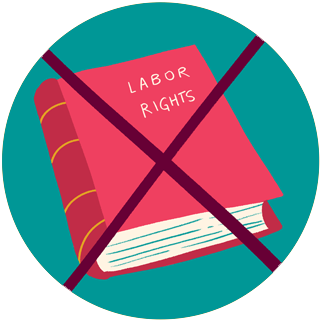
Ilustración un libro rosa que dice "Derechos laborales" con una X roja

VIOLACIONES DE DERECHOS LABORALES