None On Record

Young Feminist Activism

Organizing creatively, facing an increasing threat

Young feminist activists play a critical role in women’s rights organizations and movements worldwide by bringing up new issues that feminists face today. Their strength, creativity and adaptability are vital to the sustainability of feminist organizing.

At the same time, they face specific impediments to their activism such as limited access to funding and support, lack of capacity-building opportunities, and a significant increase of attacks on young women human rights defenders. This creates a lack of visibility that makes more difficult their inclusion and effective participation within women’s rights movements.

A multigenerational approach

AWID’s young feminist activism program was created to make sure the voices of young women are heard and reflected in feminist discourse. We want to ensure that young feminists have better access to funding, capacity-building opportunities and international processes. In addition to supporting young feminists directly, we are also working with women’s rights activists of all ages on practical models and strategies for effective multigenerational organizing.

Our Actions

We want young feminist activists to play a role in decision-making affecting their rights by:

  • Fostering community and sharing information through the Young Feminist Wire. Recognizing the importance of online media for the work of young feminists, our team launched the Young Feminist Wire in May 2010 to share information, build capacity through online webinars and e-discussions, and encourage community building.

  • Researching and building knowledge on young feminist activism, to increase the visibility and impact of young feminist activism within and across women’s rights movements and other key actors such as donors.

  • Promoting more effective multigenerational organizing, exploring better ways to work together.

  • Supporting young feminists to engage in global development processes such as those within the United Nations

  • Collaboration across all of AWID’s priority areas, including the Forum, to ensure young feminists’ key contributions, perspectives, needs and activism are reflected in debates, policies and programs affecting them.

Related Content

Ika Vantiani

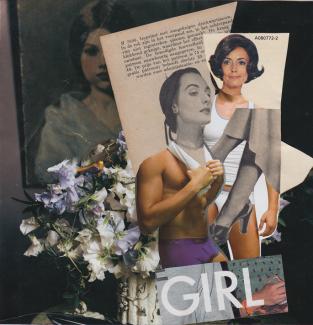
Bunga-Transgirl are girl, Analog collage, 2020
Bunga-Transgirl are girl (Les filles-Bunga trans sont des filles) collage Analog, 2020

Bunga ou fleur en francais est un symbole qui est souvent associé aux femmes en Indonésie. Ce qui signifie qu'une fleur peut également être associée aux femmes transgenres. Parce que les femmes transgenres sont des femmes. Aussi belles, aussi fortes, l’une comme l’autre a vécu sans attendre d'être "cueillie", mais en grandissant, en s'épanouissant et en mourant à sa guise. Cette œuvre est un hommage à mes ami·e·s transgenres à l'occasion de la Journée Internationale de la Visibilité des Personnes Transgenres.

À propos d’Ika Vantiani 

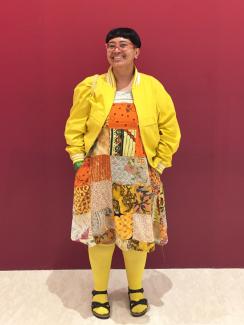
Ika Vantiani portrait
Ika Vantiani est une artiste, conservatrice et créatrice indonésienne basée à Jakarta. Ses œuvres explorent l'idée d'être une femme dans la société d'aujourd'hui où médias et consommation sont inextricablement liés. Ika utilise le principe du collage et l'étend à des ateliers, des installations et au street art. Ika est membre de collectifs d'artistes dont Micro Galleries, The Collage Club et It's In Your Hands Collective. 

Publications - Homepage - es

Publicaciones

Enciende tu fuego feminista leyendo nuestras investigaciones y publicaciones varias sobre financiamiento, defensoras de derechos humanos, construcción de movimientos, fundamentalismos, justicia económica, seguimiento y evaluación feminista y más

Leer más

Bessy Ferrera

Bessy Ferrera fue una defensora de los derechos humanos de las personas trans, de las trabajadoras sexuales y de las personas seropositivas en Honduras, durante toda su vida.  

Bessy también fue  integrante de Arcoíris, una organización que apoya a la comunidad LGBTI+. También fue una persona de referencia para la Plataforma Derechos Aquí y Ahora de Honduras, y abogó enérgicamente por la ciudadanía plena de las personas trans, y por la aprobación de una ley de identidad de género que permitiera a las personas trans cambiar su identidad de género legalmente.

"Desde principios de año [2019] la comunidad trans ha sufrido una serie de ataques, por defender, por reivindicar derechos". - Rihanna Ferrera (hermana de Bessy)
Bessy era una trabajadora sexual, y a principios de julio de 2019, fue asesinada a tiros por dos hombres mientras trabajaba en las calles de Comayagüela. Quienes la asesinaron fueron posteriormente arrestados.

Bessy es una de las muchxs defensorxs de los derechos LGBTI+ en Honduras que fueron asesinadxs por su identidad y su trabajo. Otras compañeras han sido: Cynthia Nicole, Angy Ferreira, Estefanía "Nia" Zúñiga, Gloria Carolina Hernández Vásquez, Paola Barraza, Violeta Rivas y Sherly Montoya.

El caso de Bessy es emblemático por su injusticia y por reflejar un problema mucho más amplio, que es el de la violencia sistemática a la que se enfrenta la comunidad LGBTI+ en Honduras, ya que el Estado ni garantiza los derechos que ofrece y ni  brinda protección. Esto ha creado una cultura de impunidad.

A pesar de los riesgos a los que se enfrentan lxs defensorxs LGBTI+ en Honduras, continúan a diario con su trabajo para desafiar y resistir la violencia, y luchar contra el estigma y la discriminación.

"Si muero, que sea por algo bueno y no por algo inútil. No quiero morir huyendo,  como unx cobarde. Si muero, quiero que la gente diga que morí luchando por lo que es mío". -  integrante de Arcoíris.
Snippet - Home page promo WITM - EN

"Where is the money for feminist organizing?"

Building on our 20-year history of mobilizing more and better funding for feminist-led social change, AWID invites you to complete the new iteration of our flagship survey, WITM.

START THE SURVEY Learn more

Snippet FEA Audio Story 4 (FR)

Écoutez cette histoire ici :

Understanding the Context of Anti-Rights Threats

Chapter 2

While fundamentalisms, fascisms and other systems of oppression shapeshift and find new tactics and strategies to consolidate power and influence, feminist movements continue to persevere and celebrate gains nationally and The rising power of anti-rights actors is not happening in a vacuum. Understanding the rise of ultra-nationalism, unchecked corporate power, growing repression, and diminishing civic space is key to contextualize the anti-rights threats we face today.

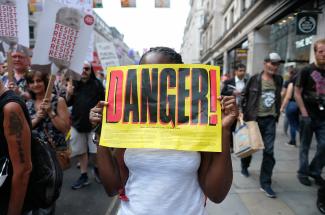
Protester holding a flyer that reads "Danger - Trump and the Far Right."
© Alisdare Hickson / Flickr
Danger - Trump and the Far Right.

Today, considerably more than half of the world’s population is governed by far-right leaders.  Against this backdrop, human rights defenders and feminists are working hard to “hold the line” and protect multilateralism and the international human rights system. They also face the risk that their engagement may bring with it violent reprisals. At the same time, these institutions are increasingly subject to private sector interests. Large businesses, particularly transnational corporations, are occupying seats at the negotiating table and leadership positions in a number of multilateral institutions, including the UN. This nexus of ultra-nationalism, closing civic space, and corporate capture is having a tremendous impact on whether human rights for all can ever be achieved. 

Table of Contents

  • Nationalism and Ultra-nationalism
  • Corporate Capture: Untamed Corporate Power is Putting Rights at Risk
  • Reprisals and Closing Civic Spaces for Feminist Activists, and LGBTIQ+ and Women Human Rights Defenders
  • Movement Resistance Story: CEDAW’s Article 16: A Pathway for Reformation of Discriminatory Family Laws in Muslim Contexts 
     

Read Full Chapter >

FRMag - Anatomy of a survivor's story

Anatomie de l'histoire d’une survivante

par Maryum Saifee 

Lorsqu’on effectue une recherche en ligne sur les « Mutilations génitales féminines » ou « MGF », un schéma en quatre parties sur l’anatomie des femmes apparaît à côté d’une page Wikipédia dédiée.  (...)

Lire

Illustration : « Rêves », par Neesa Sunar >

Yelena Grigoriyeva

Yelena Grigoriyeva, que ses ami·e·s appelaient souvent Lena, était une défenseure connue des droits des personnes LGBT en Russie.

Membre de mouvements démocratiques, pacifistes et LGBT, Yelena était une féroce opposante au président Vladimir Poutine et son administration. Elle a notamment exprimé son opposition à l’annexion de la péninsule ukrainienne de la Crimée par la Russie ainsi que critiqué les mauvais traitements infligés aux détenu·e·s.

Yelena a fait part de sa bisexualité en 2019.

« Sa déclaration m’a surprise et je ne l’approuvais pas. Je lui ai dit : « Écoute, Lena, tu portes déjà une cible sur la poitrine du fait de ton activisme politique. Tu viens de t’en peindre une autre dans le dos », Olga Smirnova, compagne de lutte politique et amie.

Yelena a effectivement reçu plusieurs menaces de mort, et des proches ont déclaré que son nom figurait sur un site Web homophobe qui incitait ses visiteur·euse·s à tuer les personnes LGBT. Elle a fait part de ces menaces à la police, mais l’État russe ne l’a pas protégée. 

Mais même dans une société où l’opposition politique, les activistes et les membres de la communauté LGBT, qui se battent pour leurs droits, font face à une violence croissante, Yelena continuait à défendre la justice sociale et l’égalité.

« Elle ne manquait pas une seule action militante. Et ils l’ont arrêtée plus de fois que je n’ai pu en compter », Olga Smirnova.

Yelena a été assassinée le 21 juillet 2019, à proximité de chez elle. Un suspect a été arrêté, mais certaines sources et plusieurs de ses ami·e·s et compagnes et compagnons de lutte pensent que ce suspect sert de bouc émissaire, et qu’en fait, il s’agit d’un assassinat politique ciblé. 

Pour la famille et les ami·e·s de Yelena, son assassinat demeure irrésolu, bien que le suspect ait avoué. 

En 2013, la Russie a passé une loi interdisant la propagation de ce qu’elle a appelé la « propagande gay ». En 2014, Human Rights Watch a publié un rapport à ce propos (en anglais et en russe).

What Our Members Say - FR

Ce que disent nos membres

Snippet - Podcast Intro (EN)

We are thrilled to announce the launch of AWID’s new podcast THAT FEMINIST FIRE. Our narrative series unravels over 40 years of feminist movements—and reimagines a way forward.

In our pilot season, you’ll hear five compelling stories that are part of a constellation of feminist activism today. Hosted by our very own Gopika Bashi, Deputy Director of Programmes at AWID, each episode explores unique but interconnected feminist realities that are achieving greater gender justice and human rights.

Produced by our Webby-winning podcast partner Hueman Group Media, you can subscribe to THAT FEMINIST FIRE and listen to our first episode here.

Find us on Apple Podcasts, Spotify, or wherever you get your podcasts. Share with your network! Help us spread stories that ignite our feminist fire and move us to action.

Subscribe here

Promover agendas feministas: progresos clave en género y sexualidad

Capítulo 1

Mientras los fundamentalismos, los fascismos y otros sistemas de opresión cambian de forma y encuentran nuevas tácticas y estrategias para consolidar su poder e influencia, los movimientos feministas siguen perseverando y celebrando logros a nivel nacional y en espacios regionales e internacionales.

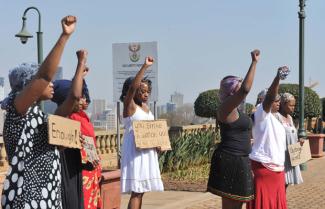
© GovernmentZA / Flickr A group of women re-enact the 1956 women's march to Pretoria protesting against pass laws.
© GovernmentZA / Flickr
Un grupo de mujeres recrea la marcha de mujeres de 1956 a Pretoria para protestar contra las leyes de pases.

Por ejemplo, en 2019, se dio un paso significativo en el Consejo de Derechos Humanos, cuando la ONU reconoció por primera vez el derecho a la integridad y autonomía corporal. Varias resoluciones del Consejo sobre la discriminación contra mujeres y niñas también reconocen que la reacción está vinculada con grupos de presión regresivos, con perspectivas ideológicas o con el uso inapropiado de la cultura o la religión para oponerse a los derechos igualitarios de mujeres y niñas. También hemos visto progresos feministas en el trabajo de Procedimientos Especiales de la ONU (funcionarixs independientes), tales como enfatizar la obligación de los Estados de oponerse a las narrativas de ideología de género, denunciar el uso inapropiado por parte de los actores antiderechos de referencias a la «cultura», y enfatizar que las creencias religiosas no pueden ser utilizadas como justificación de la violencia o la discriminación.

Índice de contenidos

  • Nivel nacional
  • Espacios internacionales
  • Ejercicio: ¡Esquematicemos y celebremos nuestras victorias!

 Lee el capítulo completo

FRMag - Our neighbourhood, our network

Our neighbourhood, our network, our strength

by Marta Plaza Fernández

The feminist reality that I want to share is about weaving networks in which we uphold one another. (...)

Read

artwork: “Entretejidas” [Interwoven women] by Surmercé >

Body

Nadyn Jouny

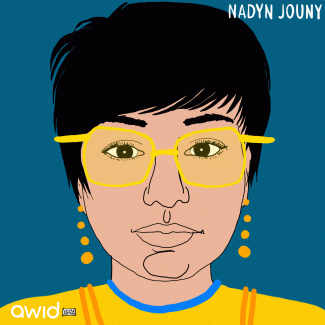
The personal is political - and fiery and courageous Nadyn Jouny personified this feminist mantra. Nadyn experienced firsthand the pain of structural violence in legal systems that strip women of their rights.

When she decided to file for divorce, the religious Shitte courts under the Lebanese Personal Status laws, denied her custody of her young son Karam. Nadyn, like so many other women across Lebanon and other countries, was caught in the impossible pain of leaving an unwanted and abusive relationship and also losing the rights to her child. But Nadyn fought back, as she would until her last day.

She used her media savvy to become an outspoken voice to women fighting discriminatory family laws in Lebanon and internationally. Nadyn co-founded the self-funded group, “Protecting Lebanese Women” (PLW) and banded with many other Lebanese mothers facing similar custody issues. Together, they advocated to raise awareness of the injustices they were facing, protesting in front of the religious courts for their rights and bringing international media attention to extreme injustices they were facing.    

Nadyn also worked with ABAAD - Resource Center for Gender Equality, another women’s rights organization in Lebanon, to campaign for women’s rights, equality in family law and custody and against forced and early marriages.

For many of her colleagues, she came to “symbolize a Lebanese mother’s fight against suppression and misogyny of all sorts," using “her personal experiences and her individual journey of empowerment to give hope to others that they can be a catalyst for positive change.”- ABAAD - Resource Centre for Gender Equality, Lebanon

On October 6, 2019 Nadyn was tragically killed in a car accident on her way to protest unfair tax increases in a country already facing spiralling financial crisis. Nadyn Jouny was only 29 years old at the time of her death.

Snippet - CSW69 spaces to watch out for - EN

CSW69 spaces to watch out for

Learn more about upcoming CSW69 events that AWID is co-organizing