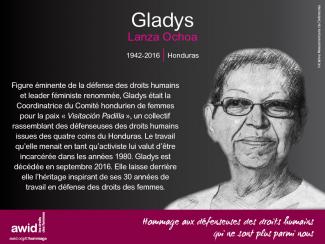
Gladys Lanza Ochoa
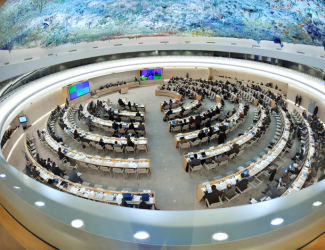
The Human Rights Council (HRC) is the key intergovernmental body within the United Nations system responsible for the promotion and protection of all human rights around the globe. It holds three regular sessions a year: in March, June and September. The Office of the UN High Commissioner for Human Rights (OHCHR) is the secretariat for the HRC.
Debating and passing resolutions on global human rights issues and human rights situations in particular countries
Examining complaints from victims of human rights violations or activist organizations on behalf of victims of human rights violations
Appointing independent experts (known as “Special Procedures”) to review human rights violations in specific countries and examine and further global human rights issues
Engaging in discussions with experts and governments on human rights issues
Assessing the human rights records of all UN Member States every four and a half years through the Universal Periodic Review
AWID works with feminist, progressive and human rights partners to share key knowledge, convene civil society dialogues and events, and influence negotiations and outcomes of the session.
جديد
سيجتمع المشاركات/ون فعليًا في عدد من المواقع خارج مكان انعقاد المنتدى في بانكوك، في أجزاء مختلفة من العالم، في كل يوم من أيام المنتدى. وستكون جميع هذه المواقع ذاتية التنظيم مرتبطة افتراضيًا لموقع انعقاد المنتدى في بانكوك. كما هو الحال مع الأفراد المتواصلون عبر الإنترنت، سيتمكن المشاركون/ات من تسيير النشاطات والمشاركة في المحادثات والاستمتاع ببرنامج غني ومتنوع.
سيتم الإعلان عن مواقع التجمعات في عام 2024.
Nous aspirons à faire du Forum de l’AWID un réel rassemblement mondial, où participeront une gamme diverse de mouvements, de régions et de générations. Dans ce but, l’AWID mobilise des ressources pour un Fonds d’accès limité, qui soutiendra les coûts liés à la participation de certaines personnes au Forum.
Le 14ème Forum international de l’AWID se tiendra du 11 au 14 janvier 2020 à Taipei, à Taïwan.
Pour ce Forum de l’AWID, il n’y aura pas de processus de candidature.
En supplément, l’AWID financera la participation d’environ 100 personnes de la région d’accueil du Forum. Les membres des comités du Forum (Contenu et méthodologie, Accès et Accueil) ainsi que les membres du Groupe de travail des artistes recevront aussi un soutien du Fonds d'accès.
Nous avons listé d’autres options pour financer votre participation au Forum de l’AWID sur cette page qui contient des idées de financement.
Sign up to be an AWID member to connect with 9,600+ global feminist movements and co-create a range of platforms and spaces designed especially for activists and organizations from teach-ins to solidarity spaces and member mixers.
The AWID Membership community is available as an app. Download the app and start connecting with movements!
 |
 |
La cocréation de nos réalités féministes commence par nous-mêmes, et nos façons de nous traiter les un·e·s les autres. Nous nous efforçons de créer et de protéger des espaces qui sécurisent et soutiennent nos communautés, à la fois en ligne et en personne.
Nous envisageons aussi les espaces sécurisés et accueillants, tout comme cocréés, et dont la possession est partagée. Nous attendons de nos membres qu'iels agissent de façon éthique, responsable et cohérente vis-à-vis des valeurs de l’AWID, et qu'iels assument une responsabilité collective pour garantir un environnement de respect mutuel et de solidarité.
Remarque :
L’AWID se réserve le droit de supprimer des commentaires, suspendre ou révoquer l’adhésion de membres en cas de violation des règles de la communauté. Les membres de l’AWID ne sont pas autorisés à représenter l’AWID à titre officiel, sauf mention écrite contraire. Les membres ne peuvent pas utiliser les espaces de l’AWID à des fins de prosélytisme ou de recrutement de membres pour rejoindre une organisation ou une croyance religieuse. Les membres ne peuvent pas utiliser les espaces de l’AWID pour demander des fonds à des fins personnelles, bien que les liens vers des actions de levée de fonds ou des campagnes de mobilisation soit autorisés.
La comunicación del deseo
Anfitrionx: Tendemos a pensar en la comunicación del deseo como algo circunscrito a la intimidad de la alcoba y nuestras relaciones personales. Sin embargo, ¿podemos también pensar este tipo de comunicación como una estructura, una práctica que nutre nuestro trabajo, y cómo somos, y cómo actuamos en el mundo?

LindiweCreo que, desafortunadamente, en el pasado expresar tu sexualidad tenía sus limitaciones. Se te permitía expresarla dentro de los confines del matrimonio, lo cual estaba permitido; siempre el tabú y el estigma estuvieron asociados a todo intento de expresarla de una forma distinta. Cuando se trata de comunicar, obviamente, el hecho de que ciertos estigmas se asocien a la expresión de tu sexualidad o la expresión de tu deseo hace mucho más difícil comunicar eso en la alcoba o en la intimidad con tu pareja. Desde mi experiencia personal creo que, obviamente, si me siento más cómoda expresándome fuera de la alcoba acerca de otros asuntos u otros temas, para mí es más fácil construir esa confianza, porque comprendes la resolución de conflictos con esa persona en particular, comprendes exactamente qué hacer para que esa comunicación sea especial para esa persona en particular. No es fácil. Se hace constantemente en todo tipo de relación, ya sea la pareja, algo casual o solo un momento. Pero creo que la confianza en el afuera puede traducirse definitivamente en cómo comunicas tu deseo.
Manal
Desde la infancia, a una mujer se la cría con eso de: «no tienes permiso para hablar de tu cuerpo, no tienes permiso para hablar de tu deseo», lo que hace recaer una enorme responsabilidad en las mujeres, sobre todo en las niñas en su adolescencia, cuando necesitan expresarse y hablar de estos temas. Por lo tanto, en mi opinión, este es un gran problema. ¿Sabes? Llevo casada más de 25 años, pero todavía, hasta el día de hoy, no puedo hablar de mis deseos. No puedo decir lo que quiero o prefiero, porque es como si no tuviera permitido cruzar esa línea. Es como un pecado, a pesar de ser mi derecho. Lo mismo sucede con todas mis amigas, no pueden expresarse de forma correcta.
Louise
Personalmente creo que expresar nuestros deseos, mis deseos, sea como sea que se expresen, tiene que ver con la otra persona y la mirada que esa otra persona tenga sobre mí. Así que esto también es algo que podemos vincularlo con el cine. Y la mirada que tenga sobre mí misma también: lo que creo que soy como persona, pero también lo que la sociedad espera de mí y mi sexualidad. En el pasado, de algún modo, solía establecer una analogía entre lo que sucede en la alcoba y lo que sucede en el lugar de trabajo, porque a veces se da esta dinámica de poder, lo quiera o no. Y a menudo, la comunicación verbal es más difícil de lo que pensamos. Pero cuando se trata de representarlo en el cine, es un juego absolutamente distinto. Estamos muy lejos de lo que supongo que a todxs lxs presentes nos gustaría ver en la pantalla cuando se trata de comunicar deseos sexuales dentro y fuera de la alcoba.
Anfitrionx: Podemos pensar en el mundo digital como hecho cuerpo: aunque sea virtual, no es menos real. Y eso quedó claro en el contexto del festival de las Realidades Feministas de AWID, el cual se celebró íntegramente en línea. Entonces, ¿qué implica hablar de sexualidad de forma colectiva, política, en los espacios en línea? ¿Navegamos por los espacios virtuales con nuestros cuerpos y afectos y, en dicho caso, cuáles son las distintas consideraciones en juego? ¿Qué implica para la comunicación y la representación?

LindiweLas redes sociales te hacen sentir en comunidad. Cuando expresas lo que quieres o lo que te agrada, habrá alguien que va a estar de acuerdo o en desacuerdo, pero quienes concuerdan contigo te hacen sentir que perteneces a una comunidad. Así que es más fácil lanzarlo al universo, o que otras personas lo vean, y potencialmente que no se te juzguen tanto. Y digo esto muy libremente porque a veces, según lo que expreses, serás humilladx o aprobadx. Pero cuando se trata de la alcoba, hay una intimidad y casi una vulnerabilidad que te expone a ti y a diferentes partes tuyas sobre las cuales no es fácil opinar. Cuando se trata de expresar tu deseo, hablarlo y manifestarlo y, quizás crear un tuit o un posteo en una red social, o incluso darle un «me gusta» y leer a otras comunidades con ideas afines, eso es más fácil que decirle a tu pareja, «así es como quiero recibir placer» o «así quiero que hagas ahora», debido al temor al rechazo. Pero no es eso únicamente. Sólo el aspecto de la vulnerabilidad – permitirte desnudarte a tal punto que la otra persona vea lo que estás pensando, sintiendo, deseando –, creo que es ahí donde radica la diferencia. Siento que en las redes sociales hay más comunidad y es más fácil involucrarse en conversaciones. Mientras que en la habitación, no quieres arruinar el momento necesariamente. Pero creo que eso, en cierta forma, te ayuda a comprender, según la relación con la persona, cómo te relacionarías de allí en más. Así que siempre sé que si intento comunicar algo y no lo logro en el momento, siempre puedo mencionarlo fuera de ese momento y ver cuál sería la reacción para saber cómo abordarlo en el futuro.
Louise¿Sabes? La cuestión con las películas es que no sé si la mirada masculina es intencionada o no. En verdad no lo sabemos. Lo que sí sabemos es la razón por la que la sexualidad en general ha sido tan heteronormativa y se ha centrado en la penetración, y por qué a las mujeres no se les da ningún espacio para realmente pedir algo en el cine: es porque la mayoría de la gente que ha trabajado en esta industria y tomado decisiones en cuanto a, ya sabes, la narración y la edición, han sido varones blancos. La venganza por violación es este género cinematográfico tan extraño que nació en la década de 1970, en donde la mitad de la historia sería sobre una mujer que fue violada por una o varias personas y, en la otra mitad, ella busca vengarse. Generalmente la mujer asesinará y matará a la persona que la violó y, en algunos casos, a otras personas cercanas al violador. Cuando este género comenzaba a surgir y, durante 30 años como mínimo, los varones eran quienes escribían, producían y dirigían esas películas. Por eso también buscamos tanto la representación. Muchxs feministas y pionerxs en la cinematografía queer también usaron el acto de filmar para hacerlo y reivindicar su propia sexualidad. Se me viene a la mente Barbara Hammer, una pionera queer y feminista del cine experimental de los Estados Unidos, que decidió filmar a mujeres teniendo sexo en 16mm., y, al hacerlo, reclamó un espacio dentro de la narrativa que se exhibía en el cine en aquel momento. Y también está el tema de la invisibilización: ahora sabemos, por Internet y el intercambio de conocimientos, que cineastas mujeres y queer vienen intentando y filmando desde los inicios del cine. Recién ahora nos damos cuenta porque tenemos acceso a bases de datos y al trabajo de activistas y curadorxs y cineastas.
Anfitrionx: Y esto abre la conversación sobre la importancia de mantener vivas las historias feministas. Los mundos en línea también han desempeñado un rol crucial en la documentación de las protestas y las resistencias. Desde Sudán hasta Palestina, pasando por Colombia, los feminismos han tomado nuestras pantallas por asalto y desafiado las realidades de la ocupación, el capitalismo y la opresión. Entonces, ¿podemos hablar de la comunicación del deseo, del deseo de algo más, como la descolonización?
ManalQuizás porque en mi pueblo hay apenas 600 habitantes y es una única familia – la Tamimi – no hay barreras entre varones y mujeres. Hacemos todo de manera conjunta. Entonces, cuando comenzamos nuestra resistencia no violenta o cuando nos unimos a la resistencia no violenta en Palestina, nadie discutió si las mujeres debían participar o no. Asumimos un papel muy importante en el movimiento aquí en el pueblo. Pero cuando otros pueblos u otros lugares comenzaron a sumarse a nuestras protestas semanales, algunos hombres pensaban que, si estas mujeres participaban o se unían a las manifestaciones, ellas lucharían con los soldados y entonces serían mujeres fáciles. Algunos hombres que no eran del pueblo intentaron acosar sexualmente a las mujeres. Pero una mujer fuerte que es capaz de enfrentar a un soldado puede también confrontar el acoso sexual. En ocasiones, cuando otras mujeres de otros lugares se suman a nuestra protesta, en un principio son tímidas; no se quieren acercar porque hay muchos hombres. Si quieres participar en la protesta, si quieres ser parte del movimiento no violento, tienes que quitarte todas esas restricciones y todas esas ideas de la cabeza. Tienes que enfocarte simplemente en luchar por tus derechos. Desafortunadamente, la ocupación israelí conoce todo esto. Por ejemplo, la primera vez que me arrestaron, tenía puesta la hijab, entonces intentaron quitármela, intentaron sacarme la ropa, frente a todo el mundo. Había entre 300 y 400 personas y lo intentaron. Cuando me llevaron para interrogarme, el interrogador dijo: «lo hicimos para castigar a otras mujeres a través suyo. Conocemos su cultura». Yo le respondí: «No me importa, creo en lo que hice. Aun si me quitaran toda la ropa, todo el mundo sabe que Manal está resistiendo».
LindiwePienso que incluso desde una perspectiva cultural, lo cual es muy irónico, si observas la cultura en África, antes de ser colonizada, se ve que mostrar la piel no era un problema. Usar piel animal o cuero para protegerte, no era ningún problema y la gente no estaba sexualizada salvo que se diera en un contexto determinado. Pero nos hemos condicionado a decir «deberías cubrirte» y cuando no te cubres, quedas expuesta y, por lo tanto, estarás sexualizada. La desnudez se sexualiza en lugar de estar simplemente desnuda; no quieres que a una niña pequeña la vean desnuda. ¿Qué tipo de sociedad nos hemos condicionado a ser si vamos a sexualizar a alguien que está desnudx fuera del contexto del vínculo sexual? Pero el entorno definitivamente juega un papel importante, porque tu madre y tu padre y tus abuelas y abuelos y tías y tíos dicen «no, no te vistas de manera inapropiada», o «no, eso es muy corto». Entonces, primero escuchas todo eso en el hogar, y luego, en el momento en que te expones al exterior, según el entorno, ya sea eurocéntrico o más occidentalizado que el que estás acostumbrada, entonces eres un poco libre de hacerlo. E incluso entonces, por más libre que seas, eso trae consigo muchas otras cuestiones en términos de abucheos y la gente que todavía sexualiza tu cuerpo. Puedes vestir una falda corta, y alguien se siente con derecho de tocarte sin tu permiso. Hay tanto asociado a la regulación y el control sobre el cuerpo de las mujeres, y la narrativa comienza en casa. Y luego sales a la comunidad, a la sociedad, y la narrativa se perpetúa, y te das cuenta de que la sociedad te sexualiza en general, sobre todo si eres una persona de color.

Anfitrionx: Por último, ¿cómo puede nuestra resistencia traspasar lo que está permitido? ¿Hay un lugar para el placer y el gozo para nosotrxs y nuestras comunidades?
LouiseEncontrar placer en la resistencia y resistencia en el placer; en primer lugar, para mí está la idea del cine de guerrilla o el acto de filmar cuando se supone que no deberías o cuando alguien te dijo que no lo hagas, lo cual es el caso de muchas realizadoras, incluidas lxs realizadorxs queer, en el mundo de hoy. Por ejemplo, en el Líbano, que es un terreno cinematográfico que conozco muy bien, la mayoría de las historias de lesbianas que he visto las han rodado estudiantes en formatos muy cortos «sin valor de producción», como se diría en Occidente: sin dinero, debido a la censura en el ámbito institucional, pero también en la esfera familiar y privada. Creo que filmar lo que sea, pero también filmar el placer y el placer en la narrativa lesbiana, es un acto de resistencia en sí mismo. Muchas veces, tan solo tomar una cámara y conseguir que alguien edite y que alguien interprete es sumamente difícil y requiere de mucha convicción política.
LindiweTengo un grupo de apoyo para casos de violación. Intento asistir a las mujeres para que se restablezcan desde una perspectiva sexual: si quieren volver a tener intimidad, que los traumas del pasado no influyan a la hora de seguir adelante. No es fácil, pero es individual. Por eso siempre comienzo por comprender el cuerpo. Creo que cuanto más lo comprendes y lo amas y más orgullo sientes por él, serás mucho más capaz de recibir a alguien en ese espacio. Lo denomino entrenamiento en la sensualidad, donde hago que comiencen a verse a sí mismas no como objetos sexuales, sino como objetos de placer y deseo que pueden ser intercambiables. De ese modo eres tan digna de recibir como de dar. Pero no solo desde un punto de vista psicológico, también es físico. Cuando sales de la ducha, sales de la tina, y te pasas loción por el cuerpo, miras cada parte de tu cuerpo, sientes cada parte de tu cuerpo, sabes cuando hay cambios, conoces tu cuerpo tan bien que si te sale un grano nuevo en la rodilla, eres tan consciente de ello porque hasta hace unas horas no lo tenías. Con este tipo de cosas intento hacer que las personas se amen a sí mismas desde su interior, se sientan que son dignas de recibir amor en un espacio seguro, así las guío hacia la reivindicación de su sexualidad y su deseo.
Manal
¿Sabes? Comenzamos a ver mujeres de Nablus, de Jerusalén, de Ramallah, incluso de las 48 zonas ocupadas, que tienen que conducir entre tres y cuatro horas solo para sumarse a las protestas. Luego intentamos ir a otros lugares, hablar con las mujeres, decirles que no sean tímidas, que simplemente tienen que creer en sí mismas y que no hay nada de malo en lo que estamos haciendo. Puedes protegerte, entonces, ¿qué tiene de malo participar o sumarte? Cuando les pregunté a algunas de ellas por qué se habían sumado, respondieron, «si las mujeres Tamimi pueden, nosotras también». Con toda honestidad, escuchar esa respuesta me hizo muy feliz porque éramos una especie de modelo para otras mujeres. Si tengo que defender mis derechos, deberían ser todos mis derechos, no apenas uno o dos. Los derechos no se dividen.

Hosted by the Alliance for Feminist Movements with AWID, Prospera and Walking the Talk Consortium
🎧 Wordly interpretation will be available. Please remember to bring your headphones!
🏢
Resourcing Hub (Exhibition Hall).
Session 1: Resourcing Solidarity in Transition Times
📅 Tuesday, April 28 | 3.30-4.30pm
Session 2: Autonomous Resourcing: How Feminist Movements Sustain Themselves
📅 Wednesday, April 29 | 9.30-11.00am AM
Session 3: Funding Feminist Futures: A Talk-Show on What’s Next for Resourcing Movements
📅 Thursday, April 30 | 10.30-11.30am
By Alejandra Laprea
What a difficult task, that of condensing all the power and diversity of voices being raised in Latin America to tell the other stories emerging in this vast territory, to speak of the feminist realities we are building in our movement and other community-based organizations.
I spent a long time trying to establish parameters for the search and selection of these films, with the idea that they would enable you to get a little closer to so many dreams and projects that are slowly coming into being in the territories Nuestroamericanos, of our Americas, as we like to call them ourselves. It was a tough job trying to establish parameters, such as geographic location, linguistic justice, and representation of diverse communities — Indigenous, Afro-descendants, migrants — and the many causes and claims for which they raise their voices. I arrived at the conclusion that making such a compilation would be the work of years, one of those projects always under construction.
And so I decided to search for works that have emerged out of organizing and activism, as well as films that will perhaps spark major debates that we are yet to have.
In this selection of films you will find the voices of filmmakers who are not content with simply recording the feminist realities that palpitate in every corner of this vast and diverse territory. These are works that from their very conceptualization are questioning for what, by whom, and how films and videos are made. They understand film to be an instrument of struggle, something more than images to be enjoyed on a screen. These are individual or collective filmmakers who see film and video making as an instrument to promote discussion, open a debate, and thus serve as a resource for popular and feminist pedagogies.
Seen in this light, this small film selection is a journeythrough feminist realities on two levels; on one level are the stories you will see, and on another level, there is the experimentation of filmmakers who are seeking and creating other feminist realities through the ways in which they are making films and telling stories.
Enjoy this journey through films that Resist, Create, and Transform.
Direction: Giovana García Soto
Docu-fiction
Spanish with English subtitles
In Lima is Burning our work plays with documentary and fiction to take us into the life of Gía, a non-binary person, who uses performance art as a tool to denounce and transgress, as a vital manifesto against transfobia in every space, including gays spaces. With Gía we also take a look at transfeminism as a safe community in which Gía feels embraced, where she shares feelings and affections.
Giovana Garcia Sojo is a young peruvian audiovisual producer, specialized in low-budget production, creation for children and adolescents in cinema and cinematographic script by the International School of Cinema and Television - EICTV in San Antonio de Baños - Cuba. Giovana has developed her path as a director towards women and feminized identities, Lima is Burning is one of her first works.
Director: Patricia Ortega
Fiction
Spanish with English subtitles
Patricia Ortega, director of «Yo, Imposible» [“Being Impossible”] explores through the character of Ariel, a young girl whose intersex body was surgically violated as a child, the many ways that society attempts to normalize sexual and gender diversity.
The film tells the story of how Ariel discovers she was born intersex and subjected to several surgeries to normalize her genitals. This discovery leads the character to rediscover her body and reconstruct her identity. The audience is led to question a society dominated by heteronormativity which renders others invisible and condemns them to a life of unhappiness.
Patricia Ortega is a Venezuelan filmmaker living in Argentina who studied at the International School of Film and Television in Cuba, where she specialized in film directing. Patricia uses fiction to address extreme situations that women or feminized bodies go through, and how they overcome them.
«Yo, Imposible»' takes a position vis-à-vis the dominant conception of a world in which only the masculine and feminine exist, which makes others invisible. “They are not sick. They are just genetically different. Interventions are done on their genitals and bodies through hormones without their consent, which is a violation of their human rights and identity, forcing them to fit into established categories'' - Patricia Ortega
Director: Maria Torrellas Liebana
Documentary
Spanish with English subtitles
María Torrellas narrates the story of the Cuban Revolution through the women who brought it to life, Vilma Espín, Celia Sánchez, and Haydee Santamaría, among others.
For women, telling the story of the Cuban Revolution is not something of the past, but a daily struggle that Torrellas shows through the voices of Cuban rural women, professionals, students, and workers in the present. In “Cuban Women in Revolution” we encounter the current challenges facing Cuban women such as the persistence of old prejudices, new forms of violence, and the constant challenge of creating new feminist realities for themselves and the next generations in a territory besieged by USA imperialism for more than 70 years.
María Torrellas is a journalist and documentary filmmaker. She has a long trajectory of filmmaking and has won, among others, the Santiago Alvarez in Memoriam award for her documentary “Memoria de una hija de Oshun” [Memory of a Daughter of Oshun].
“In the documentary I have woven together the struggles of yesterday’s heroines with those of today’s women. The women tell their own stories and also describe those whose struggles they most admire. It made an impression on me to hear the words ‘The Revolution gave us everything’ or ‘What would have become of my family without the Revolution?’ from voices of compañeras who are poor, rural, or Black.” - María Torrellas
Directors: Gabriela Arnal and Marzel Ávila for Fondo de Acción Urgente - LAC
Ecuador 2019
Spanish with English subtitles
CUIDANDERAS joins the words cuidar (to care for) and curanderas (women healers) synthesizing the identities of a series of women in Latin American territories, women who put their bodies and all their energy into protecting the Commons, what Pachamama gives us, with the commitment that we use it as wisely as the rest of living beings doThis mini series of documentary films presents the stories of three collectives of Latin American women who are committed to caring for their territories, healing their bodies, and confronting extractivist and racist projects in Ecuador, Colombia, and Bolivia.
Province of Orellana, Ecuador. For centuries the Waorani women have been engaged in a struggle for their territory in the Amazon and the preservation of their Indigenous culture. Today they confront threats by the oil industry and their death-production model. From the jungle, leaders from the Waorani Women’s Association of the Ecuadoran Amazon (AMWAE, in Spanish) share the motivation behind their resistance and show their greatest power: their inexhaustible joy.
Buenaventura, Colombia. In the largest and most violent port city in Colombia, plagued by decades of armed conflict, racism, and machismo, a group of women refuse to give in to fear and continue to resist in the face of adversity. The Butterflies with New Wings network is made up of Black women from the Pacific coast of Colombia who work together to protect their territory, recuperate their ancestral traditions, and heal the wounds of systematic and structural violence.
Indigenous, rural, and regantes (women in charge of irrigation) in Bolivia are calling for the care and protection of bodies-earth-territories, as they are faced with an extractive production model which threatens their lives, health, physical and sexual integrity, and the survival of their communities and territories. The Network of Defenders of Mother Earth is made up of women from 12 Indigenous communities who are defending the right to water and denouncing mining companies’ violations of human rights and the rights of Nature while working to recuperate their ancestral ways of knowledge and practices of collective care.
“CUIDANDERAS, a combination of the words cuidar (to care for) and curanderas (women healers), presents the stories of Latin American women defenders who are caring for their territories and healing their bodies. The collective power of these women has changed the history of their communities in Ecuador, Colombia, and Bolivia as they confront extractivist and racist production models.”
Director: Carolina Reynoso
Argentina 2013
Spanish
If there is one thing that has marked feminist movements across the continent of Latin America that is the call for abortion to be made available, safe, and free. From North to South feminist movements are rising up and taking to the streets fighting for the liberation of our first territory, our bodies, which is why this selection must include a documentary on abortion to fully understand the power of the women of Nuestramérica.
Yo aborto, Tu Abortas, Todxs Callamos [I abort, you abort, we all keep silent] presents the stories of seven women from different social classes, including the director of the documentary herself, who reflect on something they have all experienced in their own bodies: clandestine abortion.
Through their stories, the film aims to bust myths regarding the voluntary interruption of pregnancy, de-stigmatize the topic, and show one of the most common forms of violence in the Americas in a new light.
Director, researcher, and producer of feminist films. She is also a feminist activist who organizes workshops on screenwriting from a gender perspective so that more films are made showing other counterhegemonic realities and stories. Carolina Reynoso strikes a balance between activism and creation in each one of her works.
“We are a group of filmmakers who make documentaries in order to continue fighting to make abortion available, safe, and free in Argentina. The film presents the testimonies of seven women from different social classes, including the director of the documentary herself, who reflect on something they have all experienced in their own bodies: clandestine abortion.” -The filmmaking team
Nosotras Audiovisuales, collective of Chilean women filmmakers
Chile 2020
Spanish
“Urgent Stories” is a series created by women to make their needs and important experiences visible to the people living in the territories that today comprise Chile. This film series aims to keep alive the flame ignited by the social uprising of October 2019, the flame ofChile in all its diversity that woke up and said, ‘Enough!’
«Resistencia en ollas comunes» [Resistance in the Soup Kitchens] is the first of these “Urgent Stories.” Through the voices of four women from Iquique, Valparaiso, Chillan and Santiago, it shows how by collectively assuming care work they are on the front lines of resistance, creating other feminist realities for themselves and the communities where Latin American women live.
Nosotras audiovisuales
This organization was formed in 2017 to link together women involved in the Chilean filmmaking scene. It helps women filmmakers to network, collaborate, and share information along with their works and perspectives on the field.
Nosotras Audiovisuales contributes to the Chilean uprising by documenting it and collectively generating new material.
Micol Metzner
Argentina 2019
Spanish
Based on her personal experience, director Micol Metzner presents a film mixing documentary with fiction, aligning her filmmaker’s voice with that of thousands of women who have been victims of trafficking across the continent and showing how solidarity among women is the best form of protection.
Filmmaker trained at the Instituto de Arte Cinematográfico de Avellaneda [Avellaneda Institute of Film Arts]. Art director and editor. Metzner belongs to the Video Cluster of the City of Buenos Aires, a community space and multisectorial cooperative for independent projects.
She facilitates filmmaking workshops in working class neighbourhoods and spaces of enclosure (youth group homes and women’s prisons). She is a member of the film production house MVM.
“The production house MVM was born out of the necessity to express a lot of things that we regularly protest on the streets about while also doing it in a creative way through drawing, film, and photography.The production house MVM is a place that interrogates language, image, film from a feminist perspective. It is also a place for processing everything we have gone through and using art to make things sometimes to heal, sometimes to generate public debate as happened with this short film…I didn’t imagine that was going to happen, but when we showed it, a lot of things were set in motion. Discussions happen that are even more enriching than the short film itself. That this can happen based on something we made is so good…” - Micol Metzner
Facebook: @AWIDWomensRights
Instagram: @awidwomensrights
Twitter ENG: @awid
Twitter ES: @awid_es
Twitter FR: @awid_fr
LinkedIn: Association for Women's Rights in Development (AWID)
نصدر النسخة هذه من المجلة بالشراكة مع «كحل: مجلة لأبحاث الجسد والجندر»، وسنستكشف عبرها الحلول والاقتراحات وأنواع الواقع النسوية لتغيير عالمنا الحالي وكذلك أجسادنا وجنسانياتنا.
📅 27 al 28 de Abril
De Nami a Naarm es un encuentro feminista intensivo de dos días sobre cómo conectar a feministas del Pacífico en Fiji con Women Deliver. Su programa incluirá sesiones de estrategia y aprendizaje centradas en la justicia de género y ambiental, basadas en su programa Poder contra la Pobreza y en agricultorxs locales a pequeña escala y defensorxs de la tierra.