Confronting Extractivism & Corporate Power

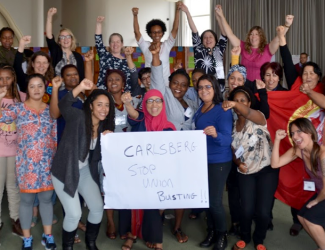
Women human rights defenders (WHRDs) worldwide defend their lands, livelihoods and communities from extractive industries and corporate power. They stand against powerful economic and political interests driving land theft, displacement of communities, loss of livelihoods, and environmental degradation.


Why resist extractive industries?

Extractivism is an economic and political model of development that commodifies nature and prioritizes profit over human rights and the environment. Rooted in colonial history, it reinforces social and economic inequalities locally and globally. Often, Black, rural and Indigenous women are the most affected by extractivism, and are largely excluded from decision-making. Defying these patriarchal and neo-colonial forces, women rise in defense of rights, lands, people and nature.

Critical risks and gender-specific violence

WHRDs confronting extractive industries experience a range of risks, threats and violations, including criminalization, stigmatization, violence and intimidation.  Their stories reveal a strong aspect of gendered and sexualized violence. Perpetrators include state and local authorities, corporations, police, military, paramilitary and private security forces, and at times their own communities.

Acting together

AWID and the Women Human Rights Defenders International Coalition (WHRD-IC) are pleased to announce “Women Human Rights Defenders Confronting Extractivism and Corporate Power”; a cross-regional research project documenting the lived experiences of WHRDs from Asia, Africa and Latin America.

We encourage activists, members of social movements, organized civil society, donors and policy makers to read and use these products for advocacy, education and inspiration.

Share your experience and questions!

Tell us how you are using the resources on WHRDs Confronting extractivism and corporate power.

◾️ How can these resources support your activism and advocacy?

◾️ What additional information or knowledge do you need to make the best use of these resources?

Share your feedback


Thank you!

AWID acknowledges with gratitude the invaluable input of every Woman Human Rights Defender who participated in this project. This project was made possible thanks to your willingness to generously and openly share your experiences and learnings. Your courage, creativity and resilience is an inspiration for us all. Thank you!

Related Content

Maritza Quiroz Leiva

Maritza Quiroz Leiva fue una activista social afrocolombiana, líder comunitaria y defensora de los derechos humanos de las mujeres. Como una de las 7,7 millones de colombianxs desplazadxs internamente por 50 años de conflicto armado, Maritza dedicó su trabajo de incidencia a apoyar los derechos de otras personas, en particular dentro de la comunidad afrocolombiana, que sufrían similares desplazamientos y violaciones de derechos.

Maritza era líder adjunta del Comité de Víctimas de Santa Marta, y una voz importante para quienes buscaban justicia en su comunidad, exigiendo reparaciones por las torturas, los secuestros, los desplazamientos y la violencia sexual que experimentaban las víctimas durante el conflicto armado. También trabajó activamente en el movimiento nacional por la redistribución de la tierra y la justicia agraria.

El 5 de enero de 2019 Maritza fue asesinada por dos individuos armados que irrumpieron en su casa. Tenía 60 años.

Maritza se sumó así a lxs otrxs cinco activistas y líderes sociales colombianxs que fueron asesinadxs durante la primera semana de 2019. En Colombia, ese año fueron asesinadxs un total de 107 defensorxs de derechos humanos.
 

Snippet Watch Stories (ES)

Conoce más sobre el impacto del foro a través de estas historias.

FRMag - Resistance Series

Série sur les résistances féministes

Explorer la série de photos

Snippet - AWID Community Jobs Board

AWID Members logo

AWID Community Jobs Board: Available for all AWID members, upon signing up for the AWID Community access. Whether you're looking for full-time advocacy roles, project-based consulting opportunities, paid internships or volunteer positions, this community-led jobs board is a valuable resource to help you find work that makes change possible.

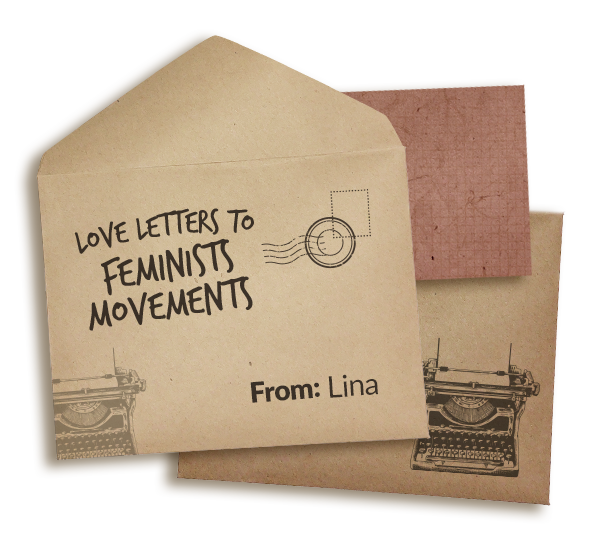
Love letter to Feminist Movements #2

To my beloved Feminist collective,

Love letter to feminist movements from Lina

I have belonged to you for as long as I can remember. As a young girl, I did not know there was a word -feminist- for us people, who aspire to overcome and dismantle the patriarchy, who seek refuge in the arms of inclusion and intersectionality, who treat people as equals regardless of their gender, race, sexuality, religion, and ethnicity, who are constantly learning to do better, to be better and to use their privilege to uplift others. 

When I was 14, my middle school French teacher, a 6ft tall thirty-year-old man, assaulted a female student in my class in front of all of us. The student, who was a childhood friend of mine, and several girls in my class went to the headmaster to report him, parents got involved, and the entire class of 30 students vouched for the girl. But all our attempts to hold him accountable failed and the administration covered up the girl’s story and he never got fired or persecuted. The girls in my class and I were outraged so we did what every young raging feminist would do. WE EGGED HIS CAR! and though the eggs get washed off easier and the paint we used to write “Pig” and “Khamaj '' -scumbag- needed to get scrubbed off. I will never forget how that made us girls feel. Liberated, enraged, happy, close-knit, and in power. The same feeling replicates in every feminist setting I have been in ever since. The teen feminist in me grew up to join Women Deliver, AWID, Unootha, facilitate feminist workshops at university, and even get persecuted for my feminist affiliation at 19, but that’s another story for another letter.

Feminist movements and spaces offer me safety and empowerment. They are the mothers we wished we had and the link we needed to connect and organize ourselves despite our differences against a common enemy that has been undermining everyone, patriarchy. It is through you that I learned to be resilient and to gather my strengths and skills and direct them towards uplifting others and bringing to light the marginalized and giving a voice to the voiceless.  

What I love most about you, feminist movements is that you mess up sometimes, you disregard and marginalize as well, you have bias as does every other movement but what makes you different is that you always strive to be better. Accountability is not something you’re afraid of and you are an ever-changing collective that reflects how altruism and philanthropy in the effort of gender equity change as time passes. 

May you always grow, may you do better, may you always rage, may you always roar, may you always love, may you always speak different tongues, and may you always be in power. 

Love, light, and rage, 
Lina