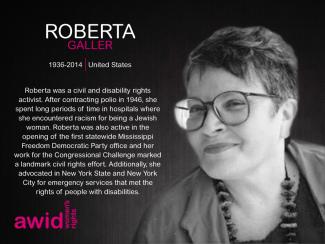
Roberta Galler
Over the past few years, a troubling new trend at the international human rights level is being observed, where discourses on ‘protecting the family’ are being employed to defend violations committed against family members, to bolster and justify impunity, and to restrict equal rights within and to family life.
The campaign to "Protect the Family" is driven by ultra-conservative efforts to impose "traditional" and patriarchal interpretations of the family, and to move rights out of the hands of family members and into the institution of ‘the family’.
Since 2014, a group of states have been operating as a bloc in human rights spaces under the name “Group of Friends of the Family”, and resolutions on “Protection of the Family” have been successfully passed every year since 2014.
This agenda has spread beyond the Human Rights Council. We have seen regressive language on “the family” being introduced at the Commission on the Status of Women, and attempts made to introduce it in negotiations on the Sustainable Development Goals.
AWID works with partners and allies to jointly resist “Protection of the Family” and other regressive agendas, and to uphold the universality of human rights.
In response to the increased influence of regressive actors in human rights spaces, AWID joined allies to form the Observatory on the Universality of Rights (OURs). OURs is a collaborative project that monitors, analyzes, and shares information on anti-rights initiatives like “Protection of the Family”.
Rights at Risk, the first OURs report, charts a map of the actors making up the global anti-rights lobby, identifies their key discourses and strategies, and the effect they are having on our human rights.
The report outlines “Protection of the Family” as an agenda that has fostered collaboration across a broad range of regressive actors at the UN. It describes it as: “a strategic framework that houses “multiple patriarchal and anti-rights positions, where the framework, in turn, aims to justify and institutionalize these positions.”
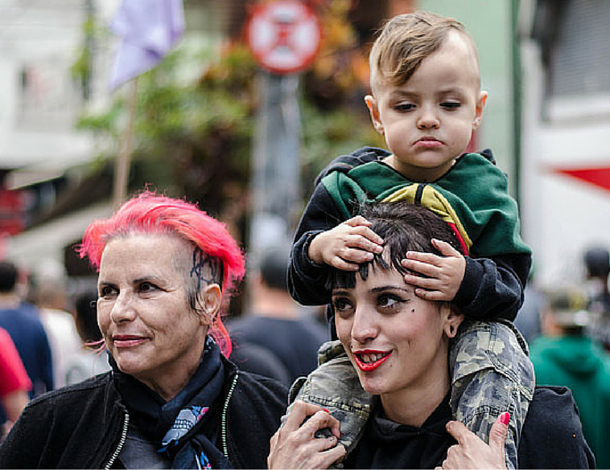
COZINHA OCUPAÇÃO 9 DE JULHO

To share your lived experience with mobilizing funding for your organizing
For any questions related to the Call for Forum Activities please contact us, selecting Forum Call for Activities as the subject of your email.
She was born in Bahia, the Northeastern part of Brazil. She is an immigrant, a social activist and a mother of 8 children.
Carmen experienced homelessness at the age of 35, after migrating to Sao Paulo on her own. This led her to become a fierce advocate for vulnerable, marginalized and invisibilized communities most affected by the housing crisis. She eventually became one of the founders of MSTC in 2000.
As a visionary political organizer and the current leader of the MSTC, Carmen’s work has laid bare the city's housing crisis and provided inspiration to others on different ways to organize and manage occupations. She stood strong on the forefront of several occupations. One of them is the 9 de Julho Occupation, which now serves as a stage for direct democracy, and a space where everyone can be heard, seen, appreciated and work together.
Carmen has been long celebrated for her boldness in giving life back to abandoned buildings in the heart of São Paulo.
To know more about her life, you can follow her on Instagram!

L’enquête est disponible en français, anglais, arabe, espagnol, portugais et russe!
This information will only be available when registration opens.
The full “Where is the Money for Feminist Organizing” report will be published in 2026.
To learn more how AWID has been shining a light on money for and against feminist movements check out the work of our Resourcing Feminist Movements Initiative here.
English, French, Spanish and Mandarin.
Metzineres
Le principal objectif de l’enquête WITM est de faire la lumière sur la situation financière de divers mouvements féministes, de défense des droits des femmes, pour la justice de genre, de défense des personnes LBTQI+ et des mouvements alliés dans le monde entier. Sur cette base, nous souhaitons démontrer l’importance d’orienter davantage de fonds, de meilleure qualité, et de transférer le pouvoir vers les mouvements féministes.
We will update the outcomes of this process in the website in due time.