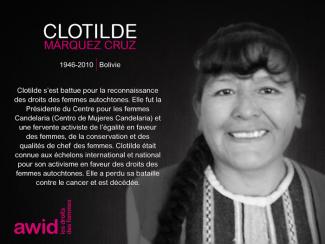
Clotilde Marquez Cruz
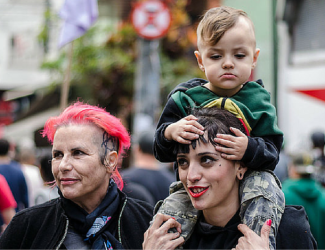
Over the past few years, a troubling new trend at the international human rights level is being observed, where discourses on ‘protecting the family’ are being employed to defend violations committed against family members, to bolster and justify impunity, and to restrict equal rights within and to family life.
The campaign to "Protect the Family" is driven by ultra-conservative efforts to impose "traditional" and patriarchal interpretations of the family, and to move rights out of the hands of family members and into the institution of ‘the family’.
Since 2014, a group of states have been operating as a bloc in human rights spaces under the name “Group of Friends of the Family”, and resolutions on “Protection of the Family” have been successfully passed every year since 2014.
This agenda has spread beyond the Human Rights Council. We have seen regressive language on “the family” being introduced at the Commission on the Status of Women, and attempts made to introduce it in negotiations on the Sustainable Development Goals.
AWID works with partners and allies to jointly resist “Protection of the Family” and other regressive agendas, and to uphold the universality of human rights.
In response to the increased influence of regressive actors in human rights spaces, AWID joined allies to form the Observatory on the Universality of Rights (OURs). OURs is a collaborative project that monitors, analyzes, and shares information on anti-rights initiatives like “Protection of the Family”.
Rights at Risk, the first OURs report, charts a map of the actors making up the global anti-rights lobby, identifies their key discourses and strategies, and the effect they are having on our human rights.
The report outlines “Protection of the Family” as an agenda that has fostered collaboration across a broad range of regressive actors at the UN. It describes it as: “a strategic framework that houses “multiple patriarchal and anti-rights positions, where the framework, in turn, aims to justify and institutionalize these positions.”
Notre nouveau rapport de recherche Le Diable est dans les détails aborde les lacunes du secteur du développement en termes de connaissance des fondamentalismes religieux et vise à améliorer la compréhension de la façon dont les fondamentalismes religieux entravent le développement et les droits des femmes en particulier. Il offre des recommandations aux acteurs-trices du développement quant aux manières d’éviter de renforcer les fondamentalismes par inadvertance et sur les stratégies pour les contrer. [CTA download link: Lire le document]
| Graphic1 | 1. Control of women’s bodies, sexuality, and choice are “warning signs” of rising fundamentalisms. |
| 2. Neoliberal economic policies have a particularly negative impact on women, and fuel the growth of religious fundamentalisms. | Graphic2 |
| Graphic3 | 3. Choosing religious organizations as default for partnerships builds their legitimacy and access to resources, and supports their ideology, including gender ideology. |
| 4.Everyone has multiple identities and should be defined by more than just their religion. Foregrounding religious identities tends to reinforce the power of religious fundamentalists. | Graphic4 |
| Graphic5 | 5. Religion, culture, and tradition are constantly changing, being reinterpreted and challenged. What is dominant is always a question of power. |
| 6. Racism, exclusion, and marginalization all add to the appeal of fundamentalists’ offer of a sense of belonging and a “cause”. | Graphic6 |
| Graphic7 | 7. There is strong evidence that the single most important factor in promoting women’s rights and gender equality is an autonomous women’s movement. |
Le Diable est dans les détails détaille les violations graves à l’encontre des droits humains, et ceux des femmes en particulier, légitimées par des fondamentalismes parrainés par les États ainsi que par des acteurs fondamentalistes non étatiques, tels que les milices, les organisations communautaires religieuses et les particuliers. Le renforcement fondamentaliste de normes sociales patriarcales régressives conduit à la montée de la violence contre les femmes, les filles et les femmes défenseuses des droits humains (WHRDs). La rapport met en avant ces éléments-clé pour comprendre et affronter la situation :
Les acteurs du développement sont en mesure de jouer un rôle important dans ce contexte. La capacité collective des acteurs du développement à reconnaître les fondamentalismes religieux et à les affronter de manière concertée est essentielle pour faire progresser la justice sociale, économique et de genre et les droits humains pour tous, dans un contexte de développement durable. En donnant la priorité à des partenaires progressistes dans le cadre de leurs activités, les acteurs du développement peuvent éviter d’octroyer des ressources ou de la légitimité aux fondamentalistes religieux. Les organisations de femmes ont de l’expertise sur le sujet et ont développé des stratégies pour lutter contre les fondamentalismes : Les acteurs du développement pourraient s’appuyer sur ces connaissances et s’engager à leurs côtés au sein de coalitions intersectorielles pour faciliter leur diffusion

THE TRANS EMPLOYMENT QUOTA
sanctioned by law is not being respected by companies and employers
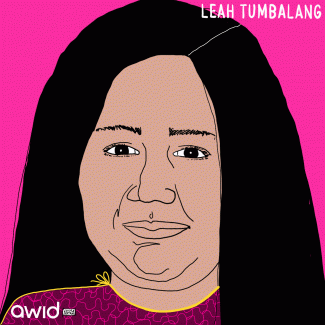
Leah Tumbalang était une femme lumad de Mindanao, aux Philippines. L’histoire du peuple autochtone Lumad recouvre des générations de résistance à l'exploitation minière à grande échelle par les entreprises, la protection des domaines ancestraux, des ressources et de la culture, et la lutte pour le droit à l'autodétermination.
Leah était une leader lumad, ainsi qu’une dirigeante du Kaugalingong Sistema Igpasasindog tu Lumadnong Ogpaan (Kasilo), une organisation paysanne lumad plaidant contre l'arrivée des sociétés minières à Bukidnon, dans la province de Mindanao. Elle s’est montrée inébranlable dans son activisme antimines, militant avec ferveur contre les effets dévastateurs de l'extraction minière sur l'environnement et les terres des peuples autochtones. Leah était également une organisatrice de la liste du parti Bayan Muna, membre du parti politique de gauche Makabayan.
Depuis près d’une décennie, Leah (ainsi que d’autres membres de Kasilo) recevait des menaces du fait qu'elle codirigeait l'opposition contre le déploiement de groupes paramilitaires soupçonnés d’être soutenus par des intérêts miniers.
« En tant que leader des Lumad au sein de leur communauté, elle est au premier plan pour lutter en faveur de leurs droits à la terre ancestrale et à l'autodétermination ». - Organisation régionale lumad de Kalumbay
Être en première ligne de la résistance implique également souvent d’être la cible de violences et victime de l’impunité. Leah a non seulement reçu de nombreuses menaces de mort, mais elle a été assassinée le 23 août 2019 à Valencia, dans la province de Bukidnon.
Selon un rapport de Global Witness, « les Philippines sont le pays à avoir été le plus touché en chiffre absolu » pour ce qui est des meurtres d’activistes écologistes en 2018.
Lisez le rapport du Global Witness, publié en juillet 2019
Para fortalecer a nossa voz e poder coletivos para obter mais recursos de melhor qualidade para a organização feminista, de direitos das mulheres, de LBTQI+ e de aliados globalmente.
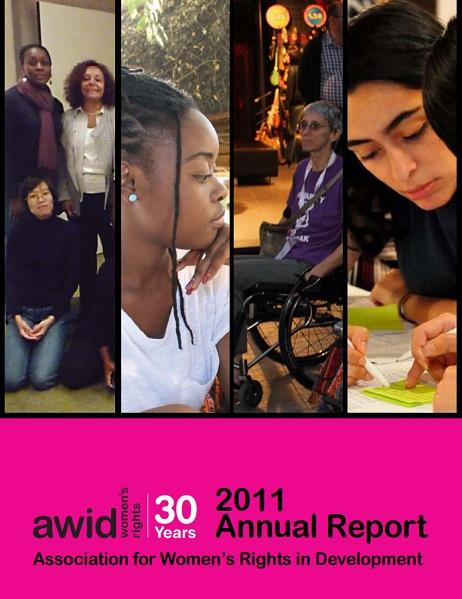
In order to achieve our mission, AWID works through multi-year interconnected programs which encompass a variety of strategies including knowledge production and dissemination, action-research, advocacy, alliance building, and convening strategic dialogues.
Our 2011 Annual Report provides key highlights of our work during the year to contribute to the advancement of women’s rights and gender equality worldwide.
Aprende más sobre las realidades feministas
Por favor no dudes en contactarnos.
“Mis sueños y objetivos siempre han sido los mismos que los de Lohana Berkins: que la cooperativa siga de pie y no cierre. Seguir dándole este lugar a nuestras compañeras travesti, darles trabajo y un lugar de apoyo”
Brisa Escobar,
presidenta de la Cooperativa
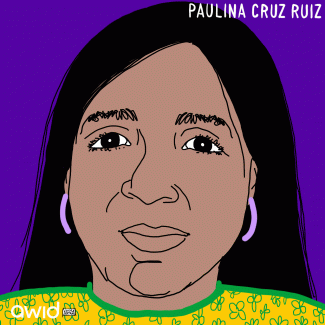
Paulina Cruz Ruiz, from the Rabinal, Baja Verapaz region of Guatemala, was an ancestral Maya Achí (Indigenous) authority and a human rights defender.
She was actively involved in community organizing and resistance, including legal measures against mining projects on Indigenous territory, projects that would severely affect and damage the socio-environmental fabric.
“The extractive industry model promoted by the Guatemalan government and the construction of large-scale development projects on indigenous lands without community consent has been a source of ongoing disputes with resistance movements.” - Minority Rights Group International
Paulina was also part of the March for Dignity, Life and Justice, in which on 1 May 2019 thousands of Guatemalans started a march of eight days against corruption and impunity in the prosecution and assassinations of human rights, peasant and Indigenous leaders and land defenders.
Paulina was murdered on 14 September 2019 near her home in the village of Xococ.
According to the Minority Rights Group International, “one of the major ongoing issues affecting Mayan communities is the increasing activity of the mining industry.”
Read more about the Mayans of Guatemala
Read more about the March for Dignity, Life and Justice
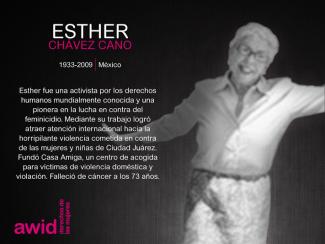
 Na última década, os financiadores investiram significativamente mais dinheiro na igualdade de género; no entanto, apenas 1% do financiamento filantrópico e de desenvolvimento foi efetivamente direcionado para apoiar diretamente mudanças sociais lideradas por feministas
Na busca da abundância, e para acabar com esta escassez crónica, o inquérito WITM é um convite para os defensores do feminismo e da justiça de género se envolverem no percurso da recolha coletiva de testemunhos e de casos para mobilizar mais recursos financeiros de melhor qualidade e recuperar o poder no ecossistema de financiamento neste momento. Em solidariedade com os movimentos que continuam invisibilizados, marginalizados e sem acesso a financiamento central, de longo prazo, flexível e baseado em fundos fiduciários, o inquérito WITM destaca o estado efetivo dos recursos, desafia soluções falsas e aponta.

Intensificamos los preparativos para el 13º Foro Internacional de AWID, pusimos mucha energía en los procesos de la Agenda 2030 y del financiamiento para el desarrollo, y hemos continuado nuestro trabajo diario y central en nuestras áreas prioritarias
En respuesta a esto, estamos saliendo de nuestros compartimentos estancos.
En todo el mundo, los movimientos por los derechos de las mujeres y otros movimientos están logrando articular cada vez más la naturaleza sistémica e interseccional de estos problemas y de muchos otros.

六大主軸支持起論壇中女性主義理念實現的框架。每個主軸都以實現的女性主義理念、經驗和願景為中心,探討抵抗與主張、奮鬥與另類選擇之間持續不斷的關係。我們希望能共同探討出女性主義理念實現的構成要素,並找到讓女性主義理念實現在人生不同領域,欣欣向榮發展的推動力。
這些實現的理念可能以生活方式、夢想和構思中的想法充分表達,或是寶貴的經驗和重要的時刻。
這些主軸並不是孤立的主題,而是與論壇活動相互串連的載體。我們預期許多活動會處在這些主題的交匯處,不同的爭取方式、社群和運動之間的交匯處。這些說明只是初步的描述,會隨著女性主義理念實現之旅的開展而不斷地演變。
本議題主軸聚焦以下問題:個人、社群和運動如何滿足自身的基本需求,並用以人為本及自然為本的方式,確保我們所需繁盛發展的資源。「資源」指的是食物、水、清潔的空氣以及金錢、勞動力、資訊、知識和時間等等。
女性主義者對抗以剝削和榨取掛帥的主流經濟體制,對於組織我們的經濟與社會生活,女性主義提出了方案、累積經驗與付諸實踐,本主軸借重其經驗,表彰深具影響力與啟發性者。糧食和種子主權、女性主義的工作和勞動願景、公正和永續的貿易體系等等,只是將要探索的一部分問題而已。我們將勇敢面對在壓迫的經濟體制下為了生存而產生的矛盾。
女性主義針對經濟正義與創造財富進行了廣泛分析,本主軸以此為前提研究組織與運動獲得資金與資源的主題,探討如何將資源轉移到需要的地方,如何從稅捐正義和基本收入的模式轉移到不同的慈善模式以及運動該如何發揮創意並自主開源。
我們力求樹立新的願景,並擴展女性主義治理、當責和正義以實現的理念與經驗。面對全球危機以及法西斯主義和基本教義派崛起,這個主軸以女性主義的、激進又解放的模式、實務與理念為重心,從在地到全球,探討社會與政治生活的組織。
本議題主軸將探討女性主義治理的樣貌,從女性主義的地方自治經驗、在民族國家以外建立制度,再到我們對多邊主義的願景。我們將交流社群、組織和運動中正義和當責製程序的經驗,包括修復式、以社群為本、轉型正義模式,而這些模式拒絕國家暴力和監獄產業綜合體。
以旅行、移民和難民以及女性主義組織經驗為中心,我們追求一個沒有致命邊境政權的世界:一個可以自由移動,旅程令人雀躍的世界。
科技在我們生活中扮演的角色越來越吃重,線上與線下真實之間的分野越來越模糊。女性主義者廣泛應用科技與線上空間來營造社群、相互學習和動員行動。借助線上空間,我們可以拓寬實體世界的邊界。但另一方面,數位通訊主要歸企業所有,而其對用戶的責任卻很少。資料探勘、監視和安全漏洞已成為常態,網路暴力和騷擾也是。
本議題主軸探討了數位化現實下的女性主義機遇和挑戰。我們將探討主導數位環境私有平台的替代方案、探索網路空間時維持身心健康的策略,以及如何應用科技來克服取得服務的挑戰。關於愉悅、信任和人際關係,我們將探索科技可發揮的潛力。
女性主義理念實現也存在於自身:體現的經驗。父權、順性別異性戀與資本主義掛帥結構的核心依然為對勞動、移動、生殖以及性相的掌控。要顛覆這種壓迫,擁有多元性別、性相和能力的人相會,打造喜悅、關懷、愉悅及強烈欣賞自我與他人的空間以及次文化。
本議題主軸將探討不同社會與文化中。女性、跨性別者、非二元性別者、非常規性別者、陰陽人,對於授意權、能動性與慾望的多元想法、敘事、想像力及文化表現。
我們將分享贏得生育權和正義的戰略,並闡明能實現和尊重人身自主、完整和自由的社會實務。該議題主軸串連不同抗爭和運動,相互交流彼此關於身心健康和愉悅的經驗和觀點。
想像一顆女性主義的星球。水的聲音聽起來如何?空氣的味道聞起來如何?土壤的觸感摸起來如何?星球與包括人類在內的生命之間有什麼關係?實現的女性主義理念亦即環境和氣候正義的實現。女性主義、原住民、去殖民和生態抗爭通常源自轉型願景以及人與自然之間的關係。
本議題主軸以我們星球的福祉為中心,反映了人類與地球互動並重塑地球的方式。永續女性主義星球包含探索傳統知識和生物多樣性,並學習女性主義關於以下議題的實踐,包括去成長(degrowth)、公社共有實踐、平行經濟模式、農業生態、糧食和能源主權倡議等。
雖然我們認為所有的議題主軸息息相關,但此主軸確實是貫串所有主軸,因此無論您提交的活動與哪一類議題主軸串連,我們也邀請您在提案中加入組織面向。
當今的世界是如何組織女性運動的?這個問題將我們的注意力轉移到參與者、權力機制、資源、領導力,我們所處的經濟狀態,我們對正義和當責的認知,數位化時代,以及對自治、身心健康和集體關懷的經驗上。我們希望所有議題主軸都可以創造一個可以誠實反思的空間,思考運動中的權力分配、資源分配與協商。
該論壇不僅僅是一個四天的會議。它更為女權主義現實實踐的運動增強之旅提供了另一個驛站,該旅程早已開始也將在論壇結束後繼續。

Ключевая цель исследования – осветить финансовое положение различных феминистских движений, инициатив за права женщин, гендерную справедливость, ЛГБТКИ+ и смежных движений по всему миру и, основываясь на этом, еще больше усилить аргументы в пользу увеличения объема денежных средств и передачи власти феминистским движениям.
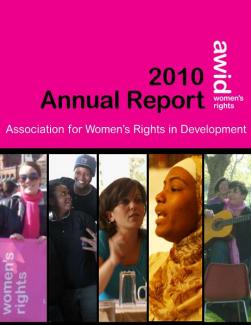
Nuestro Informe Anual 2010 pone en relieve nuestros acontecimientos y el impacto de nuestro trabajo durante el año.
Pueden leer como estamos traduciendo nuestra visión y misión en estrategias y actividades que hemos logrado en colaboración con miembros, socias y aliadas de AWID para avanzar los derechos de las mujeres y la igualdad de género a través del mundo.
Este informe también incluye vínculos a las últimas publicaciones de AWID.
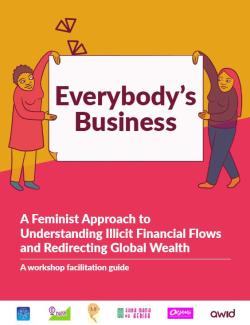
Download your facilitation guide in English
This Guide is also available in Spanish and Russian