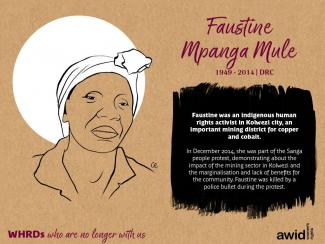
Faustine Mpanga Mule
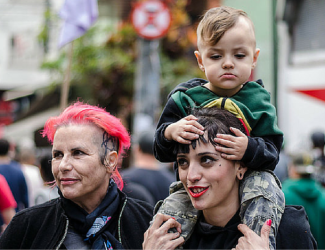
Over the past few years, a troubling new trend at the international human rights level is being observed, where discourses on ‘protecting the family’ are being employed to defend violations committed against family members, to bolster and justify impunity, and to restrict equal rights within and to family life.
The campaign to "Protect the Family" is driven by ultra-conservative efforts to impose "traditional" and patriarchal interpretations of the family, and to move rights out of the hands of family members and into the institution of ‘the family’.
Since 2014, a group of states have been operating as a bloc in human rights spaces under the name “Group of Friends of the Family”, and resolutions on “Protection of the Family” have been successfully passed every year since 2014.
This agenda has spread beyond the Human Rights Council. We have seen regressive language on “the family” being introduced at the Commission on the Status of Women, and attempts made to introduce it in negotiations on the Sustainable Development Goals.
AWID works with partners and allies to jointly resist “Protection of the Family” and other regressive agendas, and to uphold the universality of human rights.
In response to the increased influence of regressive actors in human rights spaces, AWID joined allies to form the Observatory on the Universality of Rights (OURs). OURs is a collaborative project that monitors, analyzes, and shares information on anti-rights initiatives like “Protection of the Family”.
Rights at Risk, the first OURs report, charts a map of the actors making up the global anti-rights lobby, identifies their key discourses and strategies, and the effect they are having on our human rights.
The report outlines “Protection of the Family” as an agenda that has fostered collaboration across a broad range of regressive actors at the UN. It describes it as: “a strategic framework that houses “multiple patriarchal and anti-rights positions, where the framework, in turn, aims to justify and institutionalize these positions.”

Our aim is to reach a total of 2,000 responses, almost double the number from the last WITM survey in 2011.
La Cooperativa Textil Nadia Echazú lleva el nombre de una pionera en la lucha por los derechos de las personas trans y travesti en Argentina. En muchos sentidos, el trabajo de la cooperativa celebra la vida y el legado de Nadia Echazú, que tuvo una notable trayectoria activista.
Era una de las cofundadoras de "El Teje", el primer periódico trans de América Latina, junto a Lohana Berkins, Diana Sacayán y Marlene Wayar. Nadia formó parte de la Asociación de Travestis, Transexuales y Transgéneros de Argentina (ATTTA) y fundó la Organización de Travestis y Transexuales de Argentina (OTTRA).
Poco después de su muerte, sus compañeras activistas fundaron la cooperativa en su nombre, para honrar la profunda huella que dejó en el activismo trans y travesti en Argentina.
Syndicat Réseau Solidarité
Avant de prendre sa retraite, elle a occupé de nombreux postes de haut niveau, notamment celui de membre de la cour d’appel et juge en chef adjointe de l’Ouganda. Elle a été la première femme ougandaise à occuper le poste de magistrat en chef entre 1973 et 1986 et la première femme à être nommée juge à la Haute Cour de justice en 1986.
Elle fut l'une des premières femmes à recevoir le titre de chevalier pontifical de l'histoire de l'Église catholique en Afrique. Elle est morte d'une crise cardiaque.


Чтобы заявить о себе как об эксперте по вопросам ресурсного обеспечения феминистских движений
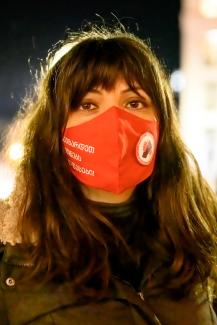
Asma was a leading Pakistani rights activist, fearless critic of the military’s interference in politics and a staunch defender of the rule of law.
She was the founding chairwoman of the Human Rights Commission of Pakistan, an independent group, and was a trustee of the International Crisis Group. She won international awards and served as the United Nations rapporteur on human rights and extrajudicial killings.
She is remembered fondly by colleagues and friends at AWID
“With her life, Asma rewrote the history that many of us were told as women. Asma changed the world. She changed it in Pakistan, and she changed it in our imaginations."


 За последнее десятилетие спонсоры выделили значительно больше средств на обеспечение гендерного равенства, однако лишь 1% средств, выделенных на благотворительность и развитие был направлен непосредственно на поддержку социальных изменений, проводимых под руководством феминисток.
В солидарности с движениями, которые по-прежнему остаются невидимыми, маргинализированными и не имеют доступа к основному, долгосрочному, гибкому и основанному на доверии финансированию, данный опрос освещает фактическое состояние ресурсного обеспечения, выявляет ошибочные решения и указывает на то, как необходимо изменить модели финансирования, чтобы движения процветали и решали сложные задачи современного мира.
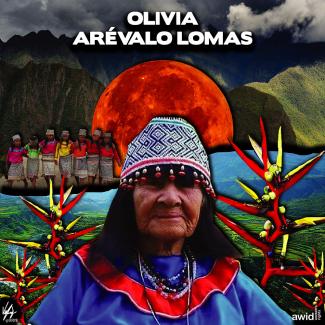
Olivia era la líder espiritual del pueblo indígena Shipibo Konibo.
Sabia mujer indígena y abuela, era conocida por practicar la medicina tradicional y cantar las canciones sagradas de su pueblo (Íkaros). Olivia Arévalo fue una activa defensora de los derechos culturales y ambientales de su pueblo. Su asesinato tuvo lugar en un contexto de conflicto territorial entre la comunidad shipibo y las empresas que quieren apropiarse de sus tierras para cultivar palma aceitera.
Integrantes de su comunidad han dicho: «Su muerte es una agresión contra toda la comunidad shipibo. Ella era la memoria viviente de su pueblo».
AWID выражает признательность всем тем, чьи идеи, аналитические работы и вклад в развитие легли в основу исследования «Где деньги?» и его дальнейшей адвокации.
Прежде всего, мы выражаем глубочайшую благодарность членам AWID и активисткам(-там), которые участвовали в консультациях, и провели этот опрос вместе с нами, щедро поделившись своим временем, аналитикой и теплом.
Мы выражаем признательность феминистским движениям, союзницам(-кам) и феминистским фондам, включая (но не ограничиваясь ими) Black Feminist Fund, Pacific Feminist Fund, ASTRAEA Lesbian Foundation for Justice, FRIDA Young Feminist Fund, Purposeful, Kosovo Women’s Network, Human Rights Funders Network, Dalan Fund and PROSPERA International Network of Women's Funds , за ваше тщательное исследование состояния ресурсного обеспечения, вдумчивый анализ и постоянную адвокацию для достижения более объемного и эффективного финансирования для феминистских организаций и движений за гендерную справедливость во всех контекстах.