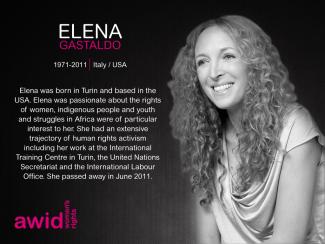
Philippe Leroyer | Flickr (CC BY-NC-ND 2.0)

Special Focus

AWID is an international, feminist, membership organisation committed to achieving gender equality, sustainable development and women’s human rights

Women Human Rights Defenders

WHRDs are self-identified women and lesbian, bisexual, transgender, queer and intersex (LBTQI) people and others who defend rights and are subject to gender-specific risks and threats due to their human rights work and/or as a direct consequence of their gender identity or sexual orientation.

WHRDs are subject to systematic violence and discrimination due to their identities and unyielding struggles for rights, equality and justice.

The WHRD Program collaborates with international and regional partners as well as the AWID membership to raise awareness about these risks and threats, advocate for feminist and holistic measures of protection and safety, and actively promote a culture of self-care and collective well being in our movements.


Risks and threats targeting WHRDs  

WHRDs are exposed to the same types of risks that all other defenders who defend human rights, communities, and the environment face. However, they are also exposed to gender-based violence and gender-specific risks because they challenge existing gender norms within their communities and societies.

By defending rights, WHRDs are at risk of:

  • Physical assault and death
  • Intimidation and harassment, including in online spaces
  • Judicial harassment and criminalization
  • Burnout

A collaborative, holistic approach to safety

We work collaboratively with international and regional networks and our membership

  • to raise awareness about human rights abuses and violations against WHRDs and the systemic violence and discrimination they experience
  • to strengthen protection mechanisms and ensure more effective and timely responses to WHRDs at risk

We work to promote a holistic approach to protection which includes:

  • emphasizing the importance of self-care and collective well being, and recognizing that what care and wellbeing mean may differ across cultures
  • documenting the violations targeting WHRDs using a feminist intersectional perspective;
  • promoting the social recognition and celebration of the work and resilience of WHRDs ; and
  • building civic spaces that are conducive to dismantling structural inequalities without restrictions or obstacles

Our Actions

We aim to contribute to a safer world for WHRDs, their families and communities. We believe that action for rights and justice should not put WHRDs at risk; it should be appreciated and celebrated.

  • Promoting collaboration and coordination among human rights and women’s rights organizations at the international level to  strengthen  responses concerning safety and wellbeing of WHRDs.

  • Supporting regional networks of WHRDs and their organizations, such as the Mesoamerican Initiative for WHRDs and the WHRD Middle East and North Africa  Coalition, in promoting and strengthening collective action for protection - emphasizing the establishment of solidarity and protection networks, the promotion of self-care, and advocacy and mobilization for the safety of WHRDs;

  • Increasing the visibility and recognition of  WHRDs and their struggles, as well as the risks that they encounter by documenting the attacks that they face, and researching, producing, and disseminating information on their struggles, strategies, and challenges:

  • Mobilizing urgent responses of international solidarity for WHRDs at risk through our international and regional networks, and our active membership.

Related Content

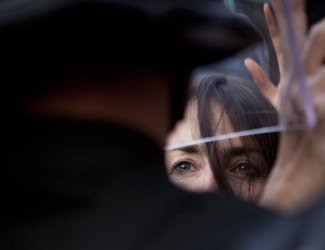
Anna Campbell (şehid Hêlîn Qerecox)

Anna grew up in Lewes, Sussex (UK) and, after deciding not to pursue her English degree at Sheffield University, she moved to Bristol and became a plumber.

She spent much of her time defending the marginalised and under-privileged, attending anti-fascist rallies, and offering support to the women of Dale Farm when they were threatened with eviction. A vegan and animal lover, she attended hunt sabotages and her name is honoured on PETA's 'Tree of Life' Memorial. Anna went to Rojava in May 2017 with a strong commitment to women's empowerment, full representation of all ethnicities and protection of the environment.

Anna died on March 15, 2018 when she was hit by a Turkish airstrike in the town of Afrin, northern Syria. Anna was fighting with the Women's Protection Forces (YPJ), when she was killed.

 

Anna Campbell (şehid Hêlîn Qerecox), UK

#MeToo in China


The #MeToo movement in China was ignited in January 2018, impelled by the momentum of the #MeToo movement around the globe. The movement was a response to cultural and systemic problems in relation to gender and power within China. The foundation of the movement was laid over decades, with many years of debate and advocacy for gender equality finally erupting into a tremendous force across society. #MeToo has been driven mainly by young people, among whom are countless anonymous women and their allies, and they search for opportunities to realize the ultimate “Chinese Dream”: to transform China into a country with gender equality.
 
The environment for #MeToo movement is extremely adverse in China: the rule of law, the fairness and transparency of government action, and freedom of speech cannot be taken for granted by the movement in China but are the very goals it fights for. From the beginning, it has been an intense struggle, with every victim or activist who comes forward running tremendous risks. From being silenced, humiliated, or retaliated against, to having their safety jeopardized, every success of the #MeToo movement has been won by those who are courageous enough to bear the costs of speaking out and defying censorship.
 
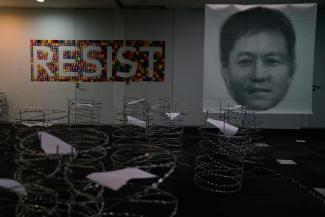
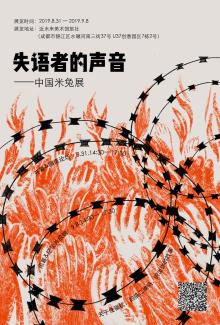
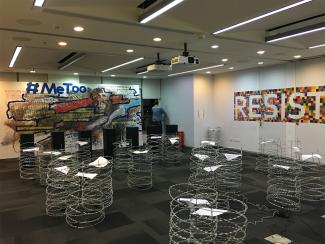
#MeToo in China Exhibition was first held in 2019 and toured in 5 cities. The aim of the exhibition is to bring the personal experiences of the victims and activists to greater prominence and, through engagement with these stories, to inspire our audience to join in the fight. The exhibition has itself become a part of the #MeToo struggle—the exhibition has been beset by challenges on its tour throughout China, on more than one occasion even facing closure.

#MeToo China Image
#MeToo China Image
#MeToo China Image

Our values - esponsibility, Accountability, and Integrity

Responsabilidad, rendición de cuentas e integridad

Nos esforzamos por ser transparentes, por utilizar nuestros recursos en forma responsable, por ser equitativxs en nuestras colaboraciones, y por ser responsables e íntegrxs con nuestrxs afiliadxs, contrapartes y donantes, y con los movimientos con los que trabajamos y en los que participamos. Estamos comprometidxs a reflejar nuestras experiencias, a compartir abiertamente nuestrxs aprendizajes, y a esforzarnos por cambiar nuestras prácticas en consecuencia.

Body

Qual é o objetivo do inquérito WITM?

O objetivo principal do inquérito WITM é chamar a atenção para o estado financeiro dos diversos movimentos feministas, de direitos das mulheres, de justiça de género, de LBTQI+ e de aliados globalmente, e com base nisto, fortalecer ainda mais o argumento para transferir mais recursos de melhor qualidade e poder para os movimentos feministas.

Snippet FEA Union Otras Photo 5 (FR)

Photo de personnes assises sur des chaises rouges dans une salle de conférence

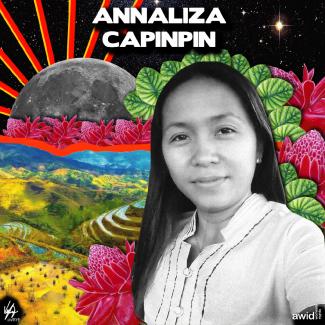
Annaliza Dinopol Gallardo Capinpin

Conocida como «Ate Liza», Annaliza era la presidenta del Consejo de la Reforma Agraria para lxs Pionerxs de Mindanao, un grupo coodinador general en Tacurong City, Filipinas.

Querida madre de cuatro hijxs, maestra y líder comunitaria, Annaliza es recordada por su comunidad como «la que lidera cuando nadie quiere liderar, la que habla cuando nadie quiere hablar, la que se puso de pie con coraje para ayudar a lxs beneficiarxs de la reforma agraria a ser dueñxs de sus tierras».

Atacantes desconocidos la ultimaron a balazos en frente de la Universidad Estatal Sultán Kudarat (SKSU), mientras se dirigía a la Escuela Secundaria Nacional Salabaca, en Esperanza.

Su familia ha dicho: «Naghihintay pa rin kami ng hustisya para sa kanya» (todavía estamos esperando justicia para ella).


Nicole Barakat

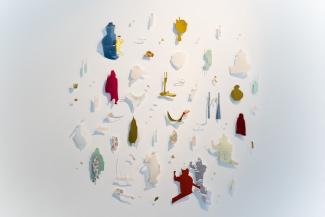
nicole barakat -verge exhibition april 2018
“We transcend time and place” [«Trascendemos el tiempo y el lugar»], papel recuperado cortado a mano (2017)
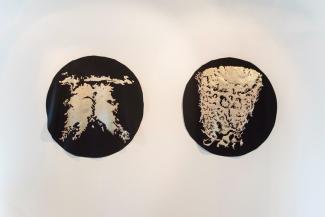
nicole barakat -verge exhibition april 2018
“We will remember who we are and we will persist” [«Recordaremos quiénes somos y persistiremos»], lamé cortado a mano bordado en algodón sobre seda de lana (2018)
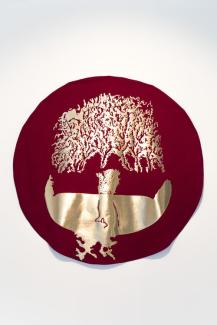
nicole barakat -verge exhibition april 2018
“We will return home” [«Regresaremos a casa»], lamé cortado a mano bordado en seda sobre terciopelo de algodón (2018)
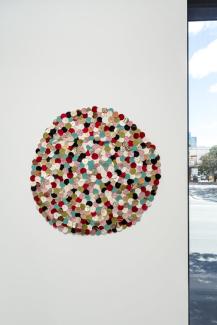
verge march 18 - document photography
“We will heal in the now” [«Sanaremos en el ahora»], seda cortada a mano, lana, lamé, algodón, impresión digital directa de satén sobre tela de lino (2018)

somos infinitxs 

Una exposición de Nicole Barakat que encarna su reconexión con los objetos de la diáspora de sus tierras ancestrales en la región del Sudoeste Asiático y África del Norte (SWANA, por sus siglas en inglés).
 
Barakat presenta una colección de obras textiles como manifestaciones de su práctica de conectarse con los objetos desplazados, y a menudo robados, que son exhibidos en colecciones de museos occidentales que incluyen  el Museo del Louvre de París, el Museo Británico de Londres y el Nicholson Museum de Sydney.
 
Para burlar a los guardianes y fisurar las vitrinas que retienen estos objetos ancestrales, Barakat recupera formas de conocimiento precoloniales, no lineales y receptivas que son, a menudo, devaluadas y desestimadas por las instituciones coloniales y patriarcales, utilizando la adivinación con la borra del  café, el trabajo con los  sueños, la escucha intuitiva y las conversaciones con los objetos mismos (fuente).

Sobre Nicole Barakat

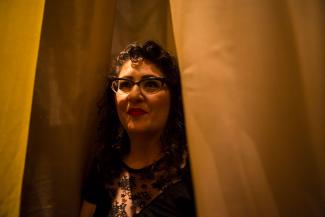
Nicole Barakat portrait
Nicole Barakat es una artista femme queer de SWANA, que nació y vive en las tierras de Gadigal (llamadas Sydney) en Australia. Trabaja con procesos intuitivos y de escucha profunda, con la intención de transformar las condiciones de la vida cotidiana. Su obra se desarrolla a través de métodos artísticos no convencionales, creando objetos intrincados que plasman el amor y la paciencia característicos de las prácticas textiles tradicionales.
 
Sus trabajos incluyen dibujos en papel y en tela cortados y cosidos a mano, esculturas realizadas con su propio cabello, tela y materiales vegetales, así como obras en vivo en las que utiliza su voz como material.
 
La práctica creativa de Nicole está arraigada en el re-cuerdo y la re-colección de sus conocimientos ancestrales, incluyendo la adivinación con la borra del café y, más recientemente, el trabajo con esencias de plantas y flores para el cuidado y la sanación comunitaria.

Nicole’s creative practice is rooted in re-membering and re-gathering her ancestral knowing, including coffee divination and more recently working with plants and flower essences for community care and healing. 

14th AWID international Forum is cancelled (forum page)

Le Forum international de l’AWID est annulé

Étant donnée la situation mondiale, notre Conseil d’administration a pris la décision difficile d’annuler le Forum, qui devait avoir lieu en 2021 à Taipei. 

Lire le communiqué

Main image
cfa_header_v8.2.png
Body

É possível existir várias respostas para o inquérito WITM em nome de um grupo específico?

Não, solicitamos apenas um inquérito completo por grupo.

Snippet FEA Principles of work Transparency (EN)

A pink umbrella

TRANSPARENCY

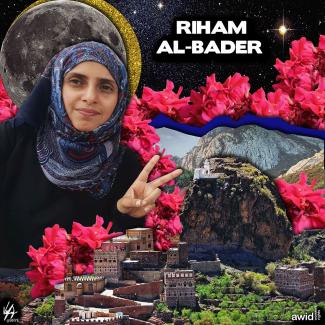
Riham Al-Bader

Riham était avocate et activiste engagée à suivre de près la question des violations des droits au Yémen.

Elle a travaillé avec d'autres activistes pour fournir de la nourriture et de l'eau aux civils piégés par les milices houthies dans la banlieue de la ville de Taiz.

Riham a été tuée en février 2018. La cause de son décès, soit par la main d’un tireur d'élite ou par un tir de mortier, n’a pas été confirmée. Personne n'a été tenu responsable de son meurtre.


Riham Al Bader, Yemen

Les tendances antidroits au sein des systèmes régionaux des droits humains

Chapter 6

À la Commission africaine et au Système interaméricain, les antidroits promeuvent les notions essentialistes de culture et de genre pour miner les avancées en matière de droits et décrédibiliser la redevabilité. Les antidroits gagnent en influence dans les systèmes de protection des droits humains régionaux et internationaux.

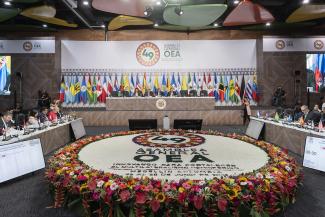
2019 JUN 27 Meeting of the Summit Implementation Review Group in Colombia
© Juan Manuel Herrera/OAS/Flickr
2019 JUIN 27 Réunion du Groupe d'examen de la mise en œuvre du Sommet en Colombie

La Commission africaine des droits de l’Homme et des peuples commence à présenter les droits des femmes et droits sexuels comme mettant en danger sa capacité à adresser les « droits réels » et contraires aux « valeurs africaines », un précédent inquiétant à l’égard des droits. Le retrait de son statut d’observatrice à la Coalition des lesbiennes africaines est un exemple de cette tendance, et traduit la répression de l’engagement féministe panafricaniste.

Au sein de l’Organisation des États américains (OEA) et du Système interaméricain de protection des droits humains, les stratégies antidroits incluent l’ONGisation de groupes religieux, l’adoption d’un langage séculier et la prise de contrôle de cadres discriminatoires. L’influence antidroits a pris plusieurs formes, et notamment l’intimidation d’activistes trans et l’entrave à l’introduction d’un langage progressif dans les résolutions.

Sommaire

  • Réduire les féministes au silence au sein du Système africain de protection des droits humains
  • Les groupes antidroits en Amérique latine : l’Assemblée générale de l’Organisation des États américains (OEA) et le Système interaméricain de protection des droits humains

Lire le chapitre complet

Contributors of toolkit (WITM landing page)

We would like to thank the contributors and advisors of this toolkit:

  • Angelika Arutyunova
  • Cindy Clark
  • Kamardip Singh
  • Martin Redfern
  • Pei Yao Chen
  • Srilatha Batliwala
  • Veronica Vidal

    Download the Toolkit in PDF

Body

هل استطيع تعبئة الاستطلاع خارج KOBO ومشاركتكم/ن الأجوبة عن طريق البريد الالكتروني؟

ما لم تكن هناك مشكلات في إمكانية الوصول و/أو إذا كنت تملأ/ئي الاستبيان بلغات أخرى، فإننا نشجعك بشدة على استخدام KOBO لجمع وتحليل البيانات الموحدة للاستطلاع.