Benjaline Hernandez
WHRDs are self-identified women and lesbian, bisexual, transgender, queer and intersex (LBTQI) people and others who defend rights and are subject to gender-specific risks and threats due to their human rights work and/or as a direct consequence of their gender identity or sexual orientation.
WHRDs are subject to systematic violence and discrimination due to their identities and unyielding struggles for rights, equality and justice.
The WHRD Program collaborates with international and regional partners as well as the AWID membership to raise awareness about these risks and threats, advocate for feminist and holistic measures of protection and safety, and actively promote a culture of self-care and collective well being in our movements.
WHRDs are exposed to the same types of risks that all other defenders who defend human rights, communities, and the environment face. However, they are also exposed to gender-based violence and gender-specific risks because they challenge existing gender norms within their communities and societies.
We work collaboratively with international and regional networks and our membership
We aim to contribute to a safer world for WHRDs, their families and communities. We believe that action for rights and justice should not put WHRDs at risk; it should be appreciated and celebrated.
Promoting collaboration and coordination among human rights and women’s rights organizations at the international level to strengthen responses concerning safety and wellbeing of WHRDs.
Supporting regional networks of WHRDs and their organizations, such as the Mesoamerican Initiative for WHRDs and the WHRD Middle East and North Africa Coalition, in promoting and strengthening collective action for protection - emphasizing the establishment of solidarity and protection networks, the promotion of self-care, and advocacy and mobilization for the safety of WHRDs;
Increasing the visibility and recognition of WHRDs and their struggles, as well as the risks that they encounter by documenting the attacks that they face, and researching, producing, and disseminating information on their struggles, strategies, and challenges:
Mobilizing urgent responses of international solidarity for WHRDs at risk through our international and regional networks, and our active membership.
Consideramos a Taipéi como el mejor lugar de la región Asia-Pacífico para construir ese espacio seguro y rebelde destinado a nuestra comunidad feminista global.
Taipéi ofrece un cierto grado de estabilidad y seguridad para la diversidad de participantes que convocamos al Foro. Tiene también capacidad logística, y resulta accesible para muchxs viajerxs (con la facilitación de un trámite de visa electrónico para conferencias internacionales).
El Foro es bien recibido por el movimiento feminista local, que está muy interesado en interactuar con feministas de todo el mundo.

Find and create connections. There are over 9,000 AWID members, all working to address complementary, interconnected issues. This diversity supports the sustainability of feminist movements and actors.
Related content
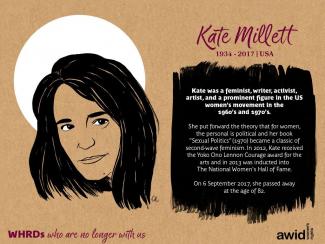
The Guardian: Kate Millett Obituary
New York Times: Kate Millett, Ground-Breaking Feminist Writer, Is Dead at 82
The New Yorker: A Last Interview with Kate Millett
Nos solidarizamos unxs con otrxs, y con las distintas luchas por la justicia y las libertades. Procuramos movilizar y fortalecer la acción colectiva, y practicamos formas significativas de trabajar en conjunto.
Oui, s’il vous plaît. Le monde a changé depuis 2021, et nous vous invitons à proposer une activité qui reflète vos réalités et priorités d’aujourd’hui.
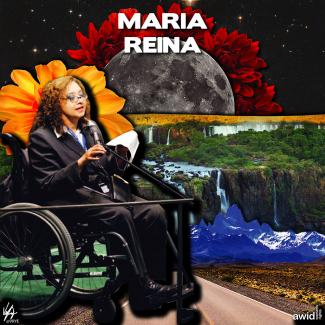
Representó al Consorcio Internacional sobre Discapacidad y Desarrollo (IDDC por su sigla en inglés) durante la negociación de la Convención sobre los Derechos de las Personas con Discapacidad (2001-2006). Su trabajo estaba dedicado a la implementación del objetivo de la Convención: el goce pleno de los derechos humanos universales por, para y con las personas con discapacidades, en pos de un mundo inclusivo, accesible y sostenible.
En sus propias palabras, su liderazgo consistía en «servir a la comunidad de personas con discapacidad, comenzando por aquellas pequeñas tareas que otrxs pueden no querer realizar».
Falleció el 27 de octubre de 2017 en su ciudad natal de Rosario, Argentina.
En esta nota puede leerse más sobre María Verónica Reina, en sus propias palabras.