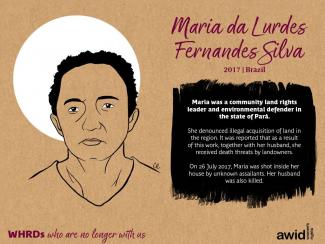
Maria da Lurdes Fernandes Silva
Over the past few years, a troubling new trend at the international human rights level is being observed, where discourses on ‘protecting the family’ are being employed to defend violations committed against family members, to bolster and justify impunity, and to restrict equal rights within and to family life.
The campaign to "Protect the Family" is driven by ultra-conservative efforts to impose "traditional" and patriarchal interpretations of the family, and to move rights out of the hands of family members and into the institution of ‘the family’.
Since 2014, a group of states have been operating as a bloc in human rights spaces under the name “Group of Friends of the Family”, and resolutions on “Protection of the Family” have been successfully passed every year since 2014.
This agenda has spread beyond the Human Rights Council. We have seen regressive language on “the family” being introduced at the Commission on the Status of Women, and attempts made to introduce it in negotiations on the Sustainable Development Goals.
AWID works with partners and allies to jointly resist “Protection of the Family” and other regressive agendas, and to uphold the universality of human rights.
In response to the increased influence of regressive actors in human rights spaces, AWID joined allies to form the Observatory on the Universality of Rights (OURs). OURs is a collaborative project that monitors, analyzes, and shares information on anti-rights initiatives like “Protection of the Family”.
Rights at Risk, the first OURs report, charts a map of the actors making up the global anti-rights lobby, identifies their key discourses and strategies, and the effect they are having on our human rights.
The report outlines “Protection of the Family” as an agenda that has fostered collaboration across a broad range of regressive actors at the UN. It describes it as: “a strategic framework that houses “multiple patriarchal and anti-rights positions, where the framework, in turn, aims to justify and institutionalize these positions.”
AGROECOLOGY AND FOOD SOVEREIGNTY AS RESISTANCE |
Today, large-scale industrial food production uses single-crop plantations, genetically modified organisms and other pesticides that destroy the land and knowledge of local communities. |
Agroecology is a resistance to corporate-driven agriculture. It prioritizes smaller scale agriculture, multiple crops and diversified food production, and the centering of local knowledge and practices. Agroecology goes hand-in-hand with demands for food sovereignty, or the “right of peoples to healthy and culturally appropriate food produced through ecologically sound and sustainable methods, and their right to define their own food and agriculture systems”(Via Campesina, Declaration of Nyéléni).
The role of women, indigenous and rural communities and people of color from the Global South is absolutely essential when it comes to food systems. Feminist agroecologists are working to dismantle oppressive gender roles and systems of patriarchy embedded within food production. As shown by the heroines of NSS, they are generating a liberatory agroecology by strengthening community resilience, empowering women peasants and farmers, and preserving local traditions, territories, and knowledge of food-producing communities.
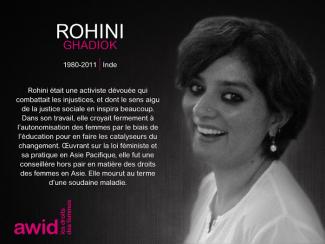
Cette année, nous rendons hommage à dix-neuf défenseuses des droits humains originaires de la région Amérique latine et Caraïbes. Parmi elles, seize ont été assassinées, dont six journalistes et quatre défenseuses des droits des personnes LGBT*QI. Nous vous invitons à vous joindre à nous pour commémorer la vie et le travail de ces femmes. Faites circuler les mèmes figurant ci-dessous auprès de vos collègues et amis ainsi que dans vos réseaux et twittez en utilisant les hashtags #WHRDTribute et #16Jours.
S'il vous plaît cliquez sur chaque image ci-dessous pour voir une version plus grande et pour télécharger comme un fichier


Au besoin, vous avez la possibilité de sauvegarder vos réponses en cours d’enquête, pour y revenir plus tard. KOBO enregistrera vos brouillons de réponses dans le coin supérieur gauche de la page de l'enquête et rechargera votre dossier lorsque vous reviendrez à l'enquête. Assurez-vous simplement de continuer à partir du même ordinateur et du même navigateur.
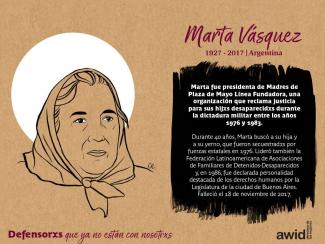
Este año, el Tributo Virtual honra a 7 defensoras de derechos humanos de la región de Asia meridional y Sudeste asiático. Son defensoras que han hecho aportes fundamentales para lograr avances en los derechos humanos y de las mujeres, los derechos de los pueblos indígenas y el derecho a la educación. Estas defensoras se desempeñaron como abogadas, activistas de derechos de las mujeres, académicas y políticas. Únete a AWID para conmemorar a estas defensoras de derechos humanos, su trabajo y su legado, compartiendo los memes aquí incluidos con tus colegas, amistades y redes; y tuiteando las etiquetas #WHRDTribute y #16Días.
Por favor, haz click en cada imagen de abajo para ver una versión más grande y para descargar como un archivo.


No, it's not. This survey builds on AWID’s 20-year history of mobilizing more and better funding for feminist-led social change and is the third iteration of our Where is the money for feminist organizing? research. Our aim is to repeat the WITM survey every 3 years.
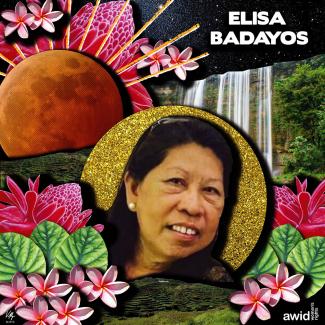
Elle organisait également les communautés urbaines pauvres dans la province de Cebu et travaillait avec Desaparecidos, une organisation de familles de disparu-e-s.
Le 28 novembre 2017, lors d'une mission d'enquête sur des violations des droits fonciers dans la région, Elisa et deux de ses collègues ont été abattu-e-s par deux hommes non identifiés à Barangay San Ramon, ville de Bayawan, dans la province de Negros Oriental.
Elle laisse quatre enfants derrière elle.
Antes de comenzar a aplicar la metodología de investigación WITM, es importante que te prepares y que sepas con qué te vas a encontrar.
Antes de implementar la metodología de investigación WITM de AWID, te recomendamos que leas el Manual completo.
Si bien el propósito de este Manual es democratizar las investigaciones sobre WITM, tu organización podrá usar esta metodología en la medida de su capacidad, es decir, sus recursos y experiencia en investigación.
Utiliza la Planilla «¿Estoy listx?» para evaluar en qué medida estás preparadx para comenzar la investigación WITM. Cuantas más preguntas de la planilla puedas responder, más preparadx estarás para embarcarte en la investigación.
Antes de comenzar cualquier investigación, te recomendamos evaluar los lazos que tiene tu organización con la comunidad y la confianza que ha generado en ella.
En muchos contextos, algunas organizaciones tal vez no quieran compartir abiertamente información financiera por distintos motivos que van desde la preocupación acerca de cómo se utilizará la información hasta el miedo frente a la «competencia» por el financiamiento o la ansiedad ante las restricciones cada vez mayores que impone el gobierno a las organizaciones de la sociedad civil.
Cuando desarrolles vínculos con otras organizaciones y te pongas en contacto con ellas de manera informal en el estadio previo a dar inicio a la investigación, ser clarx acerca de tus objetivos te ayudará a generar confianza. La transparencia permitirá que quienes participen en la investigación sepan por qué estás recogiendo información y qué beneficios podrá esperar la comunidad de tu trabajo.
Recomendamos asegurarte de que la información se recoja de manera confidencial, preservando el anonimato de quienes respondan. Esto permitirá que lxs participantes se sientan más cómodxs compartiendo información delicada contigo.
También recomendamos que consultes la Planilla «¿Estoy listx?» para evaluar tus avances.
Si tienes alguna pregunta o duda, contáctanos a través del formulario disponible aquí, indicando «Encuesta ¿Dónde está el dinero?» en el título del mensaje. También puede escribirnos a [email protected].
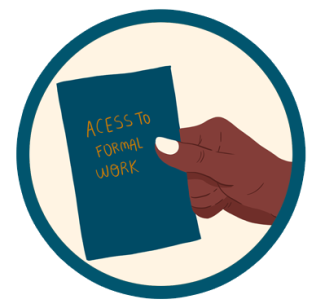
Only 18% of trans and travesti people in Argentina have access to formal work.
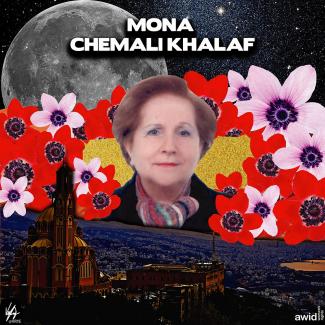
Mona was an economist and an independent consultant on gender and development issues.
She was a former Professor of Economics and Director of the Institute for Women's Studies in the Arab World at the Lebanese American University.
She passed away suddenly on January 6, 2018.
Friends and former colleagues say of Mona: “When we celebrate her life, the best thing we can do is commit to continuing what she started: gender equality no matter what.”