Flickr/Leonardo Veras (CC BY 2.0)

Special Focus

AWID is an international, feminist, membership organisation committed to achieving gender equality, sustainable development and women’s human rights

Protection of the Family

The Issue

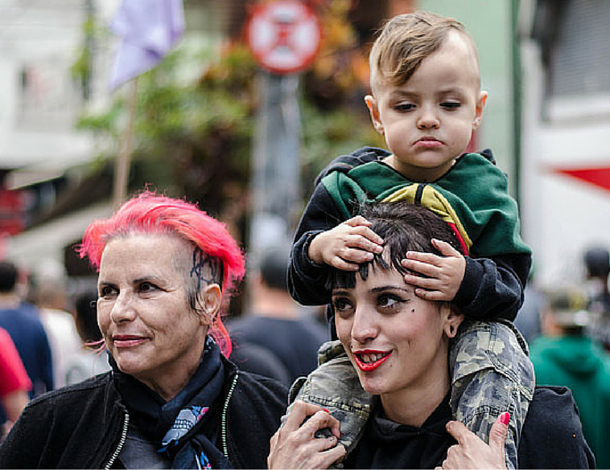
Over the past few years, a troubling new trend at the international human rights level is being observed, where discourses on ‘protecting the family’ are being employed to defend violations committed against family members, to bolster and justify impunity, and to restrict equal rights within and to family life.

The campaign to "Protect the Family" is driven by ultra-conservative efforts to impose "traditional" and patriarchal interpretations of the family, and to move rights out of the hands of family members and into the institution of ‘the family’.

“Protection of the Family” efforts stem from:

  • rising traditionalism,
  • rising cultural, social and religious conservatism and
  • sentiment hostile to women’s human rights, sexual rights, child rights and the rights of persons with non-normative gender identities and sexual orientations.

Since 2014, a group of states have been operating as a bloc in human rights spaces under the name “Group of Friends of the Family”, and resolutions on “Protection of the Family” have been successfully passed every year since 2014.

This agenda has spread beyond the Human Rights Council. We have seen regressive language on “the family” being introduced at the Commission on the Status of Women, and attempts made to introduce it in negotiations on the Sustainable Development Goals.


Our Approach

AWID works with partners and allies to jointly resist “Protection of the Family” and other regressive agendas, and to uphold the universality of human rights.

In response to the increased influence of regressive actors in human rights spaces, AWID joined allies to form the Observatory on the Universality of Rights (OURs).  OURs is a collaborative project that monitors, analyzes, and shares information on anti-rights initiatives like  “Protection of the Family”.

Rights at Risk, the first OURs report, charts a map of the actors making up the global anti-rights lobby, identifies their key discourses and strategies, and the effect they are having on our human rights.   

The report outlines “Protection of the Family” as an agenda that has fostered collaboration across a broad range of regressive actors at the UN.  It describes it as: “a strategic framework that houses “multiple patriarchal and anti-rights positions, where the framework, in turn, aims to justify and institutionalize these positions.”
 

Related Content

Snippet FEA Sabrina Sanchez Bio (FR)

Nous vous présentons Sabrina Sanchez, incroyable femme trans, migrante, travailleuse du sexe, organisatrice, transféministe et l'une des fondatrices du syndicat OTRAS.

Originaire de Mexico, elle a émigré en Espagne il y a 17 ans après avoir obtenu son diplôme en communication et a commencé à travailler comme travailleuse du sexe.

Il ne fallut pas longtemps avant qu'elle ne s'implique dans l'activisme trans et l'activisme des travailleur·euses du sexe à Barcelone. Après avoir rejoint l'Association des Professionnel·les du Sexe (Asociación de Profesionales del Sexo, Aprosex), elle a commencé à travailler dans son secrétariat et a fondé le syndicat espagnol des travailleur·euses du sexe OTRAS.

Elle vit actuellement à Amsterdam, où elle travaille comme coordinatrice de l'Alliance Européenne des Travailleur·euses du Sexe.

Fait divers: elle est aussi mécanicienne automobile et adepte de la course à pied!

Forum Theme (Forum page)

Thème du Forum

Le thème du 14e Forum international de l'AWID est «Réalités féministes : notre pouvoir en action».

Ce Forum célébrera et amplifiera les propositions audacieuses autour de nous, à tous les stades de déveoppement ! 

En savoir plus

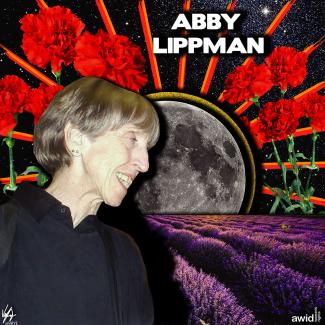
Abby Lippman

Abby fue una feminista y activista por los derechos humanos pionera, y antes epidemióloga de McGill University.

Abby era conocida por defender causas sociales, y por sus lúcidas críticas a las tecnologías reproductivas y otros temas médicos. En particular, hizo campaña contra lo que ella denominó la «genetización» de las tecnologías reproductivas, contra la terapia de reemplazo hormonal, y a favor de más y mejor investigación antes de la aprobación de descubrimientos tales como las vacunas contra el virus del papiloma humano.

Cuando falleció, sus amigxs y colegas la describieron afectuosamente como una «ardiente defensora» de la salud de las mujeres.


Abby Lipman, Canada

Colectivo Morivivi

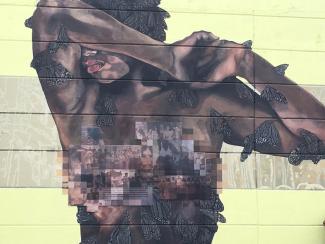
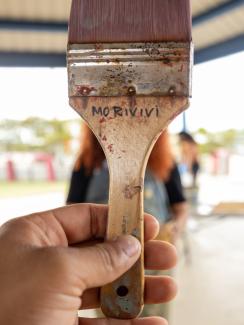
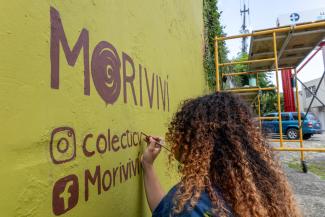
Colectivo Moriviví est un collectif artistique de femmes. Notre production artistique comprend du muralisme, du muralisme communautaire et des performances/actions de manifestation. Notre travail consiste à démocratiser l'art et à amener les récits des communautés portoricaines dans la sphère publique afin de créer des espaces où ils seront validés. Nous croyons qu’à travers l'artivisme, nous pouvons promouvoir la sensibilisation aux questions sociales et renforcer notre mémoire collective.

“Cacibajagua” 2017, Mural Project. Jiangxi, China
“Cacibajagua” 2017, Projet mural. Jiangxi, Chine
“Cacibajagua” 2017, Mural Project. Jiangxi, China
“Cacibajagua” 2017, Projet mural. Jiangxi, Chine
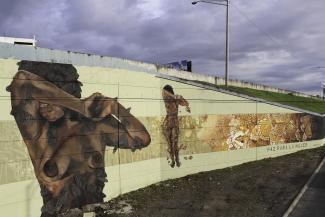
“Paz para la Mujer” 2015, collaboration with Coordinadora Paz para la Mujer Organization. Santurce,
“Paz para la Mujer” (“Paix pour la Femme”) 2015, collaboration avec l’organisation Paz para la Mujer. Santurce, Porto Rico


“Paz para la Mujer” 2015, collaboration with Coordinadora Paz para la Mujer Organization. Santurce, Puerto Rico
“Paz para la Mujer” (“Paix pour la Femme”) 2015, collaboration avec l’organisation Paz para la Mujer. Santurce, Porto Rico
Collectivo Moriri Artwork

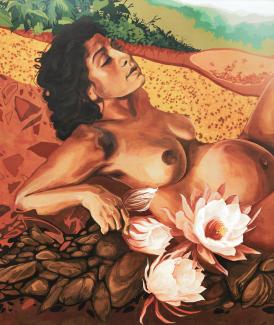
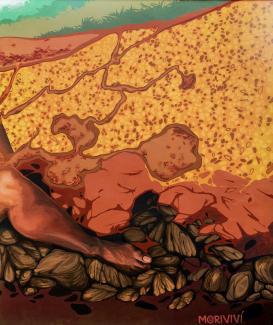
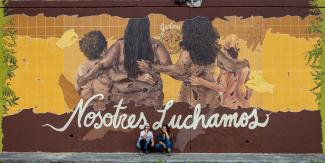
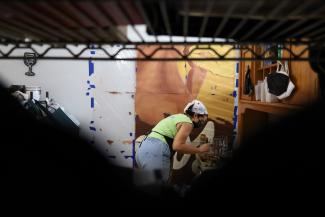
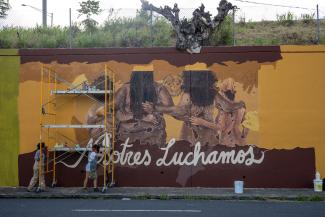
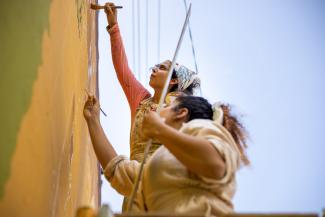
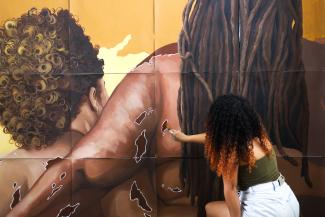
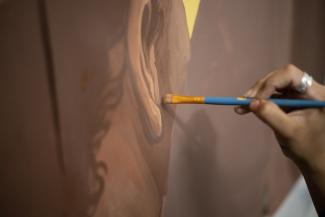
Dans le cadre de sa participation au Groupe de Travail d’Artistes d'AWID, le Colectivo Moriviví a réuni un groupe divers de membres, partenaires et personnel pour faciliter un processus collaboratif visant à imaginer, documenter et déterminer le contenu d'une fresque communautaire par le biais d'un processus de co-création en plusieurs étapes. Le projet a commencé par une conceptualisation à distance avec des féministes de différentes régions du monde réuni·e·s par l'AWID, avant d'évoluer vers sa re-contextualisation et sa réalisation à Porto Rico. Nous avons eu l'honneur de bénéficier de la contribution des artistes locaux·ales Las Nietas de Nonó(@lasnietasdenono), de la participation des femmes locales à la session de peinture communautaire, du soutien logistique de la municipalité de Caguas et du soutien supplémentaire du FRIDA | The Young Feminist Fund.
 
La fresque explore la transcendance des frontières en présentant les corps tels des cartes, dans une étreinte qui met en évidence l'intersection des différentes manifestations, pratiques et réalités féministes.
 
Nous remercions également Kelvin Rodríguez, qui a documenté et capturé les différentes étapes de ce projet à Porto Rico : 

Collectivo Moriri Artwork

À propos du Colectivo Morivivi 

Colectivo Morivivi portrait
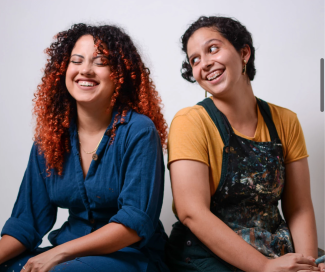
Moriviví est un collectif de jeunes femmes artistes qui travaille sur l'art public depuis Avril 2013. Basé·e·s à Porto Rico, nous sommes reconnu·e·s pour la création de fresques et d'arts dirigés par la communauté.
 
Le groupe a débuté dans les festivals d'art urbain locaux. Au fur et à mesure que notre travail devenait plus populaire, les organisations et les dirigeant.e.s communautaires ont commencé à nous contacter. Au départ, nous étions huit lycéen·ne·s qui voulaient peindre une fresque ensemble. Cependant, en huit ans de travail acharné, nous avons été confronté·e·s à de nombreux défis. Nous sommes aujourd’hui dans une période de transition. Au cours de l'année qui vient, nous souhaitons restructurer le collectif en interne. Notre objectif est d'ouvrir de nouvelles opportunités pour les collaborateurs·trices et d'étayer notre processus de prise de décisions par un nouveau système d'évaluation. À long terme, nous aspirons à devenir une école alternative de pratiques artistiques pour celles et ceux souhaitant s'immerger dans la production artistique communautaire.

Snippet - WITM FAQ - ES

Preguntas frecuentes

Snippet FEA Principles of work Human Rights (EN)

A person speaking in a loudspeaker.

HUMAN RIGHTS

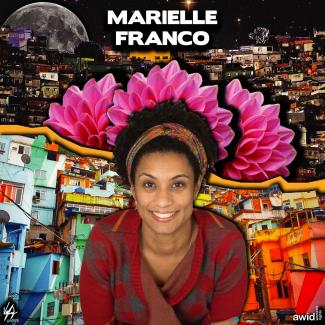
Marielle Franco

Marielle était une femme politique brésilienne, féministe lesbienne et militante des droits humains.

Marielle était une critique virulente de la brutalité policière et des exécutions extrajudiciaires. Sa politique, ouvertement féministe, centrée sur les personnes noires et les favelas était une source d’espoir pour les groupes marginalisés de Rio de Janeiro, actuellement gouvernée par un gouvernement conservateur et un maire évangélique.

Le 14 mars 2018, après avoir prononcé un discours à Rio de Janeiro, Marielle Franco et son chauffeur ont été assassinés, abattus par balles. Suite à la nouvelle de leur mort, les foules sont descendues dans les rues en criant « Marielle presente! » (Marielle est ici !) et ont exigé que justice soit faite.

En savoir plus sur Marielle et la situation au Brésil


Marielle Franco, Brasil

Anti-Rights Trends in Regional Human Rights Systems

Chapter 6

In the African Commission and the Inter-American System, anti-rights actors push essentialist notions of culture and gender to hamper progress on rights and undermine accountability. As we see, anti-rights actors are exerting influence in regional human rights systems, as well as international spaces. 

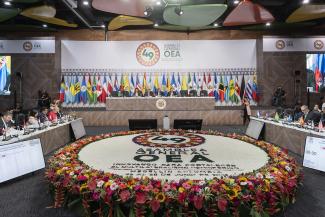
2019 JUN 27 Meeting of the Summit Implementation Review Group in Colombia
© Juan Manuel Herrera/OAS/Flickr
2019 JUN 27 Meeting of the Summit Implementation Review Group in Colombia

The African Commission on Human and Peoples' Rights has begun framing women’s and sexual rights as jeopardising its ability to deal with “real rights” and contrary to “African values”,   setting a worrying anti-rights precedent. The withdrawal of the Coalition of African Lesbians’ observer status is an example of this trend, and points to the way space for feminist, Pan-Africanist engagement is being stifled. 

In the Organization of American States (OAS) and the Inter-American Human Rights System, anti-rights strategies include the NGOization of religious groups, the use of secular discourses, and the co-optation of discrimination frameworks. Anti-rights influence has materialized in a number of ways, including the intimidation of trans activists and the blocking the introduction of progressive language in resolutions.

Table of Contents

  • Silencing Feminists in the African Human Rights System
  • Anti-rights Groups in Latin America: Organization of American States (OAS) General Assembly and the Inter-American Human Rights System
     

Read Full Chapter >

Snippet - WITM to claim - RU

Чтобы заявить о себе как об эксперте по вопросам ресурсного обеспечения феминистских движений

Snippet FEA Title Main (ES)


Las Economías Feministas

QUE AMAMOS


FRMag - Freeing the Church

Liberar a la Iglesia, descolonizar la Biblia para las mujeres de Papúa Occidental

por Rode Wanimbo

«Señor, somos indignas. Somos las que pecaron, porque Eva comió el fruto en el Edén. Solo somos mujeres que cultivan batatas, cuidan cerdos y dan a luz niñxs. Creemos que tú moriste en la cruz para liberarnos. Gracias, en el nombre de Jesús, amén». (...)

Leer


< arte: «Offerings for Black Life» [Ofrendas para las vidas negras], Sokari Ekine

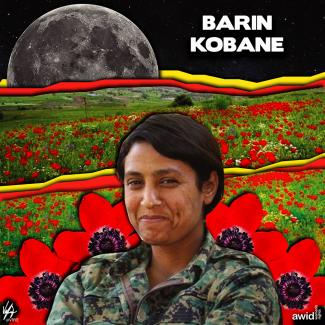
Barin Kobane

Barin was a member of the all-women fighting unit of the Kurdish People’s Protection Unit (YPG)

She was killed while on active duty.

Lebanese journalist Hifaa Zuaiter wrote: “Barin represents everything we have heard about the courage of the Kurdish female fighters, and her death is far more than the killing of a rival, or the result of a political or ethnic struggle. The horror of displaying her body only because she is a woman stems from the fact that she dared to threaten male hegemony by becoming a female fighter on a battlefield meant for men”.


Barin Kobane, Kurdistan

Suscríbete para recibir nuestras noticias

* indica un campo requerido
                  
                         
Seleccione los temas sobre los que desea recibir información:

Snippet - WITM Why now_col 2 - RU

Обеспечение ресурсами феминистских движений имеет основополагающее значение для обеспечения более справедливого и мирного настоящего и свободного будущего.

За последнее десятилетие спонсоры выделили значительно больше средств на обеспечение гендерного равенства, однако лишь 1% средств, выделенных на благотворительность и развитие был направлен непосредственно на поддержку социальных изменений, проводимых под руководством феминисток.

В солидарности с движениями, которые по-прежнему остаются невидимыми, маргинализированными и не имеют доступа к основному, долгосрочному, гибкому и основанному на доверии финансированию, данный опрос освещает фактическое состояние ресурсного обеспечения, выявляет ошибочные решения и указывает на то, как необходимо изменить модели финансирования, чтобы движения процветали и решали сложные задачи современного мира.

Snippet - Podcast Intro (FR)

Nous sommes ravi.es d'annoncer le lancement du nouveau podcast de l'AWID, NOTRE FLAMME FÉMINISTE. Notre série narrative dévoile plus de 40 ans de mouvements féministes et réinvente une voie à suivre.

Dans notre saison pilote, vous entendrez cinq histoires captivantes qui font partie d'une constellation d'activisme féministe aujourd'hui. Animé par Gopika Bashi, notre directrice adjointe des programmes à l'AWID, chaque épisode explore des réalités féministes uniques mais interconnectées qui améliorent la justice de genre et les droits humains.

Produit par notre partenaire de podcast Webby Hueman Group Media, vous pouvez vous abonner à NOTRE FLAMME FÉMINISTE et écouter notre premier épisode ici.

Retrouvez-nous sur Apple Podcasts, Spotify ou partout où vous obtenez vos podcasts. Partagez avec votre réseau ! Aidez-nous à diffuser des histoires qui allument notre feu féministe et nous poussent à l'action.

Abonnez-vous ici

FRMag - Our neighbourhood, our network

Notre quartier, nos réseaux, notre force

par Marta Plaza Fernández 

Le pouvoir de tisser des réseaux où nous nous soutenons les unes les autres: telle est la réalité féministe dont je veux vous faire part.  (...)

Lire

illustration : « Guérir ensemble », par Upasana Agarwal >