

Jean-Marc Ferré | Flickr (CC BY-NC-ND 2.0)
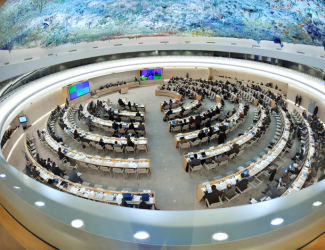
A general view of participants at the 16th session of the Human Rights Council in Geneva, Switzerland.

Special Focus

AWID is an international, feminist, membership organisation committed to achieving gender equality, sustainable development and women’s human rights

Human Rights Council (HRC)

The Human Rights Council (HRC) is the key intergovernmental body within the United Nations system responsible for the promotion and protection of all human rights around the globe. It holds three regular sessions a year: in March, June and September. The Office of the UN High Commissioner for Human Rights (OHCHR) is the secretariat for the HRC.

The HRC works by:

  • Debating and passing resolutions on global human rights issues and human rights situations in particular countries

  • Examining complaints from victims of human rights violations or activist organizations on behalf of victims of human rights violations

  • Appointing independent experts (known as “Special Procedures”) to review human rights violations in specific countries and examine and further global human rights issues

  • Engaging in discussions with experts and governments on human rights issues

  • Assessing the human rights records of all UN Member States every four and a half years through the Universal Periodic Review

Learn more about the HRC


AWID works with feminist, progressive and human rights partners to share key knowledge, convene civil society dialogues and events, and influence negotiations and outcomes of the session.

With our partners, our work will:

◾️ Monitor, track and analyze anti-rights actors, discourses and strategies and their impact on resolutions

◾️ Raise awareness of the findings of the 2017 and 2021 OURs Trends Reports.

◾️Support the work of feminist UN experts in the face of backlash and pressure

◾️Advocate for state accountability
 
◾️ Work with feminist movements and civil society organizations to advance rights related to gender and sexuality.
 

Related Content

Snippet - WITM FAQ - RU

Часто задаваемые вопросы

FR Editor's note

Editor's note

Feminist Realities is a warm and caring invitation, a kind of en masse-care (versus self-care) act of preservation, an invitation to archive, to take stock of all the work lest it disappear. (...)

Read

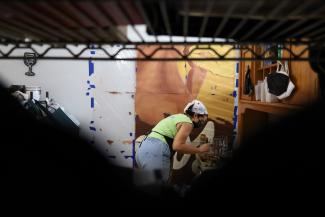
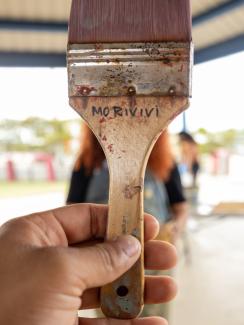
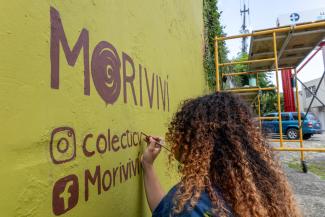
Colectivo Morivivi

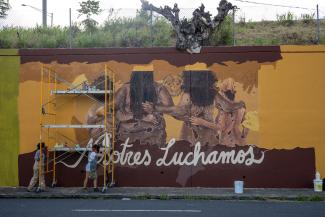
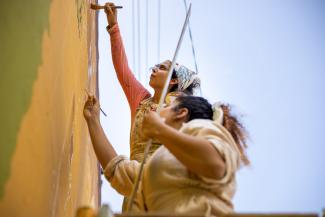
El Colectivo Moriviví es una colectiva de solo mujeres. Nuestra producción artística consiste en muralismo, muralismo comunitario y acciones/performances de protesta. Nuestro trabajo tiene como objetivo democratizar el arte y llevar a la esfera pública las narrativas de las comunidades de Puerto Rico, para generar espacios en donde sean validadas. Creemos que, a través del artivismo, podemos promover conciencia sobre temas sociales y fortalecer nuestra memoria colectiva.

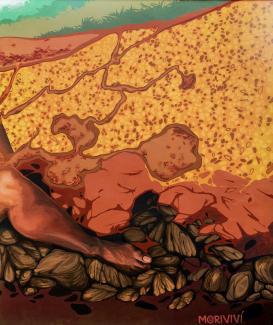
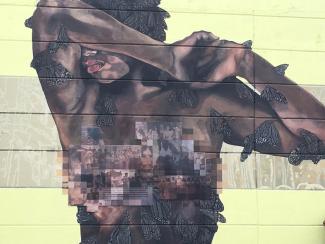
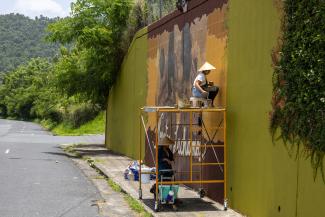
“Cacibajagua” 2017, Mural Project. Jiangxi, China
“Cacibajagua” 2017, proyecto de mural, Jiangxi, China
“Cacibajagua” 2017, Mural Project. Jiangxi, China
“Cacibajagua” 2017, proyecto de mural, Jiangxi, China
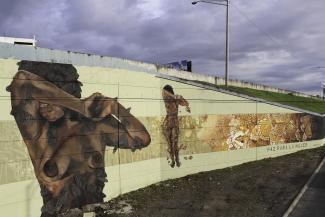
“Paz para la Mujer” 2015, collaboration with Coordinadora Paz para la Mujer Organization. Santurce,
“Paz para la Mujer” 2015, colaboración con la organización Coordinadora Paz para la Mujer, Santurce, Puerto Rico


“Paz para la Mujer” 2015, collaboration with Coordinadora Paz para la Mujer Organization. Santurce, Puerto Rico
“Paz para la Mujer” 2015, colaboración con la organización Coordinadora Paz para la Mujer, Santurce, Puerto Rico
Collectivo Moriri Artwork

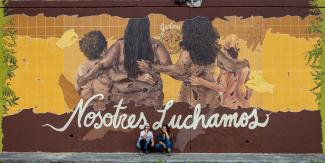
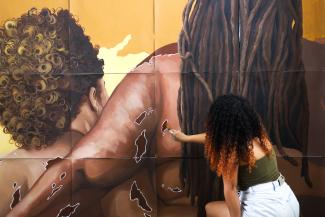
En el marco de su participación en el Grupo de Trabajo Artístico de AWID, el Colectivo Moriviví convocó a un grupo diverso de afiliadxs, asociadxs y personal de AWID y facilitó un proceso colaborativo de imaginación, configuración y decisión sobre el contenido para la creación de un mural comunitario, a través de un proceso de creación conjunta en múltiples etapas. El proyecto comenzó con una conceptualización remota con feministas de diferentes zonas del planeta reunidxs por AWID, y luego evolucionó hacia su recontextualización y realización en Puerto Rico. Nos honra haber contado con la contribución de las artistas locales Las Nietas de Nonó (@lasnietasdenono), la participación de mujeres locales en la Sesión de Pintura Comunitaria, el apoyo logístico de la Municipalidad de Caguas, y el apoyo adicional al colectivo, brindado por FRIDA Young Feminist Fund.
 
El mural explora la trascendencia de las fronteras, al presentar cuerpos como un mapa en un abrazo que realza la intersección de las distintas manifestaciones, prácticas y realidades feministas.
 
Agradecemos también a Kelvin Rodríguez, quien documentó y captó las diferentes etapas de este proyecto en Puerto Rico:

Collectivo Moriri Artwork

Sobre el Colectivo Moriviví

Colectivo Morivivi portrait

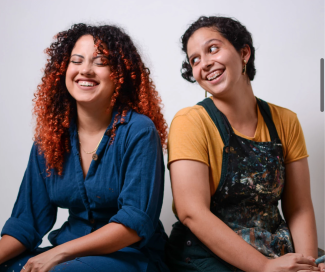
Moriviví es un colectivo de jóvenes artistas mujeres que trabajan en arte público desde abril de 2013. Con sede en Puerto Rico, hemos obtenido reconocimiento por la creación de murales y de arte comunitario.
 
El grupo se inició en festivales locales de arte urbano. A medida que nuestro trabajo se fue haciendo más conocido, algunas organizaciones y líderes comunitarias comenzaron a contactarnos. Al principio éramos solo ocho estudiantes de secundaria que querían pintar juntas un mural. Y en estos ocho años de duro trabajo hemos enfrentado muchos desafíos. Ahora estamos en un período de transición. Queremos reestructurar internamente el colectivo durante el próximo año. Nuestro objetivo es abrir nuevas oportunidades de colaboración y respaldar nuestro proceso de toma de decisiones con un nuevo sistema de evaluación. Aspiramos, en el largo plazo, a convertirnos en una escuela alternativa para la práctica artística, destinada a  aquellas personas interesadas en sumergirse en la producción de arte comunitario.

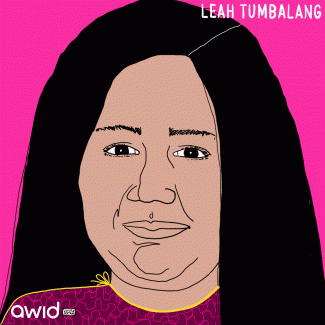
Leah Tumbalang

Leah Tumbalang était une femme lumad de Mindanao, aux Philippines. L’histoire du peuple autochtone Lumad recouvre des générations de résistance à l'exploitation minière à grande échelle par les entreprises, la protection des domaines ancestraux, des ressources et de la culture, et la lutte pour le droit à l'autodétermination. 

Leah était une leader lumad, ainsi qu’une dirigeante du Kaugalingong Sistema Igpasasindog tu Lumadnong Ogpaan (Kasilo), une organisation paysanne lumad plaidant contre l'arrivée des sociétés minières à Bukidnon, dans la province de Mindanao. Elle s’est montrée inébranlable dans son activisme antimines, militant avec ferveur contre les effets dévastateurs de l'extraction minière sur l'environnement et les terres des peuples autochtones. Leah était également une organisatrice de la liste du parti Bayan Muna, membre du parti politique de gauche Makabayan.

Depuis près d’une décennie, Leah (ainsi que d’autres membres de Kasilo) recevait des menaces du fait qu'elle codirigeait l'opposition contre le déploiement de groupes paramilitaires soupçonnés d’être soutenus par des intérêts miniers. 

« En tant que leader des Lumad au sein de leur communauté, elle est au premier plan pour lutter en faveur de leurs droits à la terre ancestrale et à l'autodétermination ». - Organisation régionale lumad de Kalumbay

Être en première ligne de la résistance implique également souvent d’être la cible de violences et victime de l’impunité. Leah a non seulement reçu de nombreuses menaces de mort, mais elle a été assassinée le 23 août 2019 à Valencia, dans la province de Bukidnon.  

Selon un rapport de Global Witness, « les Philippines sont le pays à avoir été le plus touché en chiffre absolu » pour ce qui est des meurtres d’activistes écologistes en 2018. 


Lisez le rapport du Global Witness, publié en juillet 2019
En savoir plus sur les femmes lumad aux Philippines et leur lutte intergénérationnelle pour l'autodétermination
 

Elina Margarita Castillo Jiménez

Biography

Elina es una joven feminista afrodominicana, que trabaja con enfoque interseccional. Es abogada de derechos humanos y está comprometida a usar su voz y sus capacidades para construir un mundo más justo, empático e inclusivo. Ingresó a la facultad de derecho a los 16 años, segura de que iba a obtener herramientas para entender y promover la justicia social. Luego de obtener el título de Juris Doctor [Doctora en Jurisprudencia] en la República Dominicana, cursó una maestría en Derecho Internacional Público y Derechos Humanos en el Reino Unido, como becaria Chevening. Fue la única mujer latinoamericana-caribeña en su clase y se graduó con honores.

Elina ha trabajado en la intersección de derechos humanos, género, migración y política en el gobierno, en colectivos de base y en organizaciones internacionales. Colaboró en el litigio de casos sobre violencia de género ante la Corte Interamericana de Derechos Humanos. Como integrante del Panel Consultivo de Jóvenes de UNFPA, contribuyó al fortalecimiento de los derechos sexuales y reproductivos en la República Dominicana. Fue una de las personas que lideraron la primera campaña de Amnistía Internacional sobre derechos de lxs trabajadorxs sexuales en las Américas, desarrollando una fuerte asociación con las organizaciones de trabajadorxs sexuales, y utilizando la posición de Amnistía para potenciar las voces de quienes defienden  los derechos humanos de las mujeres  y de lxs trabajadorxs sexuales. Elina es parte del Foro Feminista Magaly Pineda y la Global Shapers Community [Comunidad Global Shapers]. Habla español, francés e inglés.

Gracias a su diversificada trayectoria, Elina trae sólidas capacidades de gobernanza y de planificación estratégica, una experiencia sustancial en las Naciones Unidas y en mecanismos regionales de derechos humanos, además de su profunda determinación para que AWID siga siendo una organización inclusiva para todas las mujeres, especialmente, las feministas jóvenes y caribeñas. Con estas propuestas, se suma a una hermandad global de feministas  fantásticas, desde donde podrá seguir cultivando su liderazgo feminista y nunca más se sentirá sola en su camino. 

Position
Co-Presidenta
Add to stories
Off

Snippet FEA Story 1 Maps Economies of Care (ES)

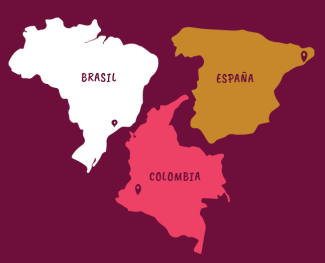
Los mapas de Brasil en blanco, España en amarillo mostaza y Colombia en rosa sobre un fondo color vino o burdeos.

Sou uma ativista individual, não colaboro com qualquer grupo, organização e/ou movimento neste momento. Devo participar no inquérito mesmo assim?

Não, apreciamos o seu trabalho, mas, de momento, não solicitamos respostas de indivídues.

FRMag - My queer Ramadan

Mi ramadán queer

por Amal Amer

Rezo con mi familia por primera vez en seis años envueltx en un keffiyah que recogí de un contenedor de basura. (...)

Leer

arte: «Angels go out at night too» [Los ángeles también salen de noche], Chloé Luu >

Tactiques, stratégies et impacts des antidroits

Chapitre 5

Les antidroits ont adopté une double stratégie : outre leurs attaques ouvertes sur le système multilatéral, ils et elles sapent les droits humains depuis l’intérieur. Leur implication vise à prendre le contrôle des processus, instaurer des normes régressives et fragiliser la redevabilité.

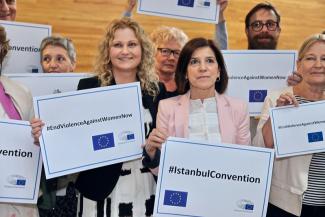
Photo-OP // the first anniversary of the EU signature to the Council of Europe Convention to prevent and combat gender-based violence and domestic violence, the so-called Istanbul Convention
© ALDE Group/Flickr
Photo-OP // Le premier anniversaire de la signature par l'UE de la Convention du Conseil de l'Europe pour prévenir et combattre la violence basée sur le genre et la violence domestique, dite Convention d'Istanbul

Leur implication dans les sphères des droits humains a un but essentiel : saper le système et sa capacité à respecter, protéger et assurer les droits humains de tout un chacun, et à tenir les États membres pour responsables de leurs enfreintes. Certaines tactiques antidroits en dehors de l’ONU visent à la délégitimer, exercer des pressions politiques pour limiter son financement ou se retirer d’accords internationaux sur les droits humains. Les acteur·rice·s antidroits gagnent cependant en influence au sein même de l’ONU. Leurs tactiques de l’intérieur incluent la formation de délégué·e·s, la dénaturation de cadres relatifs aux droits humains, la dilution de la substance d’accords sur les droits humains, l’infiltration de comités d’ONG, la demande du statut ECOSOC sous un nom neutre, l’infiltration des espaces des jeunes et la pression pour que des acteur·rice·s antidroits occupent des postes clés.

Sommaire

  • L’institutionnalisation des antidroits dans les mécanismes de l’ONU
  • Le retrait et la délégitimation
  • L’appauvrissement des standards relatifs aux droits humains
  • La prise de contrôle : création d’un cadre des droits humains parallèle
  • Exercice : Oui, ils et elles sont fort·e·s, mais nous aussi!
  • Exercice : Tenir les gouvernements pour responsables

Lire le chapitre complet

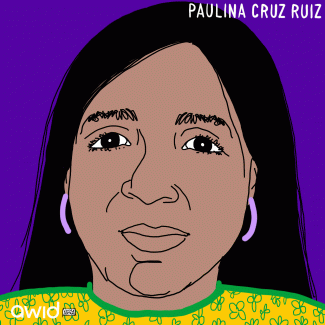
Paulina Cruz Ruiz

Paulina Cruz Ruiz, from the Rabinal, Baja Verapaz region of Guatemala, was an ancestral Maya Achí (Indigenous) authority and a human rights defender.

She was actively involved in community organizing and resistance, including legal measures against mining projects on Indigenous territory, projects that would severely affect and damage the socio-environmental fabric.  

“The extractive industry model promoted by the Guatemalan government and the construction of large-scale development projects on indigenous lands without community consent has been a source of ongoing disputes with resistance movements.” - Minority Rights Group International

Paulina was also part of the March for Dignity, Life and Justice, in which on 1 May 2019 thousands of Guatemalans started a march of eight days against corruption and impunity in the prosecution and assassinations of human rights, peasant and Indigenous leaders and land defenders.

Paulina was murdered on 14 September 2019 near her home in the village of Xococ. 

According to the Minority Rights Group International, “one of the major ongoing issues affecting Mayan communities is the increasing activity of the mining industry.”


Read more about the Mayans of Guatemala

Read more about the March for Dignity, Life and Justice


Jessica Whitbread

Biography

Jessica est une artiste-activiste queer de Toronto, au Canada, mais qui vit actuellement en Bulgarie. Elle a plus de 15 ans d'expérience dans la riposte au VIH, travaillant aux intersections du genre et du VIH auprès de populations clés (travailleurs·ses du sexe, femmes consommatrices de drogues, communautés LGBTQI, personnes incarcérées et, bien sûr, personnes vivant avec le VIH). Jessica aime créer du mouvement et réfléchir/entreprendre/élaborer des stratégies sur des interventions basées sur les arts. L'un des projets amusants qu'elle a lancé en 2013 était LOVE POSITIVE WOMEN (Femmes positives à l’amour), qui implique plus de 125 groupes et organisations communautaires du monde entier, du 1er au 14 février, pour célébrer les femmes vivant avec le VIH dans leurs communautés.

Position
Responsable de l’Adhésion et de l’Engagement des Membres
Add to stories
Off

Snippet - That Feminist Fire Logo (FR)

Texte blanc qui dit le titre de notre podcast en français : Notre flamme féministe

كيف يمكنني الوصول للاستطلاع؟

الاستطلاع متواجد في KOBO وهي منصة برمجيات مفتوحة المصدر لجمع وإدارة المعطيات. لتعبئة الاستطلاع، يمكنكم/ن الضغط على هذا الرابط. اتبعوا/ن التعليمات لتكملة الاستطلاع. 

FRMag - Ashawo Work na Work

« Ashawo Work na Work » : Comment les jeunes féministes ghanéennes transforment des horizons féministes en réalité

par Fatima B. Derby

En 2017, la campagne #ManifestezVotreSolidarité a mis en évidence la manière dont les jeunes féministes pouvaient construire un avenir féministe en étant là les unes pour les autres, en participant à des conversations transrégionales, en marchant en solidarité avec d'autres activistes et en collaborant entre les mouvements. (...)

Lire

< illustration : « Laisse-les pousser », par Gucora Andu

Join our mailing lists

* indicates required
Send me information about


Leila Hessini

Biography

Leila is a transnational feminist leader, strategist, and advisor with over 25 years of organizing, advocacy and philanthropic experience advancing human rights, gender equality, and sexual and reproductive rights and justice.  She was born in Algeria and educated in the U.S., France, and Morocco; over her professional career, she has lived and worked in forty countries across Africa, Europe, Latin America and Asia.  Leila currently serves as a Senior International Fellow at the Asfari Institute for Civil Society and Citizenship at the American University of Beirut in Lebanon and as Senior Strategist for various feminist movements and organizations as well as the the Urgent Action Fund-Africa and Trust Africa on an initiative on Reimagining Feminist and Pan-African Philanthropies.
 
From 2017-2023, Leila held the position as Vice-President of Programs at Global Fund for Women where she oversaw its strategic grantmaking, movement-strengthening, global advocacy and philanthropic collaborations. At GFW, she doubled its grantmaking to over $17 million, launched its feminist and gender-based movements and crises work, created an adolescent girls program led by a girls’ advisory council and led its philanthropic advocacy work.  Prior to that she served on the senior leadership team of Ipas from 2002 to 2016 where she published extensively on abortion rights and justice, lead global advocacy efforts and partnered with feminist groups working on self-management, community strategies and stigma reduction around bodily integrity and sexual and reproductive rights.
 
Leila is currently researching shifts in the philanthropic sector including recognizing non-institutional practices of giving resources in the Global South and efforts to decolonize practices in the Global North.  She has written extensively on the political nature of veiling across North Africa and the Middle East, abortion practices in majority Muslim contexts and feminist approaches to sexual and reproductive health, rights and justice.
 
Leila holds an MPH in public health and a MA in Middle Eastern and North African Studies, studied Islamic law in Morocco and pursued doctoral studies in sociology in France. She studied Arabic and speaks French and English fluently.  She is a mother of two feminist young women, an avid scuba diver, mountain bike rider, skier, and outdoor enthusiast.

Position
Treasurer
Add to stories
Off

Snippet Forum Stories Story 1 (EN)

Case study 1 - Three Boats, a Horse and a Taxi: Pacific Feminists at the AWID Forums

This story is about how an increasingly diverse group of feminists from the Pacific organized through the years to attend the AWID Forums and how that process changed them personally, as organizations, and as a movement through what they learned, discovered and experienced. It illustrates the importance of the Forums as a space through which a region that tends to be marginalized or ignored at the global level can build a strong presence in the feminist movement that is then replicated at other international women’s rights spaces.