Special Focus

AWID is an international, feminist, membership organisation committed to achieving gender equality, sustainable development and women’s human rights

Confronting Extractivism & Corporate Power

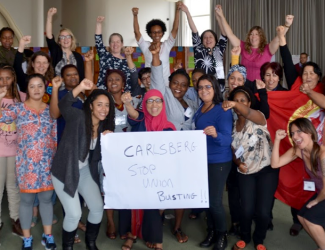
Women human rights defenders (WHRDs) worldwide defend their lands, livelihoods and communities from extractive industries and corporate power. They stand against powerful economic and political interests driving land theft, displacement of communities, loss of livelihoods, and environmental degradation.


Why resist extractive industries?

Extractivism is an economic and political model of development that commodifies nature and prioritizes profit over human rights and the environment. Rooted in colonial history, it reinforces social and economic inequalities locally and globally. Often, Black, rural and Indigenous women are the most affected by extractivism, and are largely excluded from decision-making. Defying these patriarchal and neo-colonial forces, women rise in defense of rights, lands, people and nature.

Critical risks and gender-specific violence

WHRDs confronting extractive industries experience a range of risks, threats and violations, including criminalization, stigmatization, violence and intimidation.  Their stories reveal a strong aspect of gendered and sexualized violence. Perpetrators include state and local authorities, corporations, police, military, paramilitary and private security forces, and at times their own communities.

Acting together

AWID and the Women Human Rights Defenders International Coalition (WHRD-IC) are pleased to announce “Women Human Rights Defenders Confronting Extractivism and Corporate Power”; a cross-regional research project documenting the lived experiences of WHRDs from Asia, Africa and Latin America.

We encourage activists, members of social movements, organized civil society, donors and policy makers to read and use these products for advocacy, education and inspiration.

Share your experience and questions!

Tell us how you are using the resources on WHRDs Confronting extractivism and corporate power.

◾️ How can these resources support your activism and advocacy?

◾️ What additional information or knowledge do you need to make the best use of these resources?

Share your feedback


Thank you!

AWID acknowledges with gratitude the invaluable input of every Woman Human Rights Defender who participated in this project. This project was made possible thanks to your willingness to generously and openly share your experiences and learnings. Your courage, creativity and resilience is an inspiration for us all. Thank you!

Related Content

Accumuler les expériences, travailler dur et rêver en grand – l’histoire de Meher Bano

Accumuler les expériences, travailler dur et rêver en grand – l’histoire de Meher Bano

Pendant son enfance passée dans une société caractérisée par une très forte misogynie, Meher Bano Mirzayee s’est heurtée à de nombreuses difficultés. Pour reprendre ses propres mots, dans cette société, « avoir un fils est une bénédiction et avoir une fille est une honte. C’est vraiment difficile d’être née dans une famille afghane pauvre et non éduquée. Ma chance a tourné quand nous avons émigré au Pakistan et que j’ai pu étudier ».


Le grand rêve de Meher Bano, c’est l’éducation.

« Dans ma vie, trois choses comptent : accumuler les expériences, travailler dur et rêver en grand »

Très tôt, alors qu’elle n’était encore qu’en 7e, Meher Bano Mirzayee a commencé à créer des bijoux au Pakistan. Elle était si créative dans l’élaboration de nouveaux modèles de bracelets, de colliers et de boucles d’oreille que le propriétaire du magasin qui l’employait a souhaité l’engager à plein temps alors même qu’elle allait encore à l’école. « Ça a été très difficile pour moi de travailler pour le compte d’une personne qui interférait de la sorte avec ma scolarité. Mais j’ai fini par réussir à gérer à la fois l’école et le travail. »

Plus tard, de retour en Afghanistan, Meher Bano a poursuivi ses études tout en se consacrant à un certain nombre d’activités bénévoles. Elle a notamment travaillé pour l’organisation Afghanistan’s New Generation, (la nouvelle génération de l’Afghanistan) donné des cours à des étudiant-e-s et participé aux activités des organisations Women for Afghan Women (femmes pour les femmes afghanes) et Everywoman Everywhere. Elle a effectué des stages en tant que traductrice de bulletins d’information pour 1TV Afghanistan et en tant qu’assistante de direction pour le Conseil pour l’Afghanistan de Son altesse le Prince Aga Khan Shia Imami Ismaili.

Pour Meher Bano, l’expérience et les rêves sont intimement liés au fait de travailler dur

« Le succès vient en travaillant dur. C’est la clé pour atteindre nos objectifs dans le futur. » Meher Bano doit sa réussite scolaire à son travail acharné et à sa volonté farouche de remettre en cause et de changer la façon dont la société afghane voit les filles et les femmes. « Je travaille dur pour faire quelque chose de nouveau dans ce monde. Je veux que mon peuple cesse de penser que les filles ne servent à rien. Je veux leur prouver qu’ils ont tort. »

Meher Bano considère l’éducation, les inégalités et la sécurité comme les défis majeurs que son pays doit relever. Et elle nous explique pourquoi : 

« Le patriarcat est si profondément ancré dans la société afghane que celle-ci ne permet habituellement pas aux filles de suivre une scolarité. Dans mon pays, le problème sécuritaire fait que les familles n’autorisent pas les femmes à aller à l’école ou à travailler à l’extérieur. Les gens se sentent en insécurité et ils veulent protéger les femmes. Et ce type de protection génère des inégalités entre hommes et femmes, entre garçons et filles. Cela donne l’impression que les femmes sont faibles et que les hommes sont puissants et forts. Ils protègent les femmes de la mauvaise façon, ils les empêchent de jouir de leurs droits. » – Meher Bano Mirzayee
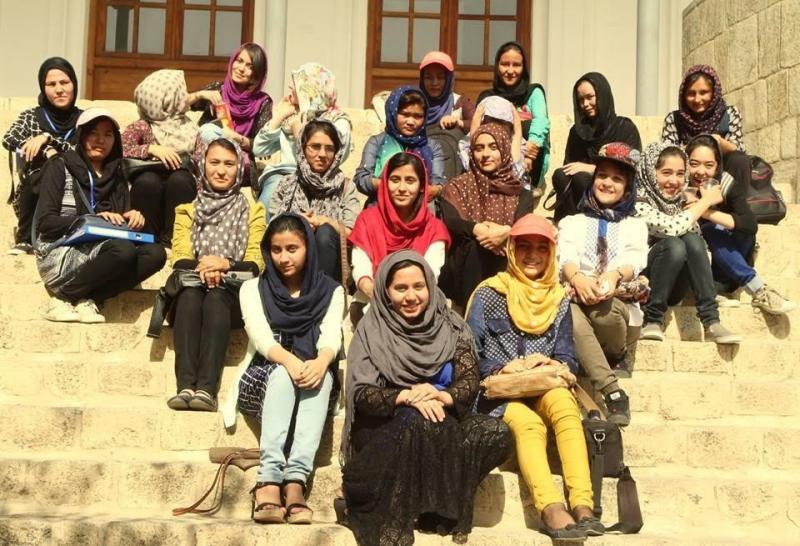
Pour contribuer au changement que Meher Bano’s envisage pour son pays, elle s’est fixé comme objectif de devenir un modèle pour les autres filles afghanes et un leader capable de mener les autres vers le succès. En partageant les connaissances et les idées avec d’autres personnes, il est possible de contribuer à faire naître le leadership et des leaders mais aussi de renforcer l’action collective. Il s’agit là de l’un des éléments que Meher Bano considère comme indispensables à la construction d’un mouvement.

En 2016, avec un groupe d’amies, elle a organisé un atelier intitulé « Afghan Girls’ Leadership », dont l’objectif était de permettre aux jeunes filles de Kaboul de devenir de véritables leaders. Quinze d’entre elles ont pris part à ce programme qui comprenait notamment des journées de service communautaire et des ateliers de créativité qui visaient, comme l’a expliqué l’une des participantes « à nous placer dans une situation où nous nous trouvions soudainement confrontées à un problème que nous étions censées résoudre avec ce que nous avions sous la main à cet instant précis. »

Le groupe a créé une page Facebook sur laquelle on peut par exemple lire : 

« L’intérêt et la passion des jeunes leaders afghanes pour l’apprentissage est le moyen que nous proposons pour que l’Afghanistan devienne un pays paisible et bien gouverné. »

À l’heure actuelle, Meher Bano étudie à l’Université américaine d’Asie centrale au Kirghizistan grâce à l’obtention d’une bourse. Elle étudie l’administration des affaires ainsi que la psychologie en option. « Dans cette université, j’ai expérimenté le fait de me confronter à des personnes, des cultures et des langues différentes mais aussi à de nombreuses idées nouvelles. Je pense que l’expérimentation est le cœur de la vie. Je rêve d’accumuler de nouvelles expériences et d’apprendre davantage en voyageant dans d’autres pays. »

Meher Bano dit avoir choisi de devenir membre de l’AWID parce qu’elle a été séduite par sa vision.

« Je veux travailler en faveur des droits des filles et des femmes. Je veux me battre pour leurs droits et je veux qu’hommes et femmes soient égaux dans ce monde parce que nous sommes tous et toutes des êtres humains. » - Meher Bano Mirzayee

Source
AWID

Get experience, work hard, and have a big dream - Meher Bano’s Story

Get experience, work hard, and have a big dream - Meher Bano’s Story

As a young girl, Meher Bano Mirzayee grew up facing many difficulties in a society carrying strong misogynistic characteristics, where, she says “having a son is a precious thing and having a daughter is shameful. It is hard to be born in an uneducated and poor Afghan family. My luck was good as we immigrated to Pakistan and started getting educated.”


Education is Meher Bano’s big dream

“In my life, three things are most important: get experience, work hard, and have a big dream.”

She started working  as a jewelry designer in Pakistan at an early age, when she was only in grade seven. Her creativity in making new designs of bracelets, necklaces and earrings made  the shop-owner want to hire her full-time, despite her still being in school. “It was so hard for me to work with such a person who interferes in my education. Finally, I succeeded to manage both of them, work and school.”

Later, back in Afghanistan again, Meher Bano attended college and was involved in a number of volunteer activities, including working for the Afghanistan New Generation Organization, teaching students, engaging in the work of Women for Afghan Women, and Everywoman Everywhere. She completed internships as a news translator for 1TV Afghanistan and as an assistant manager at His Highness Prince Aga Kahn Shia Imami Ismaili Council for Afghanistan. 

For Meher Bano, experiences and dreams are strongly connected to hard work.

“Working hard is the reason for success. Working hard is the key to achieve what we want in our future.” The education she completed so far was driven by hard work and the wish to challenge and change the way in which Afghan society views girls and women. “I am working hard to do something new in this world. I want to change the ideas my people have about girls being useless. I want to prove them wrong.”

Meher Bano sees some of the biggest challenges in her country being lack of education, an unequal environment, and security problems.

She tells us why:

“Because patriarchy is so deeply entrenched, Afghan society generally does not allow their daughters to get an education. The security problem in my country makes families not allow women to go to school or work outside. They are scared of bad security and they want to protect the women. This kind of protection creates inequality between men and women, boys and girls. It gives an impression that women are weak and men powerful and strong. They protect women in the wrong way, they don’t give them their rights.”

Part of Meher Bano’s  vision for change in her country, is to become a role model for other Afghan girls, and be a leader that will motivate others towards success. Sharing knowledge and ideas with others helps create leadership and leaders, and strengthens collective action. This is one of the components Meher Bano sees as crucial for movement building. 

In 2016, together with friends, she organized “Afghan Girls’ Leadership”, a workshop for Afghan school girls in Kabul to work towards becoming strong leaders. Fifteen young girls participated in the program that included activities such as community service days and a creativity workshop with the aim to, as one of the participants wrote, “exemplify a situation where we suddenly face a problem and we have to find a solution from whatever is accessible at the moment.”

The group has formed a Facebook page with one of the posts being:

“The Afghan girls young leaders focus and passion of learning is our means towards a peaceful and well-governed Afghanistan.”

Currently, Meher Bano is studying at the American University of Central Asia in Kyrgyzstan on a scholarship she received. Her major is in Business Administration and minor in Psychology. “In this university I experienced meeting diverse people, different cultures and languages, and many new ideas. For me, experiencing is the main part of life. I would love to get more experience and increase my knowledge by travelling to various countries.” She said she joined AWID as a member because of its vision.

“I want to work for girls and women’s rights. I want to fight for their rights and I want equality in this world because we are all humans.” - Meher Bano Mirzayee

Source
AWID