Women human rights defenders (WHRDs) worldwide defend their lands, livelihoods and communities from extractive industries and corporate power. They stand against powerful economic and political interests driving land theft, displacement of communities, loss of livelihoods, and environmental degradation.
Why resist extractive industries?
Extractivism is an economic and political model of development that commodifies nature and prioritizes profit over human rights and the environment. Rooted in colonial history, it reinforces social and economic inequalities locally and globally. Often, Black, rural and Indigenous women are the most affected by extractivism, and are largely excluded from decision-making. Defying these patriarchal and neo-colonial forces, women rise in defense of rights, lands, people and nature.
Critical risks and gender-specific violence
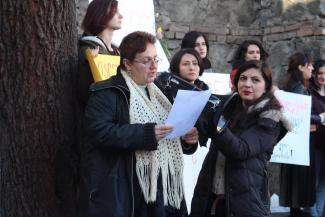
WHRDs confronting extractive industries experience a range of risks, threats and violations, including criminalization, stigmatization, violence and intimidation. Their stories reveal a strong aspect of gendered and sexualized violence. Perpetrators include state and local authorities, corporations, police, military, paramilitary and private security forces, and at times their own communities.
Acting together
AWID and the Women Human Rights Defenders International Coalition (WHRD-IC) are pleased to announce “Women Human Rights Defenders Confronting Extractivism and Corporate Power”; a cross-regional research project documenting the lived experiences of WHRDs from Asia, Africa and Latin America.
We encourage activists, members of social movements, organized civil society, donors and policy makers to read and use these products for advocacy, education and inspiration.
AWID acknowledges with gratitude the invaluable input of every Woman Human Rights Defender who participated in this project. This project was made possible thanks to your willingness to generously and openly share your experiences and learnings. Your courage, creativity and resilience is an inspiration for us all. Thank you!
La encuesta permanecerá abierta hasta fines de agosto de 2024. Te pedimos que la respondas dentro de dicho lapso para asegurarte de que tus respuestas se incluyan en el análisis.
Merci d'avoir participé à la création de nos Horizons féministes
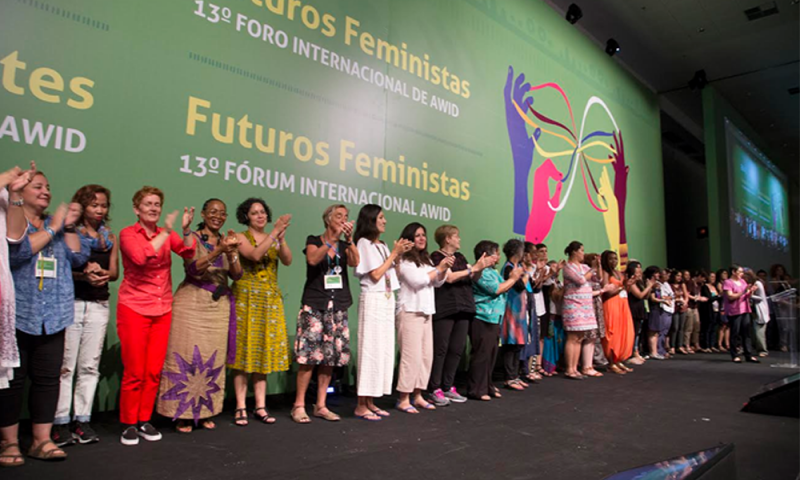
Un grand MERCI d'avoir pris part au 13ème Forum international de l'AWID !
Toute l'équipe de l'AWID vous remercie de nous avoir rejoint pour ces quatre jours d'apprentissage et de célébrations, pour envisager, rêver et co-créer nos Horizons féministes.
Nous avons été incroyablement inspiré-e-s et enthousiasmé-e-s par tout ce travail collectif que nous avons accompli ensemble !
Pour plus d'images, d'inspiration et de ressources :
« Mes rêves et mes objectifs ont toujours été les mêmes que ceux de Lohana Berkins : que la coopérative continue à exister et non à fermer. Continuez à offrir cet endroit à nos collègues travesti, à leur donner du travail et un lieu de soutien»
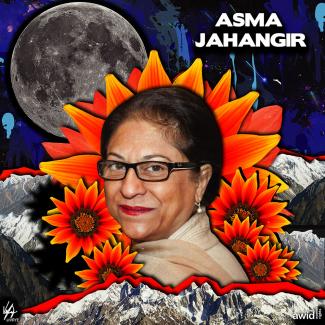
Asma was a leading Pakistani rights activist, fearless critic of the military’s interference in politics and a staunch defender of the rule of law.
She was the founding chairwoman of the Human Rights Commission of Pakistan, an independent group, and was a trustee of the International Crisis Group. She won international awards and served as the United Nations rapporteur on human rights and extrajudicial killings.
“With her life, Asma rewrote the history that many of us were told as women. Asma changed the world. She changed it in Pakistan, and she changed it in our imaginations."
Com base na nossa história de 20 anos de mobilização de mais fundos de melhor qualidade para a mudança social liderada por feministas, a AWID convida a participar da nova edição da nossa pesquisa principal:
"Onde está o dinheiro para a organização feminista?"
Please select your language in the upper right corner of the page.
Agroecology and Food Sovereignty
Context
The search for alternative means of food production based on environmental sustainability is gaining ground across regions. This worldwide search comes with a common characteristic: the need to involve rural people and particularly women, building on their local priorities and knowledge by employing the principle of agroecology.
Definition
Agroecology is a way of practicing agriculture or using technologies that do not harm the environment. It proposes breaking with the hegemonic rural development model based on large landed estates and single-crop plantations that benefit mostly agricultural businesses and entrenches social exclusion.
In family farming, agroecology manifests as a resistance to the current development model and its social, cultural, environmental, and economic problems. It opposes the lack of the farmer’s financial capital autonomy; and it symbolizes a resistance to the current agribusiness model.
Feminist perspective
Efforts based solely on agroecology may not be sufficient to solve all problems of women’s marginalization and invisibility. A feminist perspective is then crucial to analyze the norms associated with the idea of family as currently constituted as the perfect institution, as well as with the condition of women’s subordination.
In simpler terms, it is important to include in this debate a reflection on socially constructed gender roles to advance the emancipatory potential of agroecology.
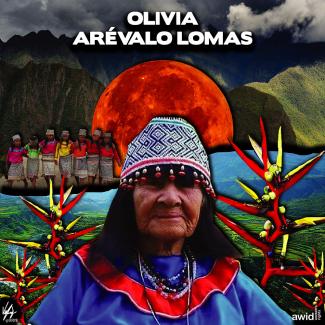
Olivia era la líder espiritual del pueblo indígena Shipibo Konibo.
Sabia mujer indígena y abuela, era conocida por practicar la medicina tradicional y cantar las canciones sagradas de su pueblo (Íkaros). Olivia Arévalo fue una activa defensora de los derechos culturales y ambientales de su pueblo. Su asesinato tuvo lugar en un contexto de conflicto territorial entre la comunidad shipibo y las empresas que quieren apropiarse de sus tierras para cultivar palma aceitera.
Integrantes de su comunidad han dicho: «Su muerte es una agresión contra toda la comunidad shipibo. Ella era la memoria viviente de su pueblo».
لجعل الواقع المركّب لتمويل الأشكال المختلفة من التنظيم النسوي، مرئي
AWID Members Engaging at CSW61
Member states and women's rights advocates and organisations are gathering at the United Nations Headquarters in New York from 13 - 24 March for the 61st Commission on the Status of Women to address ‘women’s economic empowerment’ in the context of Sustainable Development Goal 5.
Whilst AWID is looking forward to physically meeting those of you who will be in New York, we want to engage with all those who cannot attend CSW, and as much as possible, amplify your voices in relevant spaces.
Continue reading to find out how to engage with AWID around CSW, whether you are attending physically or not.
Participate in an artistic takeover!
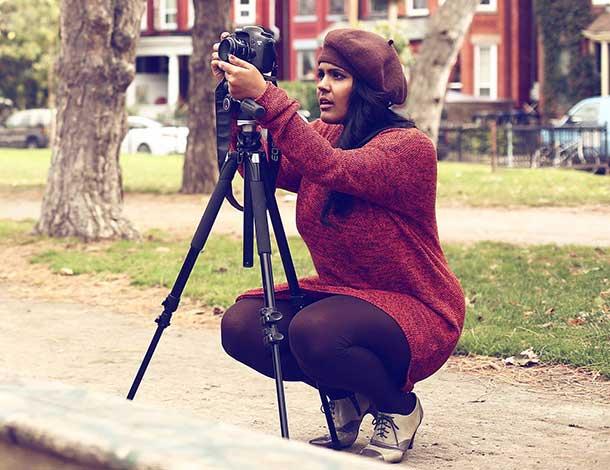
We are thrilled that AWID member Nayani Thiyagarajah is attending CSW this year and will take over the AWID Instagram. She will be available onsite to connect with other members for a possible feature on our Instagram. She will also explore possibilities of including some AWID members in a short film on the theme, ‘The personal is political’, a story of Nayani’s participation in this year’s CSW.
Nayani Thiyagarajah
Who is Nayani?
Nayani Thiyagarajah is a director, producer, and writer, dedicated to stories for the screen. A daughter of the Tamil diaspora, she calls Toronto home. For over 10 years, Nayani has worked in the arts and cultural industries. Her first independent feature documentary Shadeism: Digging Deeper (2015) had its World Premiere at the 2015 Zanzibar International Film Festival, where it won a Special Jury Prize. Nayani recently launched [RE]FRAME, with her producing partner Camaro West, a production company based out of Atlanta and Toronto, focused on re-framing the narratives around Black, Indigenous, and other people of colour through storytelling on screen.
On a more serious note, it should be noted that Nayani has a strange laugh, she's quite awkward, and her head is always in the clouds. She feels blessed beyond belief to create stories for the screen and play make believe for a living. Above all else, she believes in love.
Interested in meeting Nayani and being considered for inclusion in the film?
Send an email to [email protected] with the subject line “CSW Artistic Takeover”
By 13 March 2017
Please include your full name and country information.
Can't attend? Voice it!
If you are not able to attend CSW61 because of a travel ban, either due to the one imposed by the Trump administration or one you are facing from your own government, please share your story with us.
Send us messages you want heard in the United Nations spaces concerning funding, the impact of the reinstatement of the Global Gag Rule, and the need to push back against all types of religious fundamentalisms. You can send these in the following formats:
Video: no longer than two minutes and sent through a file sharing folder (for example dropbox, google drive)
Audio: no longer than two minutes and sent through a file sharing folder (for example dropbox, google drive)
Image: you can share a photo or a poster of your message
Text: no longer than 200 words and sent in the body of an email or in a word document
AWID members tell us that connecting with other members at CSW is valuable. In such a huge advocacy space, it is useful to connect with others including activists working on similar issues, or originating from the same country or region. Recognising the importance of connecting for movement building, we invite you to:
Interested in connecting with other members @CSW61?
If you are attending the CSW, we’d love to see what’s going on through your eyes!
Show us by capturing a moment you find speaks to the energy in the CSW space, be it on or off site. We hope to publish some of your ‘images’ on our social media channels and share on awid.org.
You can send us:
colour and/ or black and white photographs with a title (if you wish) and
a caption (no longer than 100 words) about the story your image tells.
Please also include:
your full name and country of origin and
let us know if we can publish the information you shared (in part or in full).
Send your images:
Email [email protected] with the subject line “CSW: Take a Picture!”
During the whole CSW or shortly after until Tuesday 28 March 2017.
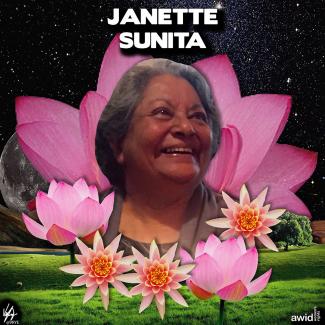
Originaire d'Inde, Janette était une personne formidable, fougueuse, bienveillante et aimante.
Son intolérance à l’égard de l’injustice et sa ferme volonté de défendre les droits de toutes les personnes l’ont amenée à travailler pour TARSHI (une ONG qui travaille sur la sexualité et la santé sexuelle et reproductive) pendant plus de 15 ans. Janette a géré et dirigé avec compétence les aspects financiers, les ressources humaines et les aspects opérationnels de TARSHI, naviguant adroitement dans la bureaucratie labyrinthique à laquelle sont soumises les ONG indiennes.
Son équipe se souvient « elle assurait nos arrières pour que nous puissions naviguer en eaux libres. Femme aux multiples talents, Janette nous a non seulement aidés à acquérir nos propres bureaux, mais elles les a également aménagés pour leur utilisation optimale. Elle aimait les voyages et les animaux et s'intéressait à la thérapie assistée par les animaux ».
Глобальный и разнообразный: Размышления о ресурсных реалиях феминистских организаций в глобальном и региональном масштабе.
Контекстуализированный: Объединение голосов, точек зрения и опыта феминистских движений во всем их богатстве, смелости и разнообразии.
Совместно созданный: Разработка и апробация опроса в тесном сотрудничестве с членами AWID и партнерками(-рами) по движению.
Дополняющий: С помощью активисток(-тов), феминистских грантодательниц(-телей) и союзниц(-ков), дополняет и усиливает имеющуюся информацию о состоянии ресурсов организаций, занимающихся вопросами феминизма, прав женщин и гендерной справедливости.
Многоязычный: Доступен на арабском, английском, французском, португальском, русском и испанском языках.
Конфиденциальность и безопасность прежде всего: Мы обязуемся обеспечить конфиденциальность и неприкосновенность ваших данных. Ознакомьтесь с нашей политикой конфиденциальности, чтобы понять, какие меры мы принимаем, чтобы защитить полученные от вас сведения.
Доступный: Доступен для людей с различными нарушениями слуха, зрения, движений и когнитивных способностей. Прохождение опроса занимает около 30 минут.
Воспроизводимый: Может быть воспроизведен различными организациями в специфических контекстах; инструменты для проведения опроса будут доступны для широкой аудитории для проведения дополнительных исследований и адвокации.