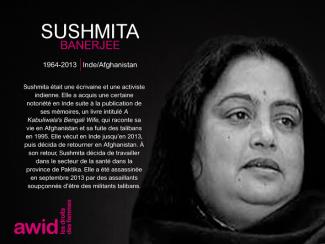
Sushmita Banerjee
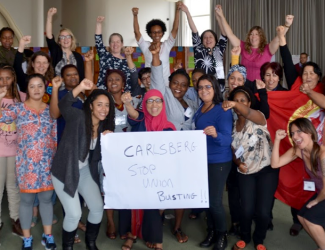
Women human rights defenders (WHRDs) worldwide defend their lands, livelihoods and communities from extractive industries and corporate power. They stand against powerful economic and political interests driving land theft, displacement of communities, loss of livelihoods, and environmental degradation.
Extractivism is an economic and political model of development that commodifies nature and prioritizes profit over human rights and the environment. Rooted in colonial history, it reinforces social and economic inequalities locally and globally. Often, Black, rural and Indigenous women are the most affected by extractivism, and are largely excluded from decision-making. Defying these patriarchal and neo-colonial forces, women rise in defense of rights, lands, people and nature.
WHRDs confronting extractive industries experience a range of risks, threats and violations, including criminalization, stigmatization, violence and intimidation. Their stories reveal a strong aspect of gendered and sexualized violence. Perpetrators include state and local authorities, corporations, police, military, paramilitary and private security forces, and at times their own communities.
AWID and the Women Human Rights Defenders International Coalition (WHRD-IC) are pleased to announce “Women Human Rights Defenders Confronting Extractivism and Corporate Power”; a cross-regional research project documenting the lived experiences of WHRDs from Asia, Africa and Latin America.
"Women Human Rights Defenders confronting extractive industries: an overview of critical risks and Human Rights obligations" is a policy report with a gender perspective. It analyses forms of violations and types of perpetrators, quotes relevant human rights obligations and includes policy recommendations to states, corporations, civil society and donors.
"Weaving resistance through action: Strategies of Women Human Rights Defenders confronting extractive industries" is a practical guide outlining creative and deliberate forms of action, successful tactics and inspiring stories of resistance.
The video “Defending people and planet: Women confronting extractive industries” puts courageous WHRDs from Africa, Asia, and Latin America in the spotlight. They share their struggles for land and life, and speak to the risks and challenges they face in their activism.
Challenging corporate power: Struggles for women’s rights, economic and gender justice is a research paper outlining the impacts of corporate power and offering insights into strategies of resistance.
AWID acknowledges with gratitude the invaluable input of every Woman Human Rights Defender who participated in this project. This project was made possible thanks to your willingness to generously and openly share your experiences and learnings. Your courage, creativity and resilience is an inspiration for us all. Thank you!
Si tu actividad es seleccionada, el equipo de AWID te contactará para evaluar y responder a tus necesidades de interpretación y accesibilidad.
Cette œuvre est la collaboration photographique et illustrative réalisée par Siphumeze et Katia pendant le confinement. Elle se penche sur les récits de sexe et de plaisir des queers noirs, le bondage, le sexe protégé, les jouets, la santé mentale et le sexe et bien d'autres choses encore. Elle a été créée pour accompagner l'anthologie Touch.
Nous œuvrons à renforcer les répercussions et l’influence des organisations, mouvements et défenseur-euse-s des droits des femmes sur la scène internationale et à amplifier leur voix collective, en vue de la pleine réalisation de la justice de genre et des droits humains des femmes.
يعقد كل منتدى في منطقة مختلفة، وقد حان الوقت لعودة منتدى جمعية حقوق المرأة في التنمية إلى آسيا! قمنا بزيارة العديد من البلدان في المنطقة، واستشرنا الحركات النسوية، وأجرينا تقييمات مفصلة للخدمات اللوجستية، وإمكانية الوصول، والسلامة، والتأشيرات، وغيرها من التفاصيل. وفي نهاية المطاف، وافق مجلس إدارة جمعية حقوق المرأة في التنمية على إقامة المنتدى في بانكوك، تايلاند، باعتبارها الخيار الأفضل. نحن متحمسون/ات للعودة إلى بانكوك، حيث عقدنا منتدى جمعية حقوق المرأة في التنمية في عام 2005.
This journal edition in partnership with Kohl: a Journal for Body and Gender Research, will explore feminist solutions, proposals and realities for transforming our current world, our bodies and our sexualities.
AWID works towards the realization of gender justice and women’s human rights worldwide. We work to strengthen the voices and impact of women’s rights advocates, organizations and movements. Our main Priority Areas relate to themes that are closely linked to dominant global trends.
These themes reflect growing challenges that negatively impact women’s rights worldwide.
Para inspirarte, te aconsejamos leer las propuestas que estamos ofreciendo antes de acercarnos tus ideas. Tal vez alguien ya haya pensado lo que quieres proponer. Puedes enviarnos tus propuestas a [email protected].
Revisaremos las propuestas que recibamos e iremos incluyendo las nuevas en este sitio de Internet.
Todos nuestros informes anuales estan disponibles en línea.
ในหัวข้อ เปิดรับสมัครกิจกรรม แสดงรายการรูปแบบและวิธีการจัดกิจกรรมที่แนะนำจำนวนหนึ่ง ใช้ความคิดสร้างสรรค์และอย่าลืมอ่านหัวข้อ “สิ่งที่คุณต้องรู้”

نحن نعلم أن السفر لأول مرة يمكن أن يكون مثيرًا ولكنه مرهق أيضًا. وإدراكًا للتحديات العديدة التي ينطوي عليها الأمر، سنقدم المزيد من المعلومات والتفاصيل حول كيفية الوصول إلى بانكوك عندما يتم فتح التسجيل في أوائل العام المقبل.
Margarita Salas, AWID
Nazik Abylgaziva, Labrys
Amaranta Gómez Regalado, Secretariado Internacional de Pueblos Indígenas frente al VIH/sida, la Sexualidad y los Derechos Humanos
Cindy Weisner, Grassroots Global Justice Alliance
Lucineia Freitas, Movimento Sem Terra
Second High-level Dialogue on Financing for Development