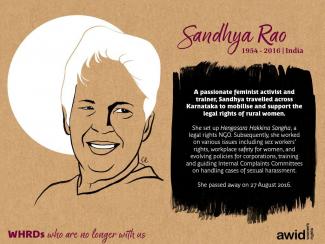
Sandhya Rao
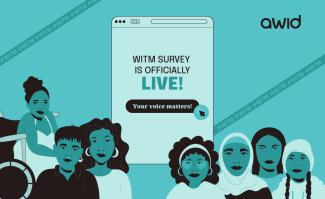
The “Where is the Money?” #WITM survey is now live! Dive in and share your experience with funding your organizing with feminists around the world.
Learn more and take the survey
Around the world, feminist, women’s rights, and allied movements are confronting power and reimagining a politics of liberation. The contributions that fuel this work come in many forms, from financial and political resources to daily acts of resistance and survival.
AWID’s Resourcing Feminist Movements (RFM) Initiative shines a light on the current funding ecosystem, which range from self-generated models of resourcing to more formal funding streams.
Through our research and analysis, we examine how funding practices can better serve our movements. We critically explore the contradictions in “funding” social transformation, especially in the face of increasing political repression, anti-rights agendas, and rising corporate power. Above all, we build collective strategies that support thriving, robust, and resilient movements.
Create and amplify alternatives: We amplify funding practices that center activists’ own priorities and engage a diverse range of funders and activists in crafting new, dynamic models for resourcing feminist movements, particularly in the context of closing civil society space.
Build knowledge: We explore, exchange, and strengthen knowledge about how movements are attracting, organizing, and using the resources they need to accomplish meaningful change.
Advocate: We work in partnerships, such as the Count Me In! Consortium, to influence funding agendas and open space for feminist movements to be in direct dialogue to shift power and money.
AWID’s working languages are English, French and Spanish. Thai will be added as the local language, as well as sign language & other accessibility measures. Other languages may be added if funding permits, so check back regularly for updates. We care about language justice and will try to include as many languages as we can and as our resources allow. We hope to create multiple opportunities for many of us to be present in our languages and to communicate with each other.
The Deadline to submit activities has been extended to February 1st, 2024
In the spirit of the Forum’s theme, we invite a diversity of activity topics and formats that:
جديد
كمشارك/ة عبر الإنترنت، يمكنك توجيه النشاطات والتواصل والتحدث مع الآخرين/ الأخريات وتجربة الإبداع والفن والاحتفال بمنتدى جمعية حقوق المرأة في التنمية بشكل مباشر. سيستمتع المشاركون/ات المتصلون/ات عبر الإنترنت ببرنامج غني ومتنوع، بدءًا من ورشات العمل والنقاشات وحتى نشاطات الاستشفاء والعروض الموسيقية. ستركز بعض الأنشطة على التواصل بين المشاركين/ات عبر الإنترنت، وسيكون البعض الآخر هجينًا بالفعل، يركز على الاتصال والتفاعل بين المشاركين/ات عبر الإنترنت وأولئك الموجودين/ات في بانكوك.
.
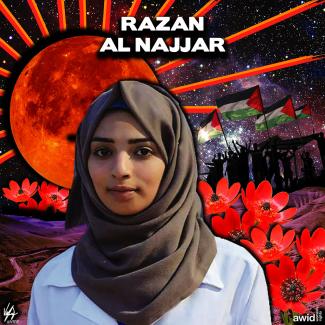
Razan was a 21-year-old volunteer medic in Palestine.
She was shot as she ran toward a fortified border fence, in an effort to reach a casualty in the east of the south Gaza city of Khan Younis.
In her very last Facebook post, Razan said: “I am returning and not retreating,” adding: “Hit me with your bullets. I am not afraid.”
It is exactly the same process and same deadline. Please use the same form to submit your activity, whether it is in-person, online, or both (hybrid).
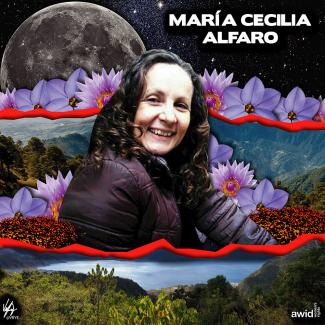
Most of María’s life was devoted to incorporating a feminist and gender perspective in institutional and organizational work, and capacity building in Latin America.
As a child, María had a strong interest in art, communication, nature, literature, and the achievement of justice, especially for women and marginalized groups.
María was committed to sexual and reproductive rights and was a member of the National Board for Integral Education in Sexuality. She is remembered by those who loved her as a “passionate and restless fighter” with a strong commitment to women’s and children’s rights.
ภาษาที่ AWID ใช้งานคือ ภาษาอังกฤษ ภาษาฝรั่งเศส และภาษาสเปน โดยภาษาไทยจะถูกเพิ่มเข้ามาในฐานะภาษาท้องถิ่น รวมถึงภาษามือและมาตราการในการช่วยให้เข้าถึงอื่นๆ โดยภาษาอื่นๆอาจถูกเพิ่มเข้ามาหากมีงบประมาณเพียงพอ สามารถเข้ามาดูการอัปเดทว่ามีการเพิ่มภาษาอื่นใดบางได้เรื่อยๆ เราใส่ใจในความยุติธรรมด้านภาษาและจะพยายามให้มีภาษามากที่ที่สุดเท่าที่งบประมาณจะสามารถครอบคลุมได้ เราหวังว่าเราจะสามารถสร้างโอกาสมากมายให้พวกเราสามารถสื่อสารกันหรือนำเสนอในภาษาของตัวเองได้
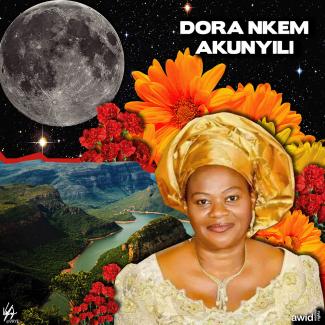
Dora was born in Benue State, Nigeria. She was a globally acclaimed pharmacist, technocrat, erudite scholar and community leader.
Dora’s revolutionary work created a paradigm shift in the Nigerian public service when she served as Director General of National Agency for Food and Drugs Administration and Control (NAFDAC) from 2001-2008. She spearheaded reforms in policy and regulatory enforcement that radically reduced the measure of fake drugs that plagued the Nigerian pharmaceutical sector during her tenure.
Having exemplified the reality of a courageous, competent woman who challenged the ills of a dominantly patriarchal society and drove change, she became an icon for women’s empowerment. She was appointed the Minister of Information and Communication between 2008 and 2010.
She died after a battle with cancer and is survived by her husband, six children and three grandchildren.
กรุณาคำนวณค่าใช้จ่ายโดยรวมถึงค่าเดินทางมายังกรุงเทพมหานคร ค่าที่พัก ค่าเบี้ยเลี้ยง ค่าวีซ่า ค่าสนับสนุนในการเข้าถึงต่างๆ และอื่นๆ ยังไม่รวมถึงค่าลงทะเบียนที่จะมีการประกาศเร็วๆนี้ โรงแรมในบริเวณสุขุมวิท กรุงเทพฯ มีราคาตั้งแต่ 1,700-6,800 บาทต่อคืน สำหรับการพักสองคน
โดยหากเป็นสมาชิก AWID จะได้รับส่วนลดค่าลงทะเบียน หากคุณยังไม่ได้เป็นสมาชิก เราขอเชิญชวนให้คุณสมัครสมาชิกและเข้าร่วมชุมชนเฟมินิสต์ระดับโลก
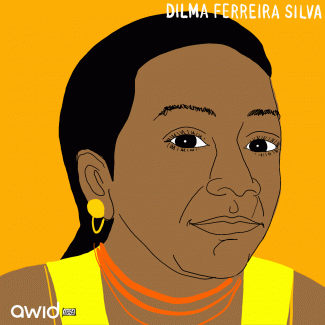
She herself was among the 32,000 people displaced by the Tucuruí, a mega-hydroelectric power plant, built in Brazil during the 1964-1985 military dictatorship.
In 2005 Dilma was invited to join the Movement of Dam-Affected Peoples in Brazil (MAB), and in 2006 she formed the women’s collective, eventually becoming regional coordinator of the movement.
In speaking about her activism, her colleagues commented:
“She stood out very fast because she was always very fearless in the struggle.”
Dilma lived in the rural settlement of Salvador Allende,50 kilometers from Tucuruí, and dedicated her life to better protect communities and the land affected by the construction of mega projects. She was especially concerned with the gendered impacts of such projects and advocated for women’s rights.
At a national MAB meeting in 2011, Dilma spoke to women affected by the dams, saying:
“We are the real Marias, warriors, fighters who are there, facing the challenge of daily struggle”.
In the following years, Dilma organized grassroots MAD groups and worked with the community to form farming cooperatives that created a better distribution of food for the community. They improved the commercialization of fishing, and developed a cistern project for safe drinking water. She was also an advocate for farmers whose lands were being coveted by ‘grileiros’ (land grabbers).
On 22nd March 2019, at the age of 48, Dilma, her husband and their friend were all brutally murdered. The three killings came as part of a wave of violence in the Amazon against the Movimento dos Trabalhadores Sem Terra (translates as ‘landless workers’ movement’), environmental and indigenous activists.
يرجى الرجوع إلى فتح باب التقديم للحصول على هذه المعلومات، بما في ذلك قسم "ما تحتاج/ين إلى معرفته".
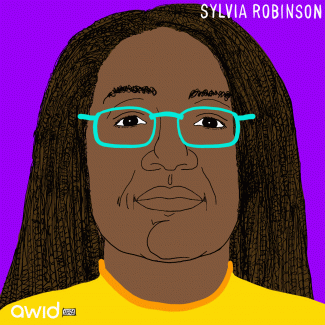
"Life is...about living in joy - waking up with purpose, feeling our creative energy, answering your calling." - Sylvia Robinson
This hub and performance space combine education, civic engagement, arts, social and spiritual services, and sustainable environmental practices. Sylvia envisioned it as a home where “there was a balance and synergy with the activities that people needed in order to sustain life.”
She was also one of the founding members of the Georgia Avenue Community Development Taskforce, a neighborhood group that works on social justice and organizing in Northwest DC to make sure the community has a voice in redevelopment and gentrification in the area.
“We're asking for affordable housing. We're asking that the small businesses that have been here for a long time don't get wiped out by new retail. We're asking for green space and space for people to get together to socialize. We're asking for streetscape improvements—better roads and lighting in the corridor.” - Sylvia Robinson about the Taskforce
Prior to becoming an organizer and after receiving a degree in computer science, Sylvia worked in air traffic control systems for over a decade. She then moved into drug and alcohol counselling, becoming increasingly engaged in community work.
“It was my call to be involved in community.” - Sylvia Robinson
Born in Washington D.C. on 14 August 1961, Sylvia passed away on 18 September 2017 after a battle with cancer.
“Sylvia's spirit and legacy will continue to inspire this community for many years to come.” - ECAC
เราทราบดีว่าการเดินทางครั้งแรกอาจจะน่าตื่นเต้นและบางครั้งอาจสร้างความกังวล จากการตระหนักถึงข้อท้าทายต่างๆต่อเรื่องนี้ เราจะจัดเตรียมข้อมูลมากขึ้นกว่านี้สำหรับการเดินทางมายังกรุงเทพฯเมื่อมีการเปิดรับลงทะเบียนในปีหน้า
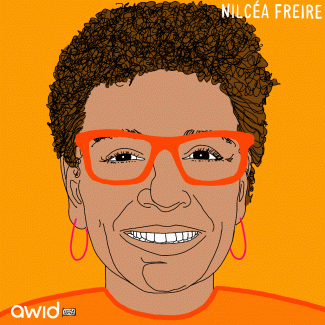
Nilcéa Freire was a Brazilian feminist activist, politician and academic. A persevering advocate for women’s rights and those of underrepresented minorities in the country, her life and work carried a long history of struggles and victories.
"While resisting we have to keep pushing for progress, and what we can achieve at this time, in my view, will be through the stupendous organization of young white women, and especially black women, in all of the state capitals and large cities of Brazil." - Nilcéa Freire
In 1999 she became the first woman to occupy the position of Dean at the State University of Rio de Janeiro. Here, she spearheaded the implementation of the first affirmative action policy for students graduating from public schools, requiring reserved places specifically for low-income black students in a public university. This system was adopted in dozens of other public universities.
Some years later, Nilcéa headed the Special Secretariat of Policies for Women in the government of former president Luiz Inácio Lula da Silva. In this capacity, she led the first National Women’s Conference. Over 12,000 women from across the country participated and the result of this collective work was embodied in the National Plan for Policies for Women.
Her commitment to women, Afro-Brazilians and indigenous peoples was also strongly reflected in her work to promote their rights through initiatives of the Brazil Ford Foundation office where she was a regional director.
The feminist activist Manoela Miklos recounted Nilcéa to be "a woman without equal".
At the age of 66, Nilcéa passed away in Rio de Janeiro on 29 December 2019 of cancer.
"Without words for the news of the death of dear Nilcea Freire. It is too sad to know that she left so early. She was always part of the ranks of those who do not settle for the injustices of the world. She was the Minister of Women, an activist, always active in the feminist cause. Much missed!” - Jandira Feghali, Federal Deputy
Watch Brazilian feminist Nilcea Freire on why we need to show solidarity with Brazil