L´AWID est une organisation féministe mondiale qui consacre ses efforts à la justice de genre, au développement durable et aux droits humains des femmes
Au cours des dernières années, nous avons observé une nouvelle tendance inquiétante dans les espaces internationaux consacrés aux droits humains. Les discours axés sur « la protection de la famille » sont en effet utilisés pour défendre des violations des droits de membres de la famille, pour renforcer et justifier l’impunité des auteurs de ces violations et pour restreindre l’égalité des droits au niveau de la vie familiale.
La campagne en faveur de la « Protection de la famille » est motivée par une volonté conservatrice d’imposer des conceptions « traditionnelles » et patriarcales de la famille et de priver les membres de la famille de leurs droits pour les transférer à « l’institution familiale ».
Les initiatives visant à la « Protection de la famille » reposent sur :
la montée du traditionalisme,
la montée du conservatisme culturel, social et religieux,
l’existence d’une hostilité vis-à-vis des droits humains des femmes, des droits sexuels, des droits des enfants et enfin des droits des personnes dont l’identité de genre et l’orientation sexuelle ne sont pas conformes aux normes.
Depuis 2014, un groupe d’Etats travaille de front dans les espaces dédiés aux droits humains sous le nom de « Group of Friends of the Family » (Groupe des ami-e-s de la famille) ; des résolutions sur la « Protection de la famille » ont été adoptées chaque année depuis 2014.
Ce programme s’est propagé au-delà du Conseil des droits humains. Nous avons observé l’introduction d’un discours régressif autour de la « famille » à la Commission sur la condition de la femme, ainsi que des tentatives d’introduction dans les négociations sur les Objectifs de développement durable.
Notre approche
L’AWID travaille avec des partenaires et des allié-e-s pour s’opposer ensemble à la « Protection de la famille » et à d’autres programmes régressifs et défendre l’universalité des droits humains.
En réponse à l’influence croissante d’acteurs régressifs au sein des espaces dédiés aux droits humains, l’AWID a rejoint des allié-e-s afin de créer l’Observatoire sur l'Universalité des droits (OURs) (site en anglais). L’OURs est un projet de collaboration qui surveille, analyse et diffuse les informations concernant les initiatives anti-droits telles que la « Protection de la famille ».
Le premier rapport de l’OURs, Nos droits en danger, trace une cartographie des acteurs et actrices qui constituent le lobby mondial anti-droits et identifie leur réthorique et stratégies clés ainsi que leur impact sur les droits humains.
Le rapport précise que le programme de « Protection de la famille » a développé une collaboration entre un large éventail d’acteurs régressifs aux Nations Unies, qu’il décrit comme « un cadre stratégique abritant des positions anti-droits et patriarcales multiples, où le cadre vise entre autres à légitimer et institutionnaliser ces positions. »
Contenu lié
Membership why page - Paz Romero
"This community is a place for connections, to understand our individual fights as part of global struggles, and sometimes even dance! There aren’t places like this online where you can meet real grassroots activists from all over the world and build solidarity and sisterhood."
- Paz Romero, Argentina
Snippet FEA Principles of work Education and Learning (FR)
ÉDUCATION ET APPRENTISSAGE CONSTANT
FRMag - Editors Note
Note éditoriale
Les Réalités féministes consistent en une invitation chaleureuse et bienveillante, une sorte d’acte de préservation et de soins massifs (versus un soin individuel), une invitation à archiver et à faire l’inventaire de tout le travail réalisé, sous peine de le voir disparaître. (...)
«لمّا نكون مُستَقتِلين للتغيير، لِكوننا في حالة مرضٍ وتمرّدٍ في آنٍ واحد، تخلو لغتنا من التعقيد وتنصقل لتعكس أبسط ركائزها. (...) لكن، ومع استمرار المرض والثورة، تصبح اللغة المُصاغة في هذه الحالة وعنها أكثرَ عمقاً وأكثرَ تعبيراً عن الفوارق الدقيقة، وتكون منغمسة انغماساً شديداً في التجربة الإنسانية التي يواجه فيها المرءُ حدودَه عند نهاية العالم». - جوانا هيدفا
بدأنا التخطيط لعدد المجلّة هذا مع نانا داركوا قُبيل مهرجان «ابدعي، قاومي، غيٍّري: مهرجان للحراكات النسوية» لجمعية «حقوق المرأة في التنمية» AWID، وانطلقنا وقتها من سؤالٍ هو بالأحرى ملاحظة حول حالة العالم، ورغبة في تغيير الاعتقادات السائدة: لماذا لا تزال جنسانيّاتنا وملذّاتنا تخضع للترويض والتجريم مع أنّه يتمّ تذكيرنا مراراً وتكراراً بأنّها لا تأتي بأيّ قيمة أو تطوّر؟ واستنتجنا أنّ جنسانيّاتنا، لمّا تتجسّد، فيها ما يتعارض مع النظام العالمي الذي ما زال يتجلّى من خلال ضوابط الحدود، والتمييز العنصري في توزيع اللقاح، والاستعمار الاستيطاني، والتطهير العرقي، والرأسمالية المُستشرية. هل يمكننا إذاً القول إنّ لجنسانيّاتنا قدرةٌ تعطيليّة؟ وهل يصحّ هذا القول عندما ننظر إلى واقع حركاتنا التي يتمّ الاستيلاء عليها ومأسستها في سعيها للتزوّد بالموارد؟
عندما يصبح عملنا المتجسّد مادةً ربحية في أيدي الأنظمة التي نسعى إلى إزالتها فلا عجب أنّ جنسانيّاتنا وملذّاتنا توضَع جانباً من جديد، لا سيّما أنّها ليست مُربِحة بما فيه الكفاية. لقد تساءلنا، في مواقف عدّة خلال إنتاج هذا العدد، ما الذي سيحدث إذا رفضنا مراعاة خدمات الرأسمالية الأساسية؟ لكن هل نجرؤ على هذا التساؤل وقد أنهكنا العالم؟ ربما يتمّ تجاهل جنسانيّاتنا بهذه السهولة لأنها لا تُعتَبَر أشكالاً من أشكال الرعاية. ربما ما نحتاجه هو أن نعيد تصوّر الملذّة كشكلٍ من أشكال الرعاية الجذرية، تكون أيضاً مناهضة للرأسمالية وللمؤسساتية.
بدأنا العام الثاني على التوالي لحالة الجائحة العالمية وكان لا بدّ أن تركّز مقاربتنا للتجسيدات العابرة للحدود القومية على ملاحظة سياسيّة واحدة: أنّ الرعاية هي شكل من أشكال التجسيد. وبما أنّ جزءاً كبيراً من عملنا يتمّ حالياً من دون أيّ اعتبار للحدود بيننا وفينا فنحن جميعاً متجسّدون بشكلٍ عابرٍ للحدود القومية، ونحن جميعاً نفشل. نحن نفشل في رعاية ذاتنا، والأهمّ أننا نفشل في رعاية الآخرين.
هذا الفشل ليس من صنع أيدينا.
إنّ الكثير من أهالينا اعتبروا العملَ مقايضةً، أي أنّه شيءٌ يُعطى مقابل أجرٍ وضمانة بالحصول على الرعاية. صحيحٌ أنّه تمّ الإخلال بهذه المقايضة أحياناً، لكنّ أهالينا ما كانوا يأملون أنّ عملهم سيوفّر لهم الرِضا الذاتي، وكانوا يعتمدون لهذا الغرض على نشاطهم الترفيهي وهواياتهم ومجتمعاتهم. أمّا اليوم، فنحن، أولادهم الذين تمّت تهيأتنا لنعتبر العمل متشابكاً مع الشغف، توقّعاتنا مختلفة تماماً. نحن لا نفرّق بين العمل والترفيه ونعتبرهما عنصراً واحداً، وبالنسبة للكثيرين بيننا، العمل بات يجسّد الذات بكاملها.
إنّ الرأسمالية القائمة على الأبويّة والمغايَرة الجنسية لا ترى لنا أيّ قيمة، ناهيك عن عملنا وجنسانيّاتنا. إنّه نظامٌ سيستمر في طلب المزيد والمزيد منك إلى يوم مماتك، وبعدها سيستبدلك بشخصٍ آخر. يُنتَظَر منّا أن نكون على اتصال بالإنترنت في كلّ الأوقات، ما يعني أنّه لا يمكننا الانصراف عن العمل حتى لو شئنا ذلك. إنّ هذا التَتْجير للعمل وفصله تماماً عن الشخص قد تسلّل إلى كلّ ناحية من نواحي حياتنا، ويتمّ ترسيخ هذا التَتْجير حتى في الأوساط الأكثر نسويّة والأكثر تمرّداً وتشدّداً.
لطالما حمَلَت تطلّعات الرأسمالية ضرراً كبيراً بالأجساد التي لا تتوافق مع النموذج المثالي، وأولئك الذين يسعون إلى ترسيخ سلطتهم استغّلوا الجائحة كفرصة لاستهداف النساء والأقلّيات الجنسية وكلّ مَن يعتبرونه دون المستوى.
تمّ إعداد هذا العدد الخاص بفعل هذا الواقع، وطبعاً، رغماً عن هذا الواقع.
لقد قدّم المساهمون/ المساهمات والعاملون/ العاملات كلّهم تقريباً مجهوداً يفوق طاقاتهم، وكلٌّ من الأعمال الواردة هنا هو نتاجُ سعيٍ شغوف ولكن أيضاً نتاج حالة إنهاكٍ شديد.
يشكّل هذا العدد، بطريقة غايةً في الواقعية، تجسيداً للعمل العابر للحدود القومية، علماً أنّ أيّ عمل في عصرنا الرقمي أصبحَ عابراً لتلك الحدود. وفيما فُرِضَ علينا تقبّل حدود جديدة، وهي حدود لا تخالف النظام القائم سابقاً بل تعزّزه، اختبرنا مباشرةً، إلى جانب مساهمينا، كيف تستنزف الرأسمالية طاقاتنا القصوى – كيف يصبح من الصعب بناء الحجج المتماسكة لا سيّما حينما تكون خاضعة لموعد التسليم. إننا نعاني بشكلٍ جَماعي من فقدان الكلام لأننا أساساً نعاني من فقدان العوالم.
الشعور بالضياع والوحدة في عالم الرأسمالية القائمة على الأبوية والمغايَرة الجنسية هو بالتحديد ما يجعل من الضروري أن نعيد تقييم أنظمة الرعاية التي نتّبعها وأن نُعيد النظر فيها. لقد حوّلنا هذا العدد بوسائل عدّة إلى مهمّة لإيجاد الملذّة في الرعاية. فبما أنّه بات من الصعب بناء الحجج المتماسكة، برزت الوسائط البصرية والمبتكرة وقد لجأ كثرٌ ممن اعتادوا الكتابة إلى هذه الوسائط كطرقٍ لإنتاج المعرفة واختراق الضباب الفكريّ الذي أحاط بنا. لقد ضمّينا في هذا العدد أصواتاً أخرى، بالإضافة إلى أصواتٍ عدّة استمعتم إليها في المهرجان، كوسيلة لإطلاق حوارات جديدة وتوسيع آفاقنا.
بما أنّ كلماتنا قد سُرِقَت منّا، يقضي واجبنا السياسي بأن نستمر في إيجاد الوسائل للحفاظ على أنفسنا والآخرين والاهتمام بأنفسنا وبالآخرين. بالتالي، يصبح تجسّدنا نوعاً من المقاومة إذ هو بداية إيجادنا لسبيل الخروج من الذات ودخولها.
ExploreTransnational Embodiments
This journal edition in partnership with Kohl: a Journal for Body and Gender Research, will explore feminist solutions, proposals and realities for transforming our current world, our bodies and our sexualities.
نصدر النسخة هذه من المجلة بالشراكة مع «كحل: مجلة لأبحاث الجسد والجندر»، وسنستكشف عبرها الحلول والاقتراحات وأنواع الواقع النسوية لتغيير عالمنا الحالي وكذلك أجسادنا وجنسانياتنا.
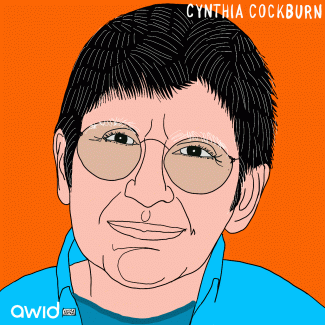
Cynthia Cockburn was a feminist sociologist, writer, academic, photographer and peace activist.
She explored the gendered aspects of violence and conflict and made significant contributions to the peace movement through her exploration of the themes of masculinity and violence as well as her local and international activism.
Cynthia brought a feminist power analysis to militarisation and war, and was among the academics whose writings and analysis clearly demonstrated how gender-based violence played a key part in perpetuating war. Working closely with peace activists in countries experiencing conflict, her findings covered diverse contexts including Northern Ireland, Bosnia-Herzegovina, Israel/Palestine, South Korea, Japan, Spain and the UK. She helped bring in her research and academic writings, an understanding that violence was experienced as a continuum of time and scale and perceived very differently when seen from a gendered lens.
In her words, “Gender helps us to see the continuity, the connection between instances of violence.”
Cynthia bridged her research with the activism she did locally and internationally with movements for demilitarisation, disarmament and peace. She helped start the Greenham Common women’s peace camp, which advocated for universal nuclear disarmament in Britain and was part of establishing the London chapter of Women in Black.
Over the decades, Cynthia organized and participated in local weekly vigils and the political choir Raised Voices, singing in the choir, and writing several of the lyrics to the songs that have made up its repertoire. She was also active in the Women’s International League for Peace and Freedom (WILPF), the European Forum of Socialist Feminists as well as in Women Against Fundamentalism.
“Cynthia shed feminist light, wove together feminist communities, sang songs of peace, listened, listened, listened, watched the birds – and stopped traffic. I’ll be forever and gratefully in her debt, the other ‘Cynthia’” – Cynthia Enloe
Cynthia was born in July 1934 and passed away in September 2019 at the age of 85.
Se rassembler à l’échelle mondiale, en tant qu’individus et mouvements, nous permet de générer une force considérable. Rejoignez-nous à Bangkok, en Thaïlande et en ligne en décembre 2024.
We are living in a world where the destruction of Nature fuels our current global economy.
FRMag - Roots of Love and Resilience
Kunyit Asam: The Roots of Love and Resilience
by Prinka Saraswati
The menstrual cycle usually lasts between 27 and 30 days. During this time, the period itself would only go on for five to seven days. During the period, fatigue, mood swings, and cramps are the result of inflammation. (...)
The space created by this festival has been so necessary. Necessary for the souls of those who are seeking comfort during these bleakest of times. Necessary for those craving community in what feels like an increasingly isolating world and above all, necessary for those fighting against the very systems that have brought many of us to our knees, especially over the past two years.
“Crisis is not new to feminist and social movements, we have a long history of surviving in the face of oppression and building our communities and our own realities.”
Advocating for alternative visions and alternative realities to the one we are currently living in is a fundamental building block of the feminist agenda. So many amazing people are doing the work of exploring different ways for us to exist in this world. These alternatives are people-centred. They are equitable and just. These worlds are filled with love, tenderness and care. The visions outlined are almost too beautiful to imagine, yet we must force ourselves to imagine because this is the only way we can continue.
Over the past 10 months, I have been incredibly fortunate to be working with a feminist collective that is not just imagining an alternative reality but actively living it. We are inspired by the work of so many other feminist movements across the globe who have not let the white supremacist, capitalist patriarchy deter their visions. This collective has held me together when all I wanted to do was fall apart. Much like the story shared by Maria Bonita on Day 4 of the festival, the liberation I have found in feminist movements is far too great to only be experienced by me. This is something we need to share, that we need to shout from the rooftops as we invite others to join.
Day 4 of the festival brought with it a captivating conversation between Felogene Anumo, Dr Dilar Dirik, Nana Akosua Hanson and Vandana Shiva who encouraged festival attendees to believe that not only is an alternative future possible - but that it is indeed urgent. Feminists have been talking about alternative worlds for so many years and hearing about these from the panellists was not just eye-opening but also comforting. Comforting in the sense that it made me feel safe to know that there are indeed strong, global feminist networks working across international and national borders, seeking to decolonise the established frameworks of our current realities.
What does an alternative reality look like?
During the session, Dr Dirik highlighted the fact that belief, sacrifice and patience are most needed to abolish the oppressive systems we currently live in. Collaboration, partnership, creativity, solidarity and autonomy. These are key pillars to building a global feminist society and they should be embraced by all feminist movements around the world.
Practical examples of these realities can be found across the globe, including the Soulaliyate Women's Land-Use Rights Movement. Referring to the tribal women in Morocco who live on collective land, the Soulalyate Women’s Movement is the first grassroots nationwide mobilisation for land rights in Morocco. Whilst initially the movement was quite small, it grew into a nationwide agenda that challenged the gendered nature of laws regulating land in the country. In 2019, the group contributed to overhauling the national framework legislation on the management of community property through the adoption of three sets of laws guaranteeing the equality of women and men.
Knowing about these feminist movements who are doing the work to make alternative futures a reality is incredibly inspiring and just what is needed, especially as I struggle to grapple with the neverending stream of bad news that seems to flow uninterrupted.
“Capitalist patriarchy is like a cancer. It doesn’t know when to stop growing” - Dr Vandana Shiva
AWID has always been a movement inspired by the feminist realities that we can live in. Through their festivals, as well as feminist realities magazine and toolkit, we have been shown a different way of doing things. We can imagine a world where care is prioritised, where feminist economies and gender justice are the norm. Creating alternative futures is how we fight back, it’s how we resist the violence that is perpetrated against our bodies every day.
The Crear | Resister | Transform Festival has allowed me to feel so connected to a global community, many of whom I will never meet. Knowing that we are all working towards and claiming another world has lit a fire in my soul and I cannot wait to see what the next festival will have in store.
If you missed it, make sure to watch the: "She is on her way: Alternatives, feminisms and another world" session from Day 4 of the festival below. And remember, as Dr Shiva said so eloquently: “Women’s energies will continue life on earth. We will not be defeated.”
Hevrin Khalaf fue una destacada líder política siria-kurda de la región autónoma de Rojava, donde las mujeres kurdas están arriesgando sus vidas para resistir la ofensiva turca y construir un sistema feminista.
Hevrin fue Secretaria General del Future Syria Party [Partido de la Futura Siria] (FSP, por sus siglas en inglés), un grupo que tenía como objetivo la construcción de puentes, la reconciliación entre diferentes grupos étnicos y el trabajo hacia una "Siria democrática, pluralista y descentralizada".
Hevrin fue un símbolo de este esfuerzo de reconciliación. También trabajó para promover la igualdad entre mujeres y hombres y fue una representante para periodistas, trabajadorxs de ayuda humanitaria y diplomáticxs que visitaban la región.
Hevrin era también una ingeniera civil de Derik, y fue una de las fundadoras de Foundation for Science and Free Though [(Fundación para la Ciencia y el Libre Pensamiento] en 2012.
El 12 de octubre de 2019 fue torturada y asesinada por la milicia Ahrar al-Sharqiya, sustentada por Turquía, durante una operación militar contra las Fuerzas Democráticas Sirias en Rojava.
"El asesinato de Khalaf es un punto de inflexión en la historia moderna de Siria. Demuestra una vez más el viejo proverbio kurdo "no hay amigxs sino montañas". Siempre seré amigo[NC1] de Khalaf y su visión de un mundo mejor." - Ahed Al Hendi
✉️ By registration for larger groups. Drop-ins for smaller groups. Register here
📅 Tuesday, March 11, 2025
🕒 12.00-2.00pm and 4.00-6.00pm EST
🏢 Chef's Kitchen Loft with Terrace, 216 East 45th St 13th Floor New York
Organizer: AWID
Snippet - Podcast Playlist Season 1 (ES)
FRMag - Mainstreaming The Invisible
Popularizar las realidades feministas invisibles
por Dr. Pragati Singh
En 2019, fui invitada por la BBC para hablar en la 100 Women Conference en Delhi, India. El tema era «El futuro del amor, las relaciones, y las familias». El público presente en el gran salón consistía mayoritariamente en jóvenes indixs: estudiantes universitarixs, profesionales, activistas, etc. (...)
arte: «Angels go out at night too» [Los ángeles también salen de noche], Chloé Luu >
Carta de amor a los movimientos feministas #4
A mis queridxs feministas que viven con el VIH:
Llevamos juntxs más de 20 años; el amor y apoyo de ustedes me es muy entrañable. Es interesante pensar que ustedes también tienen una edad similar a la de AWID, que somos contemporáneas, tratando de descubrir cómo comprometernos y apoyar a la comunidad. A las madres del movimiento: sus liderazgos y orientación han sido inigualables. Pienso en Prudence Mabele, Kate Thompson, Darien Taylor, Patricia Pérez, Martha Tholanah, Deloris Dockery, Iris De La Cruise, Doris Peltier, Cecilia Chung y tantxs otras. Aunque no son perfectxs (ya que ningunx de nosotrxs lo es), ustedes siempre ponen a su comunidad en primer lugar y abogan por la inclusión de TODXS lxs mujeres que viven con el VIH en los espacios feministas.
Amo la forma en que me sostuvieron cuando nadie más había podido hacerlo, pero lo más importante es cómo nos sostuvimos mutuamente. Ustedes comprenden el estigma, la discriminación, la violencia y el dolor, y también comprenden la alegría, el amor y el perdón. Como feministas que vivimos con el VIH, somos gloriosas y poderosas en nuestra interseccionalidad. Entendemos que el feminismo incluye y que está liderado por comunidades — las de nuestras hermanas negras, marronas e indígenas, las comunidades trans y de género diverso, lxs trabajadorxs sexuales, lxs queer/lesbianas, lxs que han sido encarceladxs y lxs que usan drogas —, tal y como se establece en los principios de la MPPVS (mayor participación de las personas que viven con el VIH y el sida). Practicamos un feminismo incluyente. Hablamos de los temas difíciles y de las comunidades criminalizadas, porque como personas que vivimos con el VIH, nosotrxs mismxs estamos criminalizadxs.
Sería muy desconsiderada si no le enviara un cariño especial a lxs mujeres jóvenes que viven con el VIH, que son el latido del movimiento. Lxs veo, Kia Lebejia, Keren Dunaway, Liz Onyango, Faith Ona, Sara Thapa Maga, Doreen Moraa, Yana Panfilova y millones de otrxs increíbles activistas que viven con el VIH. Ustedes son la energía que nos seguirá impulsando y que nos permitirá ser consideradxs importantes en los movimientos feministas hegemónicos. Gracias por hacer avanzar cada vez más a nuestro movimiento para incluir SIEMPRE a las personas trans y de género diverso, para hablar de las relaciones entre el cambio climático y la salud y los derechos sexuales y reproductivos.
Lxs quiero, quiero, quiero mucho. Para bien o para mal, avancemos juntxs porque esta es nuestra comunidad, esta es mi comunidad.
Diana Isabel Hernández Juárez était une enseignante, défenseure des droits humains et activiste pour l’environnement et les communautés guatémaltèque. Elle coordonnait le programme environnemental de la paroisse de Nuestra Señora de Guadalupe, sur la côte sud du Guatemala.
Diana a dévoué sa vie à co-créer des actions de sensibilisation à l’environnement, en étroite collaboration avec les communautés locales, dans le but de résoudre les problèmes environnementaux et protéger les ressources naturelles. Elle a été à l’initiative de projets de pépinières forestières, de fermes municipales, de jardins familiaux et de campagnes de nettoyage. Active dans les programmes de reboisement, elle s’est efforçée de récupérer des espèces locales et de remédier aux pénuries d’eau dans plus de 32 communautés rurales.
Le 7 septembre 2019, Diana a été assassinée par balle par deux hommes armés inconnus alors qu’elle participait à une procession dans sa localité. Diana n’avait que 35 ans au moment de son décès.
Al unirte a AWID, te sumas a un proceso organizativo feminista mundial, un poder colectivo surgido del trabajo entre movimientos y basado en la solidaridad.