Left
Half
Left

Analyses Spéciales

L´AWID est une organisation féministe mondiale qui consacre ses efforts à la justice de genre, au développement durable et aux droits humains des femmes

La mémoire comme forme de résistance : un hommage

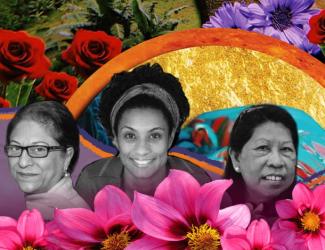
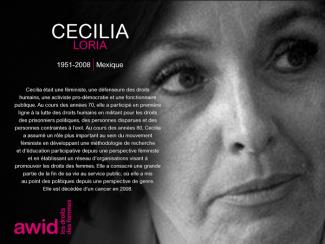
L’hommage se présente sous forme d’une exposition de portraits d’activistes du monde entier qui ne sont plus parmi nous qui ont lutté pour les droits des femmes et la justice sociale. 


En 2020, nous adoptons une démarche légèrement différente 

Cette année, tout en continuant à convoquer la mémoire de celleux qui ne sont plus parmi nous, nous souhaitons célébrer leur héritage et souligner les manières par lesquelles leur travail continue à avoir un impact sur nos réalités vécues aujourd’hui.

49 nouveaux portraits de féministes et de défenseur·e·s viennent compléter la gallerie. Bien que de nombreuses des personnes que nous honorons dans cet hommage sont décédé·e·s du fait de leur âge ou de la maladie, beaucoup trop d’entre iels ont été tué·e·s à cause de leur travail et de qui iels étaient.

Les histoires des activistes à l'honneur dans cet Hommage font vivre leur héritage et continuent d'inspirer le travail et l’action de nos mouvements.

Visiter notre exposition virtuelle

Les portraits de l'édition 2020 ont été illustrés par Louisa Bertman, artiste et animatrice qui a reçu plusieurs prix.

L’AWID tient à remercier nos membres, les familles, les organisations et les partenaires qui ont contribué à cette commémoration. Nous nous engageons auprès d’elleux à poursuivre le travail remarquable de ces féministes et défenseur·e·s et nous ne ménagerons aucun effort pour que justice soit faite dans les cas qui demeurent impunis.

« Ils ont essayé de nous enterrer. Ils ne savaient pas que nous étions des graines » - Proverbe mexicain

L'Hommage a été inauguré en 2012

Le premier hommage aux défenseur-e-s des droits humains a pris la forme d’une exposition de portraits et de biographies de féministes et d’activistes disparu·e·s lors du 12e Forum international de l’AWID en Turquie. Il se présente maintenant comme une gallerie en ligne, mise à jour chaque année.

Depuis, 467 féministes et défenseur-e-s des droits humains ont été mis·es à l'honneur.

Visiter notre exposition virtuelle

Contenu lié

¿Cuánto tiempo permanecerá abierta la encuesta?

La encuesta permanecerá abierta hasta fines de agosto de 2024. Te pedimos que la respondas dentro de dicho lapso para asegurarte de que tus respuestas se incluyan en el análisis.

Juillet 2015

Forum des femmes sur le financement de l’égalité des genres

  • Le Forum a eu lieu le 10 juillet 2015, à Addis-Abeba. Il a rassemblait des féministes, des femmes venant de la base, des défenseuses de l’égalité des genres, des universitaires et des représentant-e-s des organisations/réseaux de défense des droits des femmes. Un certain nombre de représentant-e-s de l’ONU et d’autres responsables politiques ont été invité-e-s à apporter leur contribution.
  • Les objectifs du Forum des femmes sont les suivants : échanger des informations sur l’état d’avancement des dernières négociations relatives au FdD, analyser conjointement le panorama et le suivi du FdD, adopter une position commune concernant la défense des droits des femmes et, enfin, élaborer des stratégies visant à permettre aux organisations de femmes de contribuer de manière significative et considérable à la Conférence d’Addis Abeba sur le FdD, et ce dans une perspective féministe.
  • Le Forum des femmes est organisé par le WWG on FfD, en collaboration avec FEMNET, le Fonds de développement pour la femme africaine (AWDF) et la Post-2015 Women's Coalition. Il bénéficie également du soutien de l’ONU Femmes.

Forum des OSC sur le FdD

  • Le Forum des OSC sur le FdD a eu lieu à Addis-Abeba les 11 et 12 juillet 2015. Ses objectifs sont les suivants : informer les OSC participantes de l’état d’avancement des processus officiels et coordonner la participation de la société civile pendant la troisième Conférence sur le FdD ; élaborer une Déclaration collective des OSC et les messages des OSC à destination des participant-e-s aux tables rondes de la Conférence sur le FdD, mettre en place des manifestations parallèles organisées par le groupe des OSC sur le FdD et tout autre événement qui pourrait se présenter ;  enfin, planifier et organiser les futurs domaines d’engagement des OSC dans le secteur du financement du développement, au-delà de la troisième Conférence sur le FdD.
  • Pour plus d’informations, vous pouvez consulter le site internet du Groupe des OSC sur le FdD (en anglais) ou prendre contact avec le Groupe de coordination des OSC pour Addis-Abeba ([email protected]).

La troisième Conférence internationale des Nations Unies sur le financement du développement

  • La troisième Conférence internationale des Nations Unies sur le financement du développement a eu lieu à Addis-Abeba, en Éthiopie, du 13 au 16 juillet 2015. Ses objectifs principaux étaient les suivants : évaluer les progrès accomplis dans la mise en œuvre du Consensus de Monterrey (2002) et de la Déclaration de Doha (2008) ; traiter des problèmes nouveaux et de ceux qu’il faudra anticiper, y compris dans le contexte de récentes initiatives multilatérales visant à encourager la coopération internationale pour le développement et en tenant compte des éléments suivants : l’évolution actuelle du cadre de la coopération pour le développement, les interrelations entre les différentes sources de financement du développement, les synergies existantes entre les différents objectifs de financement propres aux trois dimensions du développement durable (économique, sociale et environnementale) et la nécessité de soutenir le programme de développement des Nations Unies au-delà de 2015, et, enfin, la redynamisation et le renforcement du processus de suivi relatif au financement du développement.
  • Le Programme d’action d’Addis-Abeba a été adopté le 15 juillet 2015 par les chefs d’États et de gouvernements ainsi que les hauts-représentants de l’ONU.
  • Cependant, les pays en développement, les OSC et plus particulièrement les organisations de femmes, estiment que le Programme d’action d’Addis-Abeba n’a pas atteint son objectif. Le Groupe de Femmes sur le Financement du Développement a exprimé une vive déception et exigé des changements structurels sur le plan de la gouvernance économique mondiale et sur celui de l’architecture du développement. Consultez leur réaction au document final. Des centaines d’organisations et de réseaux de la société civile du monde entier ont aussi manifesté de vives préoccupations et de sérieuses réserves. Lisez leurs réactions au document final.

Snippet FEA Lohana Berkins (FR)

L'une des dirigeantes fondatrices de la coopérative était Lohana Berkins, une militante, défenseuse et promotrice de l'identité trans. Lohana a joué un rôle crucial dans la lutte pour les droits des personnes trans et travestis.

Grâce à sa lutte, entre autres choses, l'approbation de la loi sur l'identité de genre a été obtenue. C'est l'une des lois les plus progressistes au monde, garantissant les droits fondamentaux des personnes trans et des travestis. Désormais, les personnes peuvent changer de nom et de sexe avec un affidavit et ont accès à des soins de santé complets sans intervention/approbation judiciaire ou médicale (Outright International, 2012).

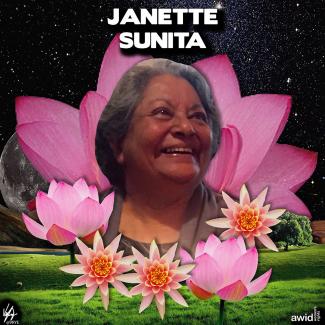
Janette Sunita

Originaire d'Inde, Janette était une personne formidable, fougueuse, bienveillante et aimante.

Son intolérance à l’égard de l’injustice et sa ferme volonté de défendre les droits de toutes les personnes l’ont amenée à travailler pour TARSHI (une ONG qui travaille sur la sexualité et la santé sexuelle et reproductive) pendant plus de 15 ans. Janette a géré et dirigé avec compétence les aspects financiers, les ressources humaines et les aspects opérationnels de TARSHI, naviguant adroitement dans la bureaucratie labyrinthique à laquelle sont soumises les ONG indiennes.

Son équipe se souvient « elle assurait nos arrières pour que nous puissions naviguer en eaux libres. Femme aux multiples talents, Janette nous a non seulement aidés à acquérir nos propres bureaux, mais elles les a également aménagés pour leur utilisation optimale. Elle aimait les voyages et les animaux et s'intéressait à la thérapie assistée par les animaux ».


Janette Sunita, India

AWID Members Engaging at CSW61

Member states and women's rights advocates and organisations are gathering at the United Nations Headquarters in New York from 13 - 24 March for the 61st Commission on the Status of Women to address ‘women’s economic empowerment’ in the context of Sustainable Development Goal 5.

Whilst AWID is looking forward to physically meeting those of you who will be in New York, we want to engage with all those who cannot attend CSW, and as much as possible, amplify your voices in relevant spaces.

Continue reading to find out how to engage with AWID around CSW, whether you are attending physically or not.


Participate in an artistic takeover!

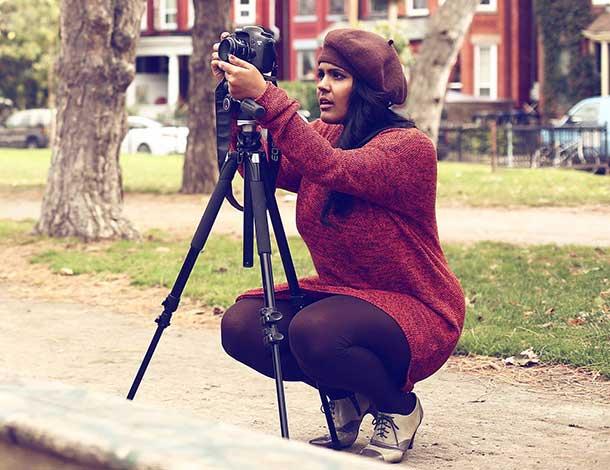
We are thrilled that AWID member Nayani Thiyagarajah is attending CSW this year and will take over the AWID Instagram. She will be available onsite to connect with other members for a possible feature on our Instagram. She will also explore possibilities of including some AWID members in a short film on the theme, ‘The personal is political’, a story of Nayani’s participation in this year’s CSW.

Nayani Thiyagarajah

Who is Nayani?

Nayani Thiyagarajah is a director, producer, and writer, dedicated to stories for the screen. A daughter of the Tamil diaspora, she calls Toronto home. For over 10 years, Nayani has worked in the arts and cultural industries. Her first independent feature documentary Shadeism: Digging Deeper (2015) had its World Premiere at the 2015 Zanzibar International Film Festival, where it won a Special Jury Prize. Nayani recently launched [RE]FRAME, with her producing partner Camaro West, a production company based out of Atlanta and Toronto, focused on re-framing the narratives around Black, Indigenous, and other people of colour through storytelling on screen.

On a more serious note, it should be noted that Nayani has a strange laugh, she's quite awkward, and her head is always in the clouds. She feels blessed beyond belief to create stories for the screen and play make believe for a living. Above all else, she believes in love.

(Biography submitted by Nayani)

Interested in meeting Nayani and being considered for inclusion in the film?

  • Send an email to [email protected] with the subject line “CSW Artistic Takeover”

  • By 13 March 2017

  • Please include your full name and country information.


Can't attend? Voice it!

If you are not able to attend CSW61 because of a travel ban, either due to the one imposed by the Trump administration or one you are facing from your own government, please share your story with us.

Send us messages you want heard in the United Nations spaces concerning funding, the impact of the reinstatement of the Global Gag Rule, and the need to push back against all types of religious fundamentalisms. You can send these in the following formats:

  • Video: no longer than two minutes and sent through a file sharing folder (for example dropbox, google drive) 

  • Audio: no longer than two minutes and sent through a file sharing folder (for example dropbox, google drive)

  • Image: you can share a photo or a poster of your message 

  • Text: no longer than 200 words and sent in the body of an email or in a word document

Share your message with us


Meet other members @CSW61

AWID members tell us that connecting with other members at CSW is valuable. In such a huge advocacy space, it is useful to connect with others including activists working on similar issues, or originating from the same country or region. Recognising the importance of connecting for movement building, we invite you to:

Interested in connecting with other members @CSW61?

  • Email [email protected] with the subject line “CSW AWID Members

  • NOTE: Please let us know your full name and country, and if we can share your email address with other members interested in meeting at CSW. 

Meet current AWID members


Take a picture!

If you are attending the CSW, we’d love to see what’s going on through your eyes!

Show us by capturing a moment you find speaks to the energy in the CSW space, be it on or off site. We hope to publish some of your ‘images’ on our social media channels and share on awid.org

You can send us: 

  • colour and/ or black and white photographs with a title (if you wish) and 

  • a caption (no longer than 100 words) about the story your image tells.

​Please also include:

  • your full name and country of origin and

  • let us know if we can publish the information you shared (in part or in full).

Send your images:

  • Email [email protected] with the subject line “CSW: Take a Picture!

  • During the whole CSW or shortly after until Tuesday 28 March 2017. 

Snippet - Intro WITM - PT

Com base na nossa história de 20 anos de mobilização de mais fundos de melhor qualidade para a mudança social liderada por feministas, a AWID convida a participar da nova edição da nossa pesquisa principal:

"Onde está o dinheiro para a organização feminista?"

(WITM)

PARTICIPE NO INQUÉRITO!Veja o tutorial

Please select your language in the upper right corner of the page.

第14屆AWID論壇的主題是什麼?

第十四屆論壇的主題是“女權主義現實實踐:我們的行動力量”。

我們將女權主義現實實踐理解為不同方式和形式的存在,向我們展示了儘管有主導的權力系統但仍舊存在各種可能性去反抗和抵抗它們。我們將這些女權主義現實實踐理解為希望和力量的開墾與體現,並且是多維的、動態的和植根於特定背景和歷史時刻的。

閱讀有關女權主義現實實踐的更多信息

Snippet FEA Bauen Hotel (EN)

Only a year after it was founded, the members of Nadia Echazú started to work in haute couture and organized a fashion show in the historic Bauen Hotel.

They showcased five models and some workers of the textile cooperative walked down the runway with their own designs.

This was revolutionary not only because they were designing alternatives to mainstream fashion, but also because they were creating accessible, inclusive clothes for all trans and travesti bodies.

Feminist economies should also be about feeling amazing and comfortable in the clothes we are wearing.

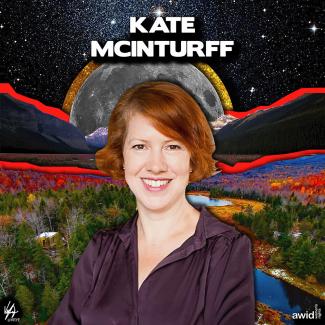
Kate McInturff

From Peacebuild to the Canadian Feminist Alliance for International Action, Amnesty International, and the Canadian Centre for Policy Alternatives (CCPA), Kate had a lifelong passion for women’s rights and gender equality and dedicated her career to fighting inequality and making the world a more compassionate place.

Kate was a member of the Coordinating Committee of Social Watch and a contributor to the Canadian National Social Watch reports.  As a Senior Researcher at the CCPA, Kate received national acclaim for researching, writing, and producing the annual “The Best and Worst Places to be a Woman in Canada” report.

Kate died peacefully surrounded by her family, following a three-year battle with colon cancer. She is described by loved ones as a “Funny, Fearless, Unapologetically Feminist.”


Kate McInturff, Canada

Background

Why this resource?

While active participants on the front lines of protests and uprisings in the Middle East and North Africa (MENA), women became invisible, absent from processes of formation of the new states, and excluded from decision-making roles, responsibilities, and positions in the aftermath of the uprisings. Except in rare cases, men dominated leadership positions in transitional structures, including the constitutional reform and electoral committees[i]. Subsequent elections brought very few women to parliamentary and ministerial positions.

Additionally, a strong and immediate backlash against women and women’s rights has clearly emerged in the aftermath. The rise of new religious fundamentalist groups with renewed patriarchal agendas aiming to obliterate previous gains of the women’s movements even in countries with longer histories of women’s rights, such as Tunisia, has been very alarming.

The varying contexts of governance and transition processes across the MENA countries presents an important opportunity for women human rights defenders to shape the future of these democracies. However, the lack of prioritization of women’s rights issues in the emerging transitions and the aforementioned backlash have posed a variety of complex challenges for the women’s movements. Faced with these enormous challenges and possibilities, women’s rights activists have been struggling to forge ahead a democratic future inclusive and only possible with women’s rights and equality. The particular historical and contextual legacies that impact women’s movements in each country continue to bear on the current capacities, strategies, and overall preparedness of the women’s movements to take on such a challenge. Burdened with daily human rights violations in one context, with lack of resources and tools in another, with organizational tensions in a third, in addition to the constant attacks on them as activists, women human rights defenders have voiced their desire to be more equipped with knowledge and tools to be effective and proactive in engaging with these fast-changing environments. Conceptual clarity and greater understanding of notions and practices of democratization, transitional justice tools and mechanisms, political governance and participation processes, international and local mechanisms, movement building strategies, constitutional reform possibilities, and secularization of public space and government are important steps to defining future strategic action.

It is clear that feminists and women’s rights activists cannot wait for women’s rights to be addressed after transitions – issues must be addressed as the new power configurations are forming. Experiences of earlier moments of transition, namely from colonial rule, have clearly demonstrated that women’s rights have to be inherently part of the transition movement towards a more just and equal society.

What is included?

This publication represents a research mapping of key resources, publications and materials on transitions to democracy and women’s rights in different countries of the world that have undergone such processes, such as: Indonesia, Chile, South Africa, Nepal, Mexico, Argentina, Poland, Ukraine, as well as within the Middle East and North Africa (MENA). It provides bibliographic information and short summaries of resources which succinctly identify the contextual changes and challenges facing women in those particular transitional moments, as well as clearly delineates the ways in which women’s rights activists sought to confront those challenges and what lessons were learned.

A key criterion in the selection process was the primacy of a women’s rights/feminist perspective; the few exceptions to this rule offer a unique and, we hope, useful, perspective on the issues that women’s rights organizations and activists face in the region.  The texts have been selected to provide a wide range of information, relevant to women human rights defenders working from the grassroots to the international level, across issues (including different case studies and examples), from different perspectives (international human rights bodies, academic institutions, NGO contributions, activists’ experiences, etc.), and at a wide range of levels of complexity, in order to respond to the needs of as many readers as possible.

The mapping clusters resources under six major categories:

  • Transitions to Democracy
  • Political Participation
  • Movement Building
  • Transitional Justice
  • Constitutional/Legal Reform
  • Responses to Fundamentalisms


[i]This and other context points are drawn from the report from Pre AWID Forum meeting on Women’s Rights in Transitions to Democracy: Achieving Rights, Resisting Backlash, collaboratively organized by AWID, the Equality Without Reservation Coalition, Global Fund for Women and Women’s Learning Partnership

Snippet - WITM To make - AR

لجعل الواقع المركّب لتمويل الأشكال المختلفة من التنظيم النسوي، مرئي

這次論壇有什麼不同?

我們一直努力確保論壇是由合作夥伴、運動和我們的優先群體共同來開發。

對於即將舉行的論壇,我們旨在加深和增強共同創造與合作的精神和實踐。我們還認識到有必要在多樣的聲音和體驗之間取得平衡,讓參與者和工作人員有調整呼吸、休息和享受一些空閒時間的空間。

該論壇將在以下方面有所不同:

  • 特別有組織條理的論壇活動大幅減少,因為我們希望人們有時間去參與、體驗、消化資訊和彼此交談等。這是溝通的關鍵:您可以參加論壇、積極活躍參與,不必協助推動特別有組織的活動(或「場次」)。
  • 我們將擁有開放空間(至少會有一個下午沒有任何有組織的活動),而且整個論壇過程中都將有可供使用的物理空間鼓勵人們自己組織會議等。
  • 我們有一個內容和方法委員會,由來自不同地區的女權主義者組成,他們在參與式方法上頗有建樹,以創新和吸引人的方式參與並支持我們的論壇活動。


Snippet FEA The fight for a world full of workplaces (ES)

La lucha por un mundo lleno de lugares de trabajo libres de todas formas de discriminación, estigma y exclusión es digna. Un mundo en el que el trabajo sexual sea descriminalizado y reconocido como trabajo es parte integrante de esto.

Un mundo donde todxs lxs trabajadorxs tengan condiciones de trabajo seguras, salarios dignos y puedan disfrutar de los mismos derechos como el acceso a la salud, pensiones, permisos por enfermedad, vacaciones, seguridad laboral y más, sin importar su género, raza, etnia, edad o capacidad.

Los derechos laborales son cuestiones feministas, y los sindicatos feministas desempeñan un papel clave en la promoción de los derechos legales, laborales y económicos de todxs lxs trabajadorxs, especialmente lxs trabajadorxs migrantes, lxs trabajadorxs domésticxs, lxs trabajadorxs informales y lxs trabajadorxs sexuales. Estas son personas que recientemente se han visto afectadas de manera desproporcionada por la pandemia, su crisis de cuidados, los confinamientos, toques de queda y el aumento de la vigilancia y represión policial.

Aquí les presentamos las historias de activistas feministas y sindicalistas que luchan por mejores condiciones de trabajo y mejores mundos para todxs.

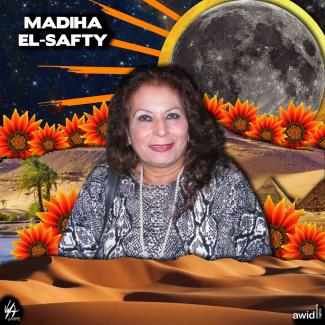
Madiha El Safty

Madiha fue una destacada profesora de Sociología con activa participación en la sociedad civil como defensora de los derechos de las mujeres en la región árabe.

Presidió la Alianza para las Mujeres Árabes y dentro del Consejo Nacional de Mujeres fue miembro del Comité de la Sociedad Civil y del Comité para el Desarrollo de la Gobernación de Minia. Fue autora de numerosas publicaciones en las que analizó y arrojó luz sobre las desigualdades de género y la discriminación contra las mujeres.

Es recordada con cariño por colegas, estudiantes y amigxs.


Madiha El Safty, Egypt

Twitter Test

Snippet - WITM About the survey - RU

Об опросе

  • Глобальный и разнообразный: Размышления о ресурсных реалиях феминистских организаций в глобальном и региональном масштабе.
  • Контекстуализированный: Объединение голосов, точек зрения и опыта феминистских движений во всем их богатстве, смелости и разнообразии.
  • Совместно созданный: Разработка и апробация опроса в тесном сотрудничестве с членами AWID и партнерками(-рами) по движению.
  • Дополняющий: С помощью активисток(-тов), феминистских грантодательниц(-телей) и союзниц(-ков), дополняет и усиливает имеющуюся информацию о состоянии ресурсов организаций, занимающихся вопросами феминизма, прав женщин и гендерной справедливости.
  • Многоязычный: Доступен на арабском, английском, французском, португальском, русском и испанском языках.
  • Конфиденциальность и безопасность прежде всего: Мы обязуемся обеспечить конфиденциальность и неприкосновенность ваших данных. Ознакомьтесь с нашей политикой конфиденциальности, чтобы понять, какие меры мы принимаем, чтобы защитить полученные от вас сведения.
  • Доступный: Доступен для людей с различными нарушениями слуха, зрения, движений и когнитивных способностей. Прохождение опроса занимает около 30 минут.
  • Воспроизводимый: Может быть воспроизведен различными организациями в специфических контекстах; инструменты для проведения опроса будут доступны для широкой аудитории для проведения дополнительных исследований и адвокации.

我如何資助自己參加AWID論壇?許多活動家負擔不起論壇費用,AWID是否可以提供一些幫助?

請訪問“資助建議”頁面,以獲取一些想法和靈感,瞭解如何為參與論壇提供資金,裡面也包括AWID能提供的部分資金支持