.
Les défenseuses des droits humains s’auto-identifient comme des femmes ou des personnes lesbiennes, bisexuelles, transgenres, queer, intersexes (LBT*QI) ou autres qui défendent les droits. Elles sont exposées à des risques et à des menaces de nature genrée à cause du travail qu’elles accomplissent en faveur des droits humains et/ou en conséquence directe de leur identité de genre ou de leur orientation sexuelle.
Les défenseuses des droits humains subissent une violence et une discrimination systématique du fait de leur identité, mais aussi à cause de la lutte indéfectible qu’elles mènent en faveur des droits, de l’égalité et de la justice.
Le programme Défenseuses des droits humains collabore avec des partenaires internationaux et régionaux ainsi qu’avec les membres de l’AWID pour éveiller les consciences à propos de ces risques et menaces, pour plaider en faveur de mesures féministes et holistiques de protection et de sécurité et enfin pour promouvoir activement une culture du souci de soi et du bien-être collectif au sein de nos mouvements.
Les défenseuses des droits humains sont exposées aux mêmes types de risques que toutes les autres personnes qui défendent les droits humains, les communautés et l’environnement. Mais elles se heurtent également à des violences fondées sur le genre et à des risques spécifiques de nature genrée parce qu’elles remettent en cause les normes de genre en vigueur au sein de leur culture et de leur société.
En défendant les droits, les défenseuses des droits humains sont exposées aux risques suivants :
Nous travaillons en collaboration avec des réseaux internationaux et régionaux ainsi qu’avec nos membres pour :
Nous travaillons à la promotion d’une approche holistique de la protection des défenseuses, qui suppose notamment :
Nous souhaitons contribuer à l’avènement d’un monde plus sûr pour les défenseuses des droits humains, leurs familles et leurs communautés. Nous pensons que le fait que les défenseuses œuvrent en faveur des droits et de la justice ne devrait pas leur faire courir de risques ; leur action devrait être appréciée et célébrée.
Promouvoir la collaboration et la coordination entre organisations de défense des droits humains et des droits des femmes au niveau international, et ce dans le but de d’apporter des réponses plus efficaces dans le domaine de la sureté et du bien-être des défenseuses des droits humains ;
Soutenir les réseaux régionaux de défenseur-es et les organisations, parmi lesquels l’Initiative mésoaméricaine des défenseuses des droits humains et la Coalition des défenseuses des droits humains du Moyen-Orient et d’Afrique du Nord, dans leur travail de promotion et de renforcement de l’action collective en faveur de la protection des défenseuses – en mettant en avant l’importance de la création de réseaux de solidarité et de protection, de la promotion du souci de soi ainsi que du plaidoyer et de la mobilisation en faveur de la sécurité des défenseuses ;
Faire en sorte que les défenseur-e-s des droits humains et les risques qui les menacent soient plus visibles et mieux reconnus, en rassemblant des informations sur les agressions dont elles sont victimes et en produisant et diffusant des documents sur leurs luttes, leurs stratégies et les difficultés qu’elles rencontrent ;
Organiser des réponses urgentes fondées sur la solidarité internationale dès que des défenseuses des droits humains sont en danger, par le biais de nos réseaux internationaux et régionaux mais aussi grâce à nos membres.
Absolutely. Your responses will be deleted at the end of data processing and analysis, and used for research purposes only. Data will NEVER be shared outside of AWID and will be only processed by AWID staff and consultants working on the WITM project. We prioritize your privacy and security. Our detailed privacy policy is available here.
.
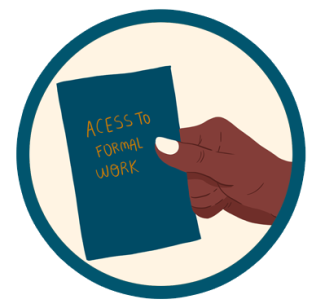
Only 18% of trans and travesti people in Argentina have access to formal work.
The current global economic crisis provides stark evidence that the economic policies of the last 3 decades have not been working.
The devastation that the crisis has wrought on the most vulnerable households in the Global North and Global South is a reminder that the formulation of economic policy and the realization of human rights (economic, social, political, civil and cultural) have for too long been divorced from one another. Economic policy and human rights do not have to be opposing forces, but can exist symbiotically.
Macroeconomic policies affect the operation of the economy as a whole, shaping the availability and distribution of resources. Within this context, fiscal and monetary policies are key.
These policies affect key prices such as interest and exchange rates that directly influence, among other things, the level of employment, access to affordable credit, and the housing market.
Applying a human rights framework to macroeconomic policy allows States to better comply with their obligation to respect, protect, and fulfill economic and social rights. Human rights are internationally agreed-upon universal standards. These legal norms are articulated in United Nations treaties including, the Universal Declaration of Human Rights (UDHR), the International Covenant on Civil and Political Rights (ICCPR), and the International Covenant on Economic, Social and Cultural Rights (ICESCR).
Article 1 of the UDHR states that, “All human beings are born free and equal in dignity and rights.”
Although the UDHR was written about six decades ago its relevance is enduring. Many of the ideas address concerns and critical issues that people continue to face globally. Issues regarding inhuman punishment (Art. 5), discrimination (Art. 7), property ownership (Art. 17), equal pay for equal work (Art. 23/2), and access to education (Art. 26/1) are pertinent matters in countries South and North of the equator.
More specifically, States have an obligation under international law to respect, protect and fulfill human rights, including the economic and social rights of people within their jurisdiction. This is particularly relevant now given the financial crisis. In the U.S., regulation is skewed in favor of certain interests. The failure to extend government’s supervisory role in the context of social and economic change is a failure with regard to the obligation to protect human rights.
States should abide by key human rights principles to achieve economic and social rights. Some of the principles have potentially important implications for governance of financial institutions and markets, yet these possibilities have been underexplored.
Economic and social rights have a concrete institutional and legal grounding. Global declarations, international treaties, covenants, and, in a number of cases, national constitutions have incorporated aspects of the economic and social rights framework—providing an institutional infrastructure in national and international law.
Some have suggested that a consideration of global justice may not be a useful pursuit because of the institutional complexities involved. However, this does not get around that fact that global institutions already have an impact on social justice, both positive and negative.
It is useful to tease out the implications that elements of alternative frameworks have for economic governance, specifically those supported by existing institutions. Economic and social rights represent one such concrete framework. The framework is an evolving one, and ongoing discussion and deliberation is necessary to address underdeveloped areas and potential deficiencies.

This section is based on CWGL’s blog “Applying a Human Rights Framework to Macroeconomic Policies” (2012).
Nuestra meta es alcanzar un total de 200 respuestas, prácticamente el doble de la cifra registrada en la última encuesta ¿Dónde está el dinero? de 2011.
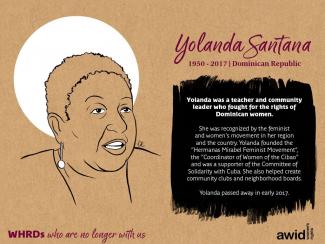
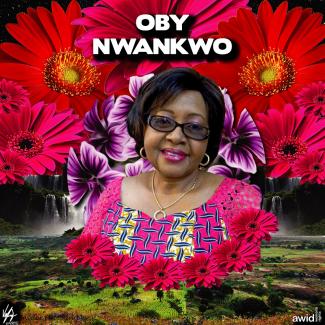
Con una carrera jurídica que abarcó más de 30 años, Oby era conocida en toda África y en el mundo como una defensora de la justicia de género y los derechos humanos.
Fundó y fue Directora Ejecutiva del Civil Resource Development and Documentation Centre (CIRDDOC), una ONG nigeriana que patrocina capacitaciones y actividades de creación de redes para miembrxs de la sociedad civil, parlamentarixs y otrxs actores clave, para promover los derechos humanos, la buena gobernanza y el acceso a la justicia y el estado de derecho.
Oby es afectuosamente recordada por lxs activistas de Nigeria como una «extraordinaria activista que mostraba energía y pasión por la lucha por la igualdad de género y la justicia de género en Nigeria y en toda África».
Anti-rights actors have had a substantive impact on our human rights framework and the progressive interpretation of human rights standards, especially rights related to gender and sexuality.
When it comes to the impact of conservative actors in international policy spaces, the overall picture today is of stasis and regressions.
We have witnessed the watering down of existing agreements and commitment; deadlock in negotiations; sustained undermining of UN agencies, treaty review bodies and Special Procedures; and success in pushing through regressive language in international human rights documents.
The CSW, held annually in March, has long been one of the most contested sites in the UN system. In March 2015, conservative efforts set the tone before events or negotiations even began; the outcome document of the Commission was a weak Declaration negotiated before any women’s rights activists even arrived on the ground.
At 2016’s CSW, the new Youth Caucus was infiltrated by large numbers of vocal anti-abortion and anti-SRHR actors, who shouted down progressive youth organizations. Again, intensive negotiations resulted in a lacklustre text, which included regressive language on ‘the family.’
Precisely when addressing women’s human rights is of urgent importance, the CSW has been rendered a depoliticized and weakened space. Using it to advance rights has become harder and harder since progressives’ energy is taken up trying to hold the ground against conservative backlash.
As the intergovernmental body responsible for the promotion and protection of human rights around the globe, the HRC is a key entry point for conservative actors. In recent years, this mechanism has been the scene for a number of damaging anti-human rights moves.
In conversation with other anti-rights actors, one strategy of conservative states, and blocs of states, is to aggressively negotiate out positive language and to introduce hostile amendments to resolutions, most often resolutions focusing on rights related to gender and sexuality.
To take one example, during the June 2016 session of the HRC, opposition was mounted towards a resolution on discrimination against women by the member states of the Organization of Islamic Cooperation (OIC) and allies. During contentious negotiations, multiple provisions were removed, including women’s and girls’ right to have control over their sexuality, sexual and reproductive health, and reproductive rights; and the need to repeal laws which perpetuate the patriarchal oppression of women and girls in families, and those criminalizing adultery or pardoning marital rape.
The HRC has also been the site of pernicious conservative initiatives to co-opt human rights norms and enact conservative “human rights” language, such as that of the Russia-led “traditional values” resolutions, and more recently the “Protection of the Family” agenda.
In 2015, moving their sights to another front, a number of religious right organizations began to target the Human Rights Committee, the treaty monitoring body for the International Covenant on Civil and Political Rights (ICCPR), a pivotal human rights instrument.
Anti-human rights groups mobilized in hopes of cementing their anti-abortion rhetoric into the treaty.
When the Committee announced it was drafting a new authoritative interpretation of the right to life, over 30 conservative non-state actors sent in written submissions, advocating their misleading discourse on ‘right to life’ - that life begins at conception and that abortion is a violation of the right - be incorporated in the Committee’s interpretation of article 6.
Conservative groups targeting the Human Rights Committee was a shift considering that historically anti-human rights actors have repeatedly attempted to undermine and invalidate the essential work of the treaty monitoring bodies, including the Human Rights Committee.

Anti-human rights actors were involved in lobbying towards the development of the new Sustainable Development Goals (SDGs) in 2015, focusing again on rights relating to gender and sexuality. These efforts had limited traction in their attempts to embed regressive language in Agenda 2030.
However, after successfully pushing back against progressive language in the final text, conservative actors then pivoted to another strategy. In an attempt to evade state accountability and undermine the universality of rights, several states have repeatedly made reservations to the Goals.
On behalf of the African Group, Senegal claimed that African states would only “implement the goals in line with the cultural and religious values of its countries.”
The Holy See also made a number of reservations, stating it was “confident that the related pledge ‘no one will be left behind’ would be read” as meaning “the right to life of the person, from conception until natural death.”
Saudi Arabia went one step further, declaring that the country would not follow any international rules relating to the SDGs that reference sexual orientation or gender identity, describing them as running “counter to Islamic law.”
Anti-rights actors have made increasing headway at the UN General Assembly (GA). Most recently, during the 71st session in 2016, the GA was the scene of feverish anti-rights organizing in opposition to the new mandate created by the Human Rights Council resolution on sexual orientation and gender identity in June 2016: the Independent Expert on SOGI. Four separate attempts were made to undercut the mandate in GA spaces.
One approach was to introduce a hostile resolution at the Third Committee[1], led by the African Group, which in essence aimed to indefinitely defer the new mandate. While this approach was not successful, such an attempt in the GA to retroactively block the creation of a mandate brought forward by the Human Rights Council represented a new and troubling tactic - anti-right actors are now working to directly undermine the HRC’s authority respective to the General Assembly.
Another approach targeted the Fifth Committee (responsible for administration and budgetary matters) as an entry point to attack the mandate. In an unprecedented move a number of States attempted (again, unsuccessfully) to block the funding of UN human rights experts, including the new IE on SOGI[2],.
While these multiple efforts were unsuccessful in blocking the creation and continuation of the new mandate, the significant support they received, the novel strategizing employed, and the strong alliances built along regional lines through negotiations point to difficulties ahead.
[1] The Third Committee of the GA deals with agenda items relating to a range of social, humanitarian affairs, and human rights issues. Each year it discusses and issues resolutions on issues including the advancement of women, the protection of children, family, and youth.
[2] While UN Special Procedures experts (i.e. Special Rapporteurs, Working Group members and Independent Experts) work pro bono, some funds are generally allocated to facilitate country visits on the invitation of the national government, and support staff.
Laura était une activiste et une avocate de premier plan qui a mené une campagne courageuse en faveur de la dépénalisation du travail du sexe en Irlande.
On se souvient d'elle comme « une combattante de la liberté pour les travailleurs et les travailleuses du sexe, une féministe, une mère pour certainEs et une amie nécessaire pour beaucoup ».
Laura militait pour que les personnes de l'industrie du sexe soient reconnu-e-s comme des travailleurs et travailleuses sujets de droits. Elle a activement milité en faveur de la dépénalisation, notamment en engageant une procédure judiciaire devant la haute cour de Belfast qui concernent des dispositions criminalisant l’achat de services sexuels. Laura a déclaré que son intention était de porter l'affaire devant la Cour européenne des droits de l'homme.

La Coopérative Textile Nadia Echazú porte le nom d'une pionnière dans la lutte pour les droits des personnes trans en Argentine. À bien des égards, le travail de la coopérative célèbre la vie et l'héritage de Nadia Echazú, qui a eu une carrière militante remarquable.
La Coopérative Textile Nadia Echazú porte le nom d'une pionnière dans la lutte pour les droits des personnes trans en Argentine. À bien des égards, le travail de la coopérative célèbre la vie et l'héritage de Nadia Echazú, qui a eu une carrière militante remarquable.
Peu de temps après sa mort, ses collègues militantes ont fondé la coopérative en son nom, pour honorer la marque profonde qu'elle a laissée sur l'activisme trans et travesti en Argentine.
Resources to support feminist movements, policy-makers, and allies!
Compilación de noticias sobre la organización y/o el trabajo de AWID
Notas de prensa, dosieres y kits

لتجسيد قوتكم/ن كخبيرات عن وضع التمويل للحركات النسوية
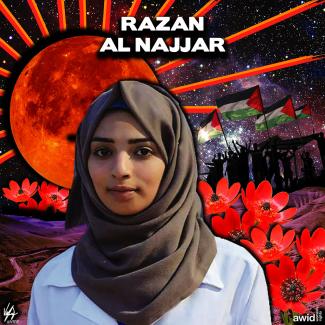
Razan was a 21-year-old volunteer medic in Palestine.
She was shot as she ran toward a fortified border fence, in an effort to reach a casualty in the east of the south Gaza city of Khan Younis.
In her very last Facebook post, Razan said: “I am returning and not retreating,” adding: “Hit me with your bullets. I am not afraid.”