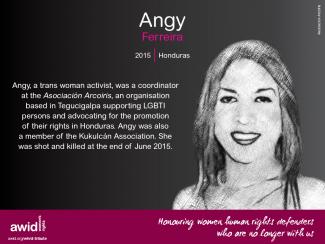
Angy Ferreira
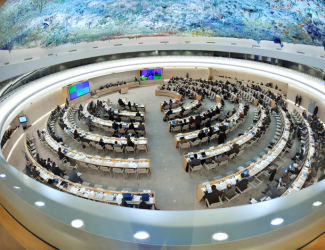
Le Conseil des droits de l'homme (CDH) est un organe intergouvernemental clé du système des Nations Unies, responsable de la promotion et la protection des droits humains autour du globe. Il se réunit trois fois par an en session ordinaire, en Mars, Juin et Septembre. Le Bureau du Haut-Commissariat des Nations Unies aux Droits de l’Homme (HCDH) constitue le secrétariat pour le CDH.
Débat et adopte des résolutions sur les questions globales des droits humains ainsi que sur la situation des droits humains dans des pays particuliers
Examine les plaintes des victimes de violations des droits humains et des organisations activistes, au nom des victimes de violations des droits humains
Nomme des experts indépendants (que l'on connaît sous le nom de « Procédures Spéciales ») pour réviser les cas de violation des droits humains dans des pays spécifiques, ainsi que pour examiner et suivre des questions globales relatives aux droits humains
Prend part à des discussions avec les experts et les gouvernements sur les questions de droits humains
Évalue les bilans des États membres de l'ONU en matière de droits humains tous les quatre ans et demi, dans le cadre de l'examen périodique universel.
La prochaine session du CDH a lieu à Genève, en Suisse, du 30 juin au 17 juillet 2020.
AWID travaille avec des partenaires féministes, progressistes et du domaine des droits humains pour partager nos connaissances clé, convoquer dialogues et évènements avec la société civile, et influencer les négociations et les résultats de la session.
El salario mínimo de Georgia se encuentra en un porcentaje inferior al de todos los países del mundo. Esta realidad afecta mayoritariamente a las mujeres.
El país no solo tiene una brecha salarial de género significativa, sino que las mujeres también trabajan más horas y más horas no reguladas antes de irse a casa para ocuparse de las tareas domésticas y de sus familias. No hay licencia por maternidad, no hay aumentos de salario por horas extras, no hay seguro de desempleo, y no hay licencias por enfermedad u otra protección social. Presionados por organizaciones occidentales, los partidos políticos oligárquicos georgianos han estado implementando reformas que están destruyendo el estado de bienestar, aumentando las medidas de austeridad y empeorando la explotación de lxs trabajadorxs, todo para los beneficios de grandes corporaciones que aplauden al país por su "facilidad para hacer negocios". Los medios de comunicación, cooptados por intereses privados y corporativos, están sesgados sobre estos temas o los silencian. La organización sindical sigue siendo una de las pocas opciones para luchar por los derechos humanos básicos y para hacer que el Estado y las empresas rindan cuentas ante las violaciones y persecuciones diarias y generalizadas contra lxs trabajadorxs, especialmente contra las mujeres.
Fuentes: Minimum-Wage y entrevista con Sopo Japaridze en Democracia Abierta
Un outil destiné aux militant·es féministes présent·es à la COP30 qui luttent pour des solutions transformatrices, équitables et centrées sur les communautés afin de lutter contre la crise climatique.
The menstrual cycle usually lasts between 27 and 30 days. During this time, the period itself would only go on for five to seven days. During the period, fatigue, mood swings, and cramps are the result of inflammation.
In traditional Javanese culture, this is the moment for women to rest and take care of themselves. During this moment, a woman would take Kunyit Asam, a jamu or herbal drink to soothe the inflammation. This elixir consists of turmeric and tamarind boiled together in a pot.
I still remember my first period - it was one day before graduation day in elementary school. I remember pedaling my bike feeling something warm running between my thighs. When I arrived home I did all I could to clean myself and then put on a menstrual pad. My mother came home from work about four hours later. I told her what had happened. She looked me in the eye and asked how I felt. I told her that it was painful, that my body was swollen in every place. Then she asked me to go with her to the backyard. I followed her to our little jungle, my mother sat down on the soil and smiled.
“See this slender leaf? This is the leaf of Kunyit, *empon-empon that leaves the yellow stain on your fingers. What’s most important is not the leaf, but the roots. You dig the soil and slowly grab the roots.”, my mother showed me how to pick Kunyit or Turmeric roots. Then we went to the kitchen where she boiled water along with some tamarind. While waiting for it to boil, she showed me how to wash and grate the orangey-yellow root. Then, we put the grated turmeric into the boiling tamarind water. “Tomorrow, you can make it for yourself. This will help you to feel better!”.
I remember the first time I tasted it - a slightly bitter taste but also sour. My mother always served it warm. She would also put some in a big bottle which I would place on my stomach or lower back for further relief. For days after, my mother’s hands and mine were yellow. My friends could always tell every time I got period because my hands would be yellow.
A year after my first period, I found out that you could get the bottled version in convenience stores. Still, I made my own Kunyit Asam every time I had my period because the one in the convenience stores was cold. It did not smell of wet soil and warm kitchen.
Fast forward, I am a 26 year old woman who casually makes this drink for friends when they have their periods. I’ve made some for my housemates and I’ve delivered some for friends who live in different towns. I do not grow turmeric roots in my garden, but I have grown and shared the love from my mom. What was once from garden to cup is now from *pasar to cup.
A couple of days ago, I asked my mother who taught her how to make the jamu.
“Who else? Yang Ti*! Your grandmother was not just a teacher”, said my mom. I was never close to my grandmother. She passed away when I was eight. All I knew from my mom was that she was a math teacher who had to teach courses after work. I had this image of my grandmother as a hard worker who was kind of distant with her children. My mom did not disagree with that but explained it came from her survival instinct as a mother. “She tried to make time. She tried. She taught me how to make jamu so I could take care of myself and my sisters”.
My mother is the second child out of seven, six of whom are girls. The reason my grandmother taught her is so that all of her children could take care of each other. While my mother was taught how to make the drink, my mother’s older sister was taught how to plant turmeric. Yang Ti knew which one loved the smell of soil more and which one loved the smell of the kitchen. My mother was the latter. She learned how to plant from my aunt, her older sister.
My grandfather worked in a bank but he got laid off when he was in his 40s. So, my grandmother had to do a side-hustle to support their children. My mother was in high school at that time when Yang Ti woke her and her older sister up at dawn. “Would you help me to pick some roots?”. Of course nobody said no. Especially if it was your mother, especially if you were born in Javanese culture where saying “no” sounded like a bad word. Together, the three of them went to the backyard, and they harvested empon - empon, rhizome, that was buried inside the soil. She grew many kinds of rhizome; temu lawak, temu putih, ginger, galangal, kunci, kencur, and kunyit. That was the day where my mother realized that her mother was never far away from her.
That was the day where she could spend more time with her mother. There, in the garden. There, in the kitchen.
“We’re sending these for Ibu Darti, the lady who lives across the river. Kunyit Asam for her and her daughters.”, said my grandmother to my mother and my aunt that day. They poured the Turmeric-Tamarind warm drink into a tall thermos and later my grandmother would deliver it on the way to school.
Over time, my grandmother got more orders for jamu. Everybody in the family helped her to make and deliver her jamu. The small business lasted only a few years, but that was what paid for my mother and her siblings’ education.
Today, my mother, who got laid off just a few days before I wrote this piece, harvested Turmeric and other roots. She’s making her Turmeric Tamarind drink from her kitchen.
My phone rang in the middle of this afternoon, a couple minutes after I boiled the rest of my grated turmeric. Today is one day after my period.
“Ingka, have you washed your pot after boiling those turmeric? It would forever be yellow if you don’t wash it right away!”
*empon-empon = roots like ginger, turmeric, etc. coming from the Javanese word “Empu” which means, something or someone that has deep knowledge.
*jamu = Indonesia’s traditional elixir made of roots, barks, flowers, seeds, leaves, and fruits.
*Yang Ti = Javanese term for grandmother, taken from the term “Eyang Putri” the female you look up to.
*pasar = the word for traditional market in Indonesian.
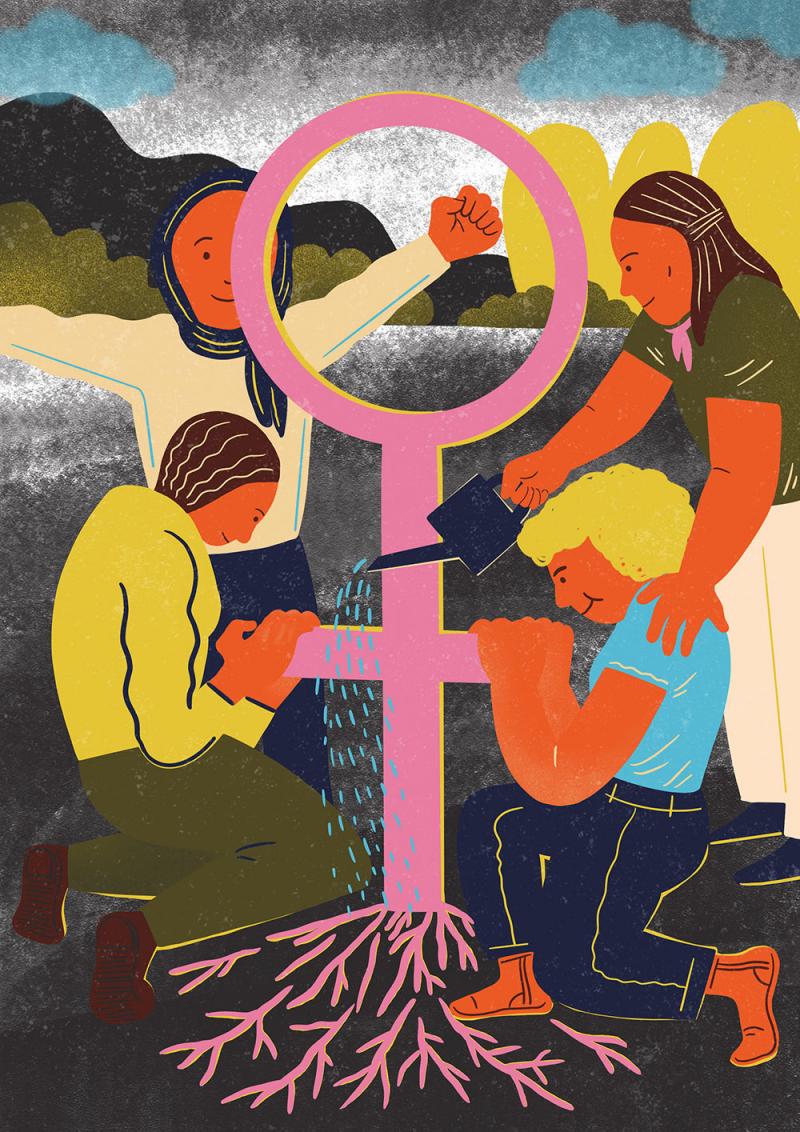
The more women support other women, the quicker we’ll see progress. Together we are stronger and make even more impact.
Sigue la campaña
Súmate
Nuestra membresía| Nuestra comunidad
Mantente al tanto
Suscríbete para recibir las novedades
¿Tienes alguna pregunta?
Contacto: communications @ awid.org
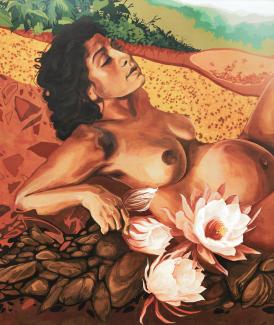
The artwork is a photography and illustration collaboration between Siphumeze and Katia during lockdown. The work looks at black queer sex and plesure narratives, bondage, safe sex, toys, mental health and sex and many more. It was created to accompany the Anthology Touch.






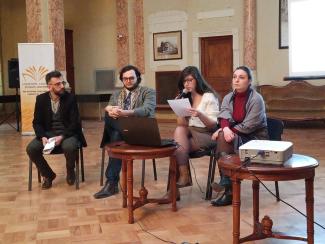
Cette année, aux côtés de militant.e.s féministes du monde entier, nous serons à la CSW68 à New York. Nous serons là pour contester les discours capitalistes et néolibéraux et les fausses solutions autour de la pauvreté, du développement et de la finance. À travers des événements en présentiel, des lives sur nos réseaux sociaux, un stand d'exposition et bien plus encore, nous visons à nous rassembler, amplifier et soutenir les voix et la participation de nos membres et allié.e.s.
Apprenez-en davantage sur notre programme cette année ci-dessous.
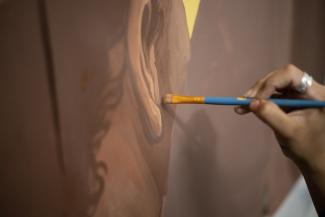
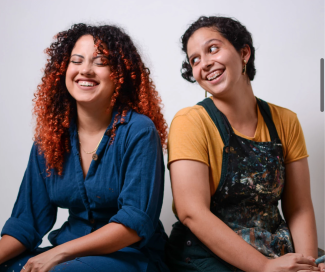
El Colectivo Moriviví es una colectiva de solo mujeres. Nuestra producción artística consiste en muralismo, muralismo comunitario y acciones/performances de protesta. Nuestro trabajo tiene como objetivo democratizar el arte y llevar a la esfera pública las narrativas de las comunidades de Puerto Rico, para generar espacios en donde sean validadas. Creemos que, a través del artivismo, podemos promover conciencia sobre temas sociales y fortalecer nuestra memoria colectiva.
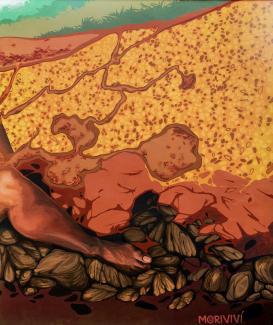
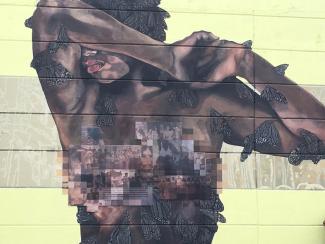


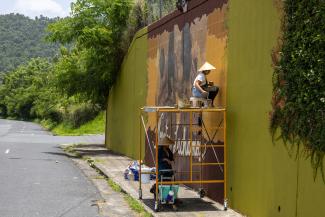
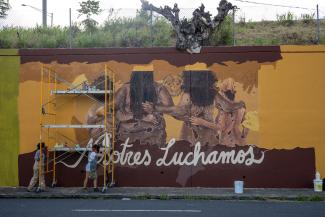
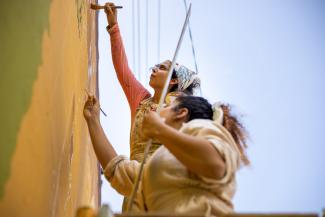
En el marco de su participación en el Grupo de Trabajo Artístico de AWID, el Colectivo Moriviví convocó a un grupo diverso de afiliadxs, asociadxs y personal de AWID y facilitó un proceso colaborativo de imaginación, configuración y decisión sobre el contenido para la creación de un mural comunitario, a través de un proceso de creación conjunta en múltiples etapas. El proyecto comenzó con una conceptualización remota con feministas de diferentes zonas del planeta reunidxs por AWID, y luego evolucionó hacia su recontextualización y realización en Puerto Rico. Nos honra haber contado con la contribución de las artistas locales Las Nietas de Nonó (@lasnietasdenono), la participación de mujeres locales en la Sesión de Pintura Comunitaria, el apoyo logístico de la Municipalidad de Caguas, y el apoyo adicional al colectivo, brindado por FRIDA Young Feminist Fund.
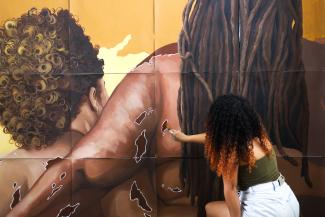
El mural explora la trascendencia de las fronteras, al presentar cuerpos como un mapa en un abrazo que realza la intersección de las distintas manifestaciones, prácticas y realidades feministas.
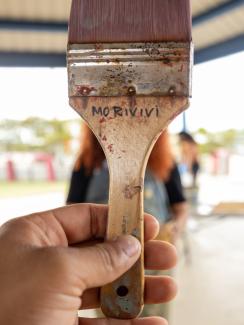
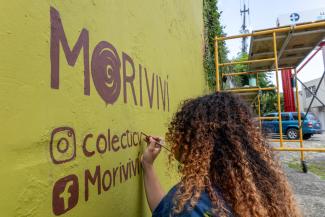
Agradecemos también a Kelvin Rodríguez, quien documentó y captó las diferentes etapas de este proyecto en Puerto Rico:



Encuentra y crea conexiones. AWID cuenta con más de 9000 afiliadxs, todxs dedicadxs a abordar cuestiones complementarias e interconectadas. En esta diversidad se apoya la sostenibilidad de los movimientos y actorxs feministas.
Les antidroits ont adopté une double stratégie : outre leurs attaques ouvertes sur le système multilatéral, ils et elles sapent les droits humains depuis l’intérieur. Leur implication vise à prendre le contrôle des processus, instaurer des normes régressives et fragiliser la redevabilité.

Leur implication dans les sphères des droits humains a un but essentiel : saper le système et sa capacité à respecter, protéger et assurer les droits humains de tout un chacun, et à tenir les États membres pour responsables de leurs enfreintes. Certaines tactiques antidroits en dehors de l’ONU visent à la délégitimer, exercer des pressions politiques pour limiter son financement ou se retirer d’accords internationaux sur les droits humains. Les acteur·rice·s antidroits gagnent cependant en influence au sein même de l’ONU. Leurs tactiques de l’intérieur incluent la formation de délégué·e·s, la dénaturation de cadres relatifs aux droits humains, la dilution de la substance d’accords sur les droits humains, l’infiltration de comités d’ONG, la demande du statut ECOSOC sous un nom neutre, l’infiltration des espaces des jeunes et la pression pour que des acteur·rice·s antidroits occupent des postes clés.