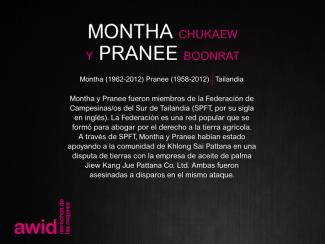
Montha Chukaew y Pranee Boonrat
Esta sección de análisis especial ofrece un análisis feminista crítico y acceso a los recursos clave relacionados con la «protección de la familia» en los espacios internacionales de derechos humanos.
Durante los últimos años, venimos observando una nueva y preocupante tendencia en el ámbito internacional de derechos humanos, donde se están empleando discursos sobre la «protección de la familia» para defender violaciones cometidas contra miembros de la familia, de modo de reforzar y justificar la impunidad y para coartar la igualdad de derechos en el seno de la familia y la vida familiar.
La campaña para «proteger a la familia» es impulsada por proyectos conservadores que tienen como fin imponer interpretaciones «tradicionales» y patriarcales de familia; quitando los derechos de las manos de sus miembros para ponerlos en las de la institución «familia».
Desde 2014 un grupo de estados opera como bloque en espacios de derechos humanos, bajo el nombre «Group of Friends of the Family» [Grupo de amigos de la familia], y a partir de entonces se han aprobado resoluciones sobre la «Protección de la familia» todos los años.
Esta agenda se ha extendido más allá del Consejo de Derechos Humanos (HRC, por sus siglas en inglés). Hemos visto cómo el lenguaje regresivo sobre «la familia» se ha introducido en la Comisión de la Condición Jurídica y Social de las Mujeres (CSW, por sus siglas en inglés), y hemos asistido a intentos por incluir este lenguaje en las negociaciones sobre los Objetivos de Desarrollo Sostenible.
AWID trabaja con asociadxs y aliadxs para resistir conjuntamente las agendas regresivas de «Protección de la familia» y otras, y para defender la universalidad de los derechos humanos.
En respuesta a la creciente influencia de actores regresivos en los espacios de derechos humanos, AWID se ha unido con aliadxs para formar el Observatorio de la Universalidad de los Derechos (OURs, por sus siglas en inglés). OURs es un proyecto colaborativo que monitorea, analiza y comparte información sobre iniciativas anti-derechos tales como la «Protección de la familia».
Derechos en Riesgo, el primer informe de OURs, traza un mapa de los actores que conforman el cabildeo global anti-derechos e identifica sus discursos y estrategias principales, señalando los efectos que estos discursos y estrategias están teniendo sobre nuestros derechos humanos.
El informe expone a la «Protección de la familia» como una agenda que ha promovido la colaboración entre una amplia gama de actores regresivos en las Naciones Unidas. La describe como un marco estratégico que aloja «múltiples posiciones patriarcales y anti-derechos, cuyo marco, a su vez, apunta a justificar e institucionalizar estas posiciones».
يرجى الرجوع إلى فتح باب التقديم للحصول على هذه المعلومات، بما في ذلك قسم "ما تحتاج/ين إلى معرفته".
Membre de mouvements démocratiques, pacifistes et LGBT, Yelena était une féroce opposante au président Vladimir Poutine et son administration. Elle a notamment exprimé son opposition à l’annexion de la péninsule ukrainienne de la Crimée par la Russie ainsi que critiqué les mauvais traitements infligés aux détenu·e·s.
Yelena a fait part de sa bisexualité en 2019.
« Sa déclaration m’a surprise et je ne l’approuvais pas. Je lui ai dit : « Écoute, Lena, tu portes déjà une cible sur la poitrine du fait de ton activisme politique. Tu viens de t’en peindre une autre dans le dos », Olga Smirnova, compagne de lutte politique et amie.
Yelena a effectivement reçu plusieurs menaces de mort, et des proches ont déclaré que son nom figurait sur un site Web homophobe qui incitait ses visiteur·euse·s à tuer les personnes LGBT. Elle a fait part de ces menaces à la police, mais l’État russe ne l’a pas protégée.
Mais même dans une société où l’opposition politique, les activistes et les membres de la communauté LGBT, qui se battent pour leurs droits, font face à une violence croissante, Yelena continuait à défendre la justice sociale et l’égalité.
« Elle ne manquait pas une seule action militante. Et ils l’ont arrêtée plus de fois que je n’ai pu en compter », Olga Smirnova.
Yelena a été assassinée le 21 juillet 2019, à proximité de chez elle. Un suspect a été arrêté, mais certaines sources et plusieurs de ses ami·e·s et compagnes et compagnons de lutte pensent que ce suspect sert de bouc émissaire, et qu’en fait, il s’agit d’un assassinat politique ciblé.
Pour la famille et les ami·e·s de Yelena, son assassinat demeure irrésolu, bien que le suspect ait avoué.
En 2013, la Russie a passé une loi interdisant la propagation de ce qu’elle a appelé la « propagande gay ». En 2014, Human Rights Watch a publié un rapport à ce propos (en anglais et en russe).
เราทราบดีว่าการเดินทางครั้งแรกอาจจะน่าตื่นเต้นและบางครั้งอาจสร้างความกังวล จากการตระหนักถึงข้อท้าทายต่างๆต่อเรื่องนี้ เราจะจัดเตรียมข้อมูลมากขึ้นกว่านี้สำหรับการเดินทางมายังกรุงเทพฯเมื่อมีการเปิดรับลงทะเบียนในปีหน้า
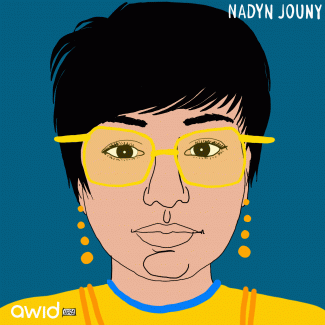
The personal is political - and fiery and courageous Nadyn Jouny personified this feminist mantra. Nadyn experienced firsthand the pain of structural violence in legal systems that strip women of their rights.
When she decided to file for divorce, the religious Shitte courts under the Lebanese Personal Status laws, denied her custody of her young son Karam. Nadyn, like so many other women across Lebanon and other countries, was caught in the impossible pain of leaving an unwanted and abusive relationship and also losing the rights to her child. But Nadyn fought back, as she would until her last day.
She used her media savvy to become an outspoken voice to women fighting discriminatory family laws in Lebanon and internationally. Nadyn co-founded the self-funded group, “Protecting Lebanese Women” (PLW) and banded with many other Lebanese mothers facing similar custody issues. Together, they advocated to raise awareness of the injustices they were facing, protesting in front of the religious courts for their rights and bringing international media attention to extreme injustices they were facing.
Nadyn also worked with ABAAD - Resource Center for Gender Equality, another women’s rights organization in Lebanon, to campaign for women’s rights, equality in family law and custody and against forced and early marriages.
For many of her colleagues, she came to “symbolize a Lebanese mother’s fight against suppression and misogyny of all sorts," using “her personal experiences and her individual journey of empowerment to give hope to others that they can be a catalyst for positive change.”- ABAAD - Resource Centre for Gender Equality, Lebanon
On October 6, 2019 Nadyn was tragically killed in a car accident on her way to protest unfair tax increases in a country already facing spiralling financial crisis. Nadyn Jouny was only 29 years old at the time of her death.
Facebook: @AWIDWomensRights
Instagram: @awidwomensrights
Twitter ES: @awid_es
LinkedIn: Association for Women's Rights in Development (AWID)
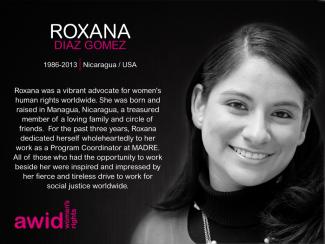
Doris Valenzuela Angulo fue una activista social afrodescendiente, líder y defensora de los derechos humanos, de Buenaventura, Colombia. Fue parte de Comunidades Construyendo Paz en los Territorios (CONPAZ), una red nacional de organizaciones de comunidades afectadas por el conflicto armado que propugnan la no violencia y la justicia socioambiental.
Doris desafiaba la constante violencia paramilitar y las presiones de los megaproyectos para desplazar a su comunidad, así como la complicidad del Estado. Enfrentando uno de los contextos más difíciles de su país, tuvo un rol de liderazgo en una iniciativa de resistencia no violenta sin precedentes llamado «Espacio Humanitario Puente Nayero», una zona urbana para la cohesión comunitaria, la seguridad, la creatividad y la acción colectiva.
Esta singular lucha no violenta de las familias que pertenecían al «Espacio Humanitario Puente Nayero» atrajo la atención y el apoyo de organismos locales e internacionales. Hacia septiembre de 2014, la Comisión Interamericana de Derechos Humanos había establecido medidas cautelares de protección para la comunidad, y había ordenado al Estado colombiano hacer lo necesario para preservar sus vidas y su integridad personal. Sin embargo, las amenazas y la violencia de los paramilitares continuaron. Doris centró sus energías en evitar el reclutamiento forzoso de niñxs y jóvenes por parte de los neo-paramilitares, y siguió haciéndolo a pesar del asesinato de su hijo Cristian Dainer Aragón Valenzuela en julio de 2015. Doris también se convirtió en blanco de ataques, y recibía amenazas por su activismo y el trabajo que realizaba continuamente.
Las persistentes agresiones y amenazas contra su vida forzaron a Doris a abandonar Colombia. Residió en España desde febrero de 2017 hasta febrero de 2018, e integró el Programa de Protección Temporal de Defensores y Defensoras de los Derechos Humanos de Amnistía Internacional para activistas cuyas vidas están en riesgo.
En abril de 2018, Doris fue asesinada por su ex-marido en Murcia, España. Tenía solamente 39 años.
«Doris, pasar un año entero contigo nos ha enseñado cómo una persona puede tener la capacidad de transformar y generar esperanza ante hechos profundamente negativos y devastadores sucedidos durante tu vida...Seguimos con nuestro compromiso en la defensa de todos los derechos humanos. Siempre nos guiará tu valentía y tu luz.» Montserrat Román, Amnistía Internacional Grupo La Palma
«Tú lo sabías. Siempre lo supiste. Y a pesar de todo te levantaste firme contra tantas injusticias, tantas miserias, tanta persecución.Te alzaste, altiva y feroz, contra aquellos que querían hacerte de nuevo abandonar tus esperanzas, humillarte y rendirte. Puesta en pie clamaste por tu libertad y la nuestra que era la tuya. Nada ni nadie paralizó tus esfuerzos por cambiar el mundo y hacerlo más generoso y habitable. Tú, viva entre nosotras, más viva hoy que nunca entre nosotras a pesar de la muerte. Viva siempre por tus gestos, tu valor, tu grandeza al clamar por una tierra prometida que llegaste a invocar con cada uno de tus gritos por todos los desiertos que habitaste. Tú. Siempre viva. Doris Valenzuela Angulo.
Son sólo palabras. Lo sé. Yo también lo sé. Pero las palabras nos unen, nos protegen, nos dan fuerza y aliento para seguir caminando hacia la luz que tanto defendías.»
AWID began preparing this annual report just as the global pandemic began to unravel how we gather, organize and live our lives. It is impossible to review what we have done without COVID-19 tinting our assessment.
Download the full 2019 Annual review
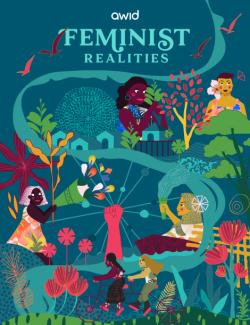
It is an urgently needed affirmation that there are other, more just ways of organizing our lives. During 2019 hundreds of groups shared their experiences and proposals for feminist realities with us, ranging from radical networks of community support in Latin America facilitating self-managed abortion, to practices of community-centered economies in Indonesia and community-centered food systems in India and the US, to a re-imagination and new practice of harm-free rites of passage in Sierra Leone. These are the experiences that will chart a path forward for a “new normal”.
Yet long histories of oppression and violence can make it difficult to imagine the possible. A key part of our work in 2019 was to spark these explorations through a toolkit AWID launched to support groups interested in unearthing the stories and aspirations that are the building blocks of feminist propositions.
Through the Observatory on the Universality of Rights, Feminists for a Binding Treaty, Count Me In! and other alliances, AWID has continued to push back against unfettered corporate power and fascist and fundamentalist agendas that undermine women’s rights and gender justice. With dim prospects for transformative change through multilateral processes and limited responsiveness from most states, we are redoubling our efforts to ensure that feminist movements, in all their diversity, are resourced in ways that match the critical roles they play - supporting their communities, demanding rights and responding to crises. In 2019 we introduced feminist principles and approaches to ground-breaking funds like the Spotlight Initiative and the Equality Fund, and succeeded in leveraging resources through feminist reality seed grant funding from feminist funders.
As we look ahead, it is clear that the context is calling for a transformation of our organizing strategies:
AWID is embarking on a new membership model that lowers barriers to access and emphasizes opportunities for engagement and cross-member connection. We will continue to experiment with different online tools and processes for building community. Cross-movement engagement will stay at the center of our work. AWID’s actions in solidarity with oppressed movements and identities, even and especially where these are marginalized in feminist movements, are important to drive change and support broad and inclusive movements for all.
We are resilient, we adapt, and we show up for each other. And we have to keep doing better. Thank you to all who are part of the journey with us.
Download the full 2019 Annual review
Día 1
Mena Mangal était une éminente journaliste de télévision, défenseure des droits des femmes et conseillère culturelle du Wolesi Jirga, la chambre basse du parlement national afghan.
Pendant plus d’une décennie, Mena a travaillé pour Ariana TC, la chaîne en pashto Lamar de Tolo TV et la chaîne de télévision nationale privée Shamshad TV. Mena était principalement présentatrice d’émissions sur les droits des femmes et la culture.
« La défenseure des droits des femmes Wazhma Frogh a dit que Mangal « se faisait entendre » et s’exprimait ouvertement en faveur de la défense de son peuple. »
Loin des écrans, elle dirigeait également des plateformes sur les réseaux sociaux, promouvant les droits à l’éducation et au travail des filles et femmes afghanes. Sur le plan de sa vie privée, Mena a longuement écrit sur le mariage arrangé qu’elle a été forcée d’accepter en 2017, et le long processus qui s’en est suivi pour finalement obtenir le divorce.
Dans un post sur Facebook, Mena avait écrit qu’elle recevait des menaces de mort de sources inconnues, mais qu’elle continuerait néanmoins son travail.
Elle a été attaquée le 11 mai 2019 par des hommes armés inconnus et tuée en plein jour et dans un espace public, dans le sud-est de Kaboul.
« La situation nous inquiète, car elle a un impact direct sur les femmes qui travaillent en dehors de la maison... Les femmes journalistes changent de profession du fait de l’augmentation des risques auxquels elles sont confrontées. » - Robina Hamdard, défenseure des droits des femmes à Kaboul
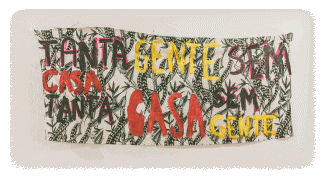
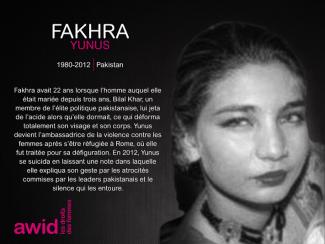
From the rising right in many countries and the flurry of funding cuts hitting hard civil society of the Global Majority, to the ongoing genocide in Gaza, the intensification of violent conflicts in Sudan, and climate crisis in many parts of our planet, we are facing real forces of fascism and a world order of impunity. This makes our opportunities to come together and build solidarity particularly valuable and imperative for our survival as a global feminist community. Of course, in 2024, the 15th AWID International Forum finally happened, and what a powerful space it was.
Download the full 2024 Annual Report
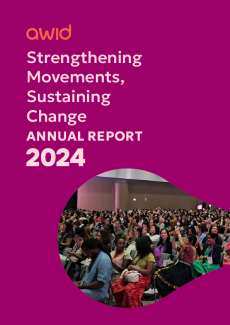
As we look ahead, we build on the powerful calls to action made by feminists at the AWID Forum; Together we can build a world where justice, liberation and care are not aspirations but realities.