Jean-Marc Ferré | Flickr (CC BY-NC-ND 2.0)
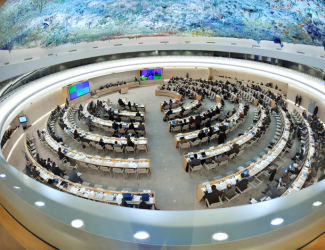
A general view of participants at the 16th session of the Human Rights Council in Geneva, Switzerland.

Human Rights Council (HRC)

The Human Rights Council (HRC) is the key intergovernmental body within the United Nations system responsible for the promotion and protection of all human rights around the globe. It holds three regular sessions a year: in March, June and September. The Office of the UN High Commissioner for Human Rights (OHCHR) is the secretariat for the HRC.

The HRC works by:

  • Debating and passing resolutions on global human rights issues and human rights situations in particular countries

  • Examining complaints from victims of human rights violations or activist organizations on behalf of victims of human rights violations

  • Appointing independent experts (known as “Special Procedures”) to review human rights violations in specific countries and examine and further global human rights issues

  • Engaging in discussions with experts and governments on human rights issues

  • Assessing the human rights records of all UN Member States every four and a half years through the Universal Periodic Review

Learn more about the HRC


AWID works with feminist, progressive and human rights partners to share key knowledge, convene civil society dialogues and events, and influence negotiations and outcomes of the session.

With our partners, our work will:

◾️ Monitor, track and analyze anti-rights actors, discourses and strategies and their impact on resolutions

◾️ Raise awareness of the findings of the 2017 and 2021 OURs Trends Reports.

◾️Support the work of feminist UN experts in the face of backlash and pressure

◾️Advocate for state accountability
 
◾️ Work with feminist movements and civil society organizations to advance rights related to gender and sexuality.
 

Related Content

Snippet - WITM FAQ - FR

Foire aux questions - FAQ

Winnie Madikizela-Mandela

Winnie has been described as a “militant firebrand activist” who fought the apartheid regime in South Africa.

She was imprisoned multiple times, and on many occasions placed in solitary confinement.

Ma’Winnie, as she is affectionately remembered, was known for being outspoken about the challenges Black women faced during and after apartheid, having been on the receiving end of these brutalities herself as a mother, wife and activist during the struggle. She transcended the misconception that leadership is gender, class or race-based. Despite being a controversial figure, she is remembered by many by her Xhosa name, “ Nomzamo”, which means "She who endures trials".  

Ma’Winnie continues to be an inspiration to many, particularly young South African women for whom her death has spurred a burgeoning movement, with the mantra: "She didn't die, she multiplied."
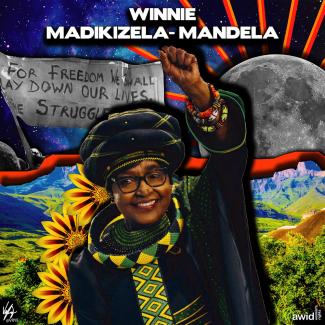
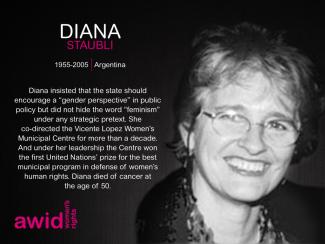


Winnie Madikizela-Mandela, South Africa

Merci

Merci de votre visite sur le site d'AWID. Pour plus d'informations sur AWID rendez-vous sur https://www.awid.org/fr

Snippet FEA Introducing Carmen Silva Ferreira (EN)

We have the pleasure to introduce you to Carmen Silva Ferreira.

She was born in Bahia, the Northeastern part of Brazil. She is an immigrant, a social activist and a mother of 8 children.

Carmen experienced homelessness at the age of 35, after migrating to Sao Paulo on her own. This led her to become a fierce advocate for vulnerable, marginalized and invisibilized communities most affected by the housing crisis. She eventually became one of the founders of MSTC in 2000.

As a visionary political organizer and the current leader of the MSTC, Carmen’s work has laid bare the city's housing crisis and provided inspiration to others on different ways to organize and manage occupations. She stood strong on the forefront of several occupations. One of them is the 9 de Julho Occupation, which now serves as a stage for direct democracy, and a space where everyone can be heard, seen, appreciated and work together.

Carmen has been long celebrated for her boldness in giving life back to abandoned buildings in the heart of São Paulo.

To know more about her life, you can follow her on Instagram!

Snippet - WITM to claim - AR

لتجسيد قوتكم/ن كخبيرات عن وضع التمويل للحركات النسوية

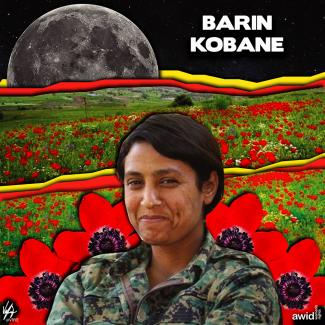
Barin Kobane

Barin integraba la unidad de batalla formada íntegramente por mujeres de la Unidad de Protección del Pueblo Kurdo (YPG).

La mataron cuando estaba en servicio activo.

La periodista libanesa Hifaa Zuaiter escribió: «Barin representa todo lo que hemos oído acerca del coraje de las combatientes kurdas, y su muerte es mucho más que el matar a un rival o el resultado de una lucha política o étnica. El horror de exhibir su cuerpo sólo porque es una mujer surge del hecho de que ella se atrevió a amenazar la hegemonía masculina al convertirse en una combatiente en un campo de batalla que se suponía era solo para hombres».


Barin Kobane, Kurdistan

Financiamiento de los movimientos feministas

Imagen promocional para la encuesta ¿Dónde está el dinero?

La encuesta "¿Dónde está el dinero?" #WITM ya está disponible. Participa y comparte tu experiencia en la financiación de tu organización con feministas de todo el mundo.

Obtén más información y participa de la encuesta


En todo el mundo, los movimientos feministas, de derechos de las mujeres y aliados están enfrentando al poder y reimaginando políticas de liberación. Las contribuciones que sostienen este trabajo llegan de muchas formas, desde recursos financieros y políticos a actos diarios de resistencia y supervivencia.


La iniciativa de AWID Financiando a los Movimientos Feministas (FMF) echa luz sobre el actual ecosistema de financiamiento, el cual abarca desde modelos autogenerados a corrientes de financiamiento más formales.

Mediante nuestra investigación y análisis, indagamos cómo las prácticas de financiamiento pueden servir mejor a nuestros movimientos. Analizamos críticamente las contradicciones de «financiar» la transformación social, especialmente en vistas de la creciente represión política, las agendas anti-derechos y el creciente poder corporativo. Sobre todo, construimos estrategias colectivas para apoyar  movimientos prósperos, fuertes y resilientes.


Nuestras acciones

Reconociendo la riqueza de nuestros movimientos y respondiendo al momento actual, nosotrxs:

  • Creamos y difundimos alternativas: Difundimos prácticas de financiamiento que ponen en el centro las prioridades de lxs propixs activistas e involucramos a un amplio espectro de financiadoras y activistas para que desarrollen nuevos y dinámicos modelos para financiar los movimientos feministas, especialmente en un contexto en el que se reducen los espacios para la sociedad civil.

  • Construimos conocimiento: Analizamos, intercambiamos y fortalecemos el conocimiento sobre cómo los movimientos atraen, organizan y utilizan los recursos que necesitan para lograr cambios significativos.

  • Hacemos incidencia: Trabajamos de manera colaborativa, como  en el Consorcio Count Me In, para influir sobre las agendas de financiamiento y abrimos espacios para el diálogo directo entre/con los movimientos feministas para redistribuir poderes y dineros..

Related Content

Snippet FEA ASOM Challenges Story 1 (ES)

DESAFÍOS

  • Cambio Climático
  • Acesso a créditos
  • Intermediários

Snippet - WITM Survey will remain open - RU

Опрос будет открыт до 31 июля 2024 года

Пройти опрос!

Пожалуйста выберите язык, на котором вы хотите отвечать на вопросы в правом верхнем углу страницы

Если вы хотите узнать больше, присоединяйтесь к нашей встрече участников исследования «Где деньги?», которая пройдет 27 мая, понедельник, в 9:00 UTC – с синхронным переводом на французский и английский языки. 14:00 UTC – с синхронным переводом на испанский и английский языки.

Становиться участником (in English).

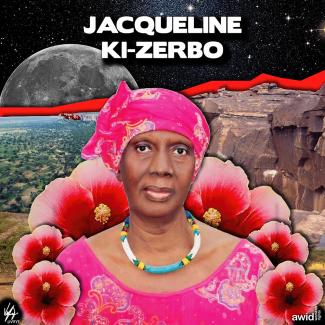
Jacqueline Coulibaly Ki-Zerbo

Jacqueline était une éducatrice malienne pionnière de la cause féministe et nationaliste.

Elle a d’abord enseigné l'anglais au Sénégal avant d'être recrutée en 1961 par le Lycée Philippe Zinda Kaboré à Ouagadougou, au Burkina Faso. Etant donné son engagement militant, elle a pris part au soulèvement populaire du 3 janvier 1966. Entre 1961 et 1966, Jacqueline était par ailleurs responsable de la presse syndicale, La voix des enseignants. Elle a été nommée directrice du Cours normal des jeunes filles (aujourd’hui connu sous le nom de lycée Nelson Mandela) jusqu'en 1974 et s'est consacrée à l'éducation des filles et à la promotion des droits des femmes.

En 1984, elle a reçu le prix Paul G. Hoffmann pour sa contribution remarquable en matière de développement national et international.


Jacqueline Coulibaly Ki-Zerbo, Mali/ Burkina Faso

Snippet FEA Barcelona, Spain (FR)

Barcelone, Espagne

Metzineres


Les Gens se Droguent.

ET ALORS?

Snippet - WITM Acknowledgements - PT

Agradecimentos

A AWID agradece sinceramente às várias pessoas cujas ideias, análises e contribuições moldaram a pesquisa e a defesa do “Onde está o dinheiro” ao longo dos anos.

Em primeiro lugar, os nossos mais sinceros agradecimentos aos membres da AWID e às ativistas que participaram nas colaborações com o WITM e testaram este questionário connosco, ao partilhar tão generosamente o seu tempo, análise e espírito.

Agradecemos aos movimentos feministas, aos aliados e aos fundos feministas, incluindo, mas não se limitando ao Black Feminist Fund, Pacific Feminist Fund, ASTREA, FRIDA Young Feminist Fund, Purposeful, Kosovo Women's Network, Human Rights Funders Network, CEECCNA Feminist Fund e PROSPERA, pelas suas investigações rigorosas sobre o estado de financiamento, pela análise perspicaz e pela defesa contínua de mais recursos de melhor qualidade e poder para a organização feminista e de justiça de género em todos os contextos.

Junte-se à comunidade global de feministas que se manifestam sobre o estado de financiamento, e exigem mais recursos de melhor qualidade e poder para feministas globalmente.

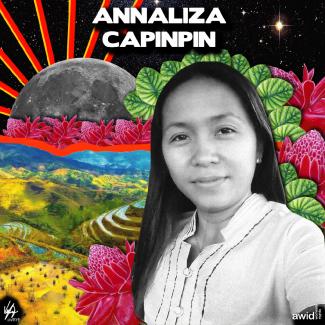
Annaliza Dinopol Gallardo Capinpin

Known as “Ate Liza,” Annaliza was the president of the Agrarian Reform Council for Mindanao Pioneers, an umbrella group in Tacurong City, Philippines.

A loved mother of four, teacher and community leader, Annaliza is remembered by her community as “she who leads when no one wants to lead, she who talks when no one wants to talk, she who stood with courage to help the agrarian reform beneficiaries to own lands.”

Annaliza was shot dead by unknown assailants in front of the Sultan Kudarat State University (SKSU) while on her way to Salabaca National High School in Esperanza.

Her family have said “Naghihintay pa rin kami ng hustisya para sa kanya” (we are still waiting justice for her).


Snippet FEA Care as the foundation (EN)

Care as the foundation of economies

The COVID-19 pandemic put the global crisis of care into sharp focus and demonstrated the failures of the dominant economic model that is decimating essential public services, social infrastructures and systems of care around the world.

Cozinha Ocupação 9 Julho, the Association of Afro-Descendant Women of the Northern Cauca (ASOM) and Metzineres are only some examples of caring economies that center the needs of marginalized people and nature, as well as the reproductive, invisibilized, and unpaid care work required to ensure the sustainability of our lives, societies and eco-systems.

مجموعتنا، منظمتنا و\أو حركتنا غير مسجلة. هل علينا تعبئة الاستطلاع؟

نعم! نريد أن نسمع منكم/ن عن تجربتكم/ن بالتمويل.

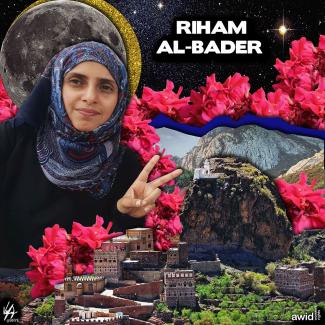
Riham Al-Bader

Riham fue una abogada y activista comprometida con el registro y denuncia de las violaciones de derechos en Yemen.

Trabajó junto a otrxs activistas en el suministro de agua y alimentos para la población civil atrapada por las milicias huzíes en las afueras de la ciudad de Taiz.

Riham fue asesinada en febrero de 2018 pero todavía no se confirmó si la mató un francotirador o si fue alcanzada por los disparos de una aeronave. No se ha imputado a nadie por su homicidio.


Riham Al Bader, Yemen