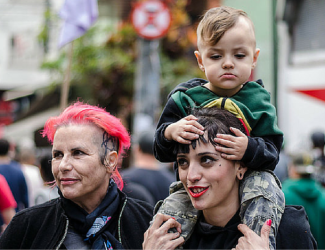
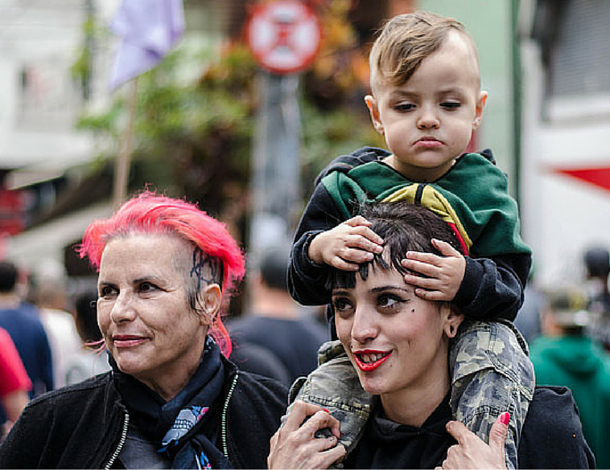
Flickr/Leonardo Veras (CC BY 2.0)

Protection of the Family

The Issue

Over the past few years, a troubling new trend at the international human rights level is being observed, where discourses on ‘protecting the family’ are being employed to defend violations committed against family members, to bolster and justify impunity, and to restrict equal rights within and to family life.

The campaign to "Protect the Family" is driven by ultra-conservative efforts to impose "traditional" and patriarchal interpretations of the family, and to move rights out of the hands of family members and into the institution of ‘the family’.

“Protection of the Family” efforts stem from:

  • rising traditionalism,
  • rising cultural, social and religious conservatism and
  • sentiment hostile to women’s human rights, sexual rights, child rights and the rights of persons with non-normative gender identities and sexual orientations.

Since 2014, a group of states have been operating as a bloc in human rights spaces under the name “Group of Friends of the Family”, and resolutions on “Protection of the Family” have been successfully passed every year since 2014.

This agenda has spread beyond the Human Rights Council. We have seen regressive language on “the family” being introduced at the Commission on the Status of Women, and attempts made to introduce it in negotiations on the Sustainable Development Goals.


Our Approach

AWID works with partners and allies to jointly resist “Protection of the Family” and other regressive agendas, and to uphold the universality of human rights.

In response to the increased influence of regressive actors in human rights spaces, AWID joined allies to form the Observatory on the Universality of Rights (OURs).  OURs is a collaborative project that monitors, analyzes, and shares information on anti-rights initiatives like  “Protection of the Family”.

Rights at Risk, the first OURs report, charts a map of the actors making up the global anti-rights lobby, identifies their key discourses and strategies, and the effect they are having on our human rights.   

The report outlines “Protection of the Family” as an agenda that has fostered collaboration across a broad range of regressive actors at the UN.  It describes it as: “a strategic framework that houses “multiple patriarchal and anti-rights positions, where the framework, in turn, aims to justify and institutionalize these positions.”
 

Related Content

Membership why page - Paz Romero

Cette communauté est un endroit de connexions, où l’on comprend nos combats individuels comme faisant partie de luttes mondiales, et où l’on peut même parfois danser ! Il n’existe aucun endroit de la sorte en ligne, où être en contact avec des activistes de terrain, qui viennent du monde entier, et forger de la solidarité et de la sororité..- Paz Romero, Argentina

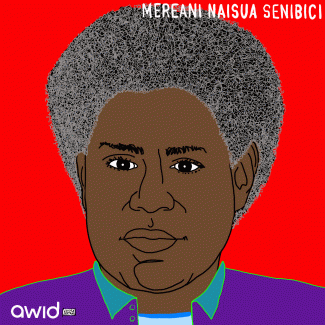
Mereani Naisua Senibici

Mereani Naisua Senibici, also called ‘Sua’, was a longstanding member of the Fiji Young Women’s Christian Association (YWCA) movement.

She worked with diverse groups of women in multi-racial, rural and urban settings and was committed to supporting and promoting women’s and young women’s rights.

In the Lautoka YWCA, she worked with women of Indian descent, and was  a leading figure in the sports development and participation of women and of trans athletes in Lautoka. 

“Sua is greatly loved by Fiji YWCA members for her dedication and long-time support towards all that the organisation endeavoured to do.” - Tupou Vere

Mereani was part of the House of Sarah (HoS), an initiative of the Association of Anglican Women (AAW), launched in 2009 and aimed at raising awareness of the issues around gender-based violence, as well as providing support to women who face violence. She started as a dedicated volunteer and offered support to women throughout the Pacific.

“A people’s person and an all-rounder in women's empowerment and movement work at community level. Rest in Peace, Sua.” - Tupou Vere

Do You Want To Organize Your Own Festival?

Do You Want To Organize Your Own Festival?

Check Out our Super Short Guide To Organising Global Feminist Festivals And Online Events!

Download here

Building Feminist Economies

Building Feminist Economies is about creating a world with clean air to breath and water to drink, with meaningful labour and care for ourselves and our communities, where we can all enjoy our economic, sexual and political autonomy.


In the world we live in today, the economy continues to rely on women’s unpaid and undervalued care work for the profit of others. The pursuit of “growth” only expands extractivism - a model of development based on massive extraction and exploitation of natural resources that keeps destroying people and planet while concentrating wealth in the hands of global elites. Meanwhile, access to healthcare, education, a decent wage and social security is becoming a privilege to few. This economic model sits upon white supremacy, colonialism and patriarchy.

Adopting solely a “women’s economic empowerment approach” is merely to integrate women deeper into this system. It may be a temporary means of survival. We need to plant the seeds to make another world possible while we tear down the walls of the existing one.


We believe in the ability of feminist movements to work for change with broad alliances across social movements. By amplifying feminist proposals and visions, we aim to build new paradigms of just economies.

Our approach must be interconnected and intersectional, because sexual and bodily autonomy will not be possible until each and every one of us enjoys economic rights and independence. We aim to work with those who resist and counter the global rise of the conservative right and religious fundamentalisms as no just economy is possible until we shake the foundations of the current system.


Our Actions

Our work challenges the system from within and exposes its fundamental injustices:

  • Advance feminist agendas: We counter corporate power and impunity for human rights abuses by working with allies to ensure that we put forward feminist, women’s rights and gender justice perspectives in policy spaces. For example, learn more about our work on the future international legally binding instrument on “transnational corporations and other business enterprises with respect to human rights” at the United Nations Human Rights Council.

  • Mobilize solidarity actions: We work to strengthen the links between feminist and tax justice movements, including reclaiming the public resources lost through illicit financial flows (IFFs) to ensure social and gender justice.

  • Build knowledge: We provide women human rights defenders (WHRDs) with strategic information vital to challenge corporate power and extractivism. We will contribute to build the knowledge about local and global financing and investment mechanisms fuelling extractivism.

  • Create and amplify alternatives: We engage and mobilize our members and movements in visioning feminist economies and sharing feminist knowledges, practices and agendas for economic justice.


“The corporate revolution will collapse if we refuse to buy what they are selling – their ideas, their version of history, their wars, their weapons, their notion of inevitability. Another world is not only possible, she is on her way. On a quiet day, I can hear her breathing”.

Arundhati Roy, War Talk

Related Content

Snippet - Intro CSW69_ES

#CongelarFascismos

#FreezeFascisms

A 30 años de la adopción de la Declaración y Plataforma de Acción de Beijing, existe una ola creciente de fascismos que ejercen gran poder e influencia en los espacios multilaterales, todo un retroceso para las conquistas de igualdad de género y la protección de los derechos humanos en el mundo entero.

En torno a la CSW69, estamos organizando, en conjunto y de forma horizontal, una serie de valientes espacios sobre el terreno y en línea a fin de compartir estrategias y forjar un poder feminista más allá de Beijing +30. Nuestra presencia colectiva trastorna las prácticas institucionales de exclusión en dichos espacios y, a la vez, apoya los procesos de organización de los movimientos en torno a las alternativas feministas a los sistemas de opresión.

Súmate a las conversaciones desde el 10 al 21 de marzo de 2025, mientras transformamos de forma colectiva la CSW69 en espacios para y sobre la resistencia y la solidaridad.

Sylvia Robinson

"La vida se trata ... de vivir en alegría – despertarse con objetivos, sentir tu propia energía creativa, responder a tu llamada." - Sylvia Robinson

Sylvia Robinson, una incansable organizadora y líder comunitaria, fue la fundadora y directora ejecutiva de Emergence Community Arts Collective [Colectivo de Artes Comunitarias de Emergencia] (ECAC, por sus siglas en inglés ), en Washington DC.

Este centro y espacio de performance combina la educación, el compromiso cívico, las artes, los servicios sociales y espirituales y las prácticas ambientales sostenibles. Sylvia lo concibió como un hogar donde " hubiera equilibrio y sinergia con las actividades que la gente necesitaba para sostener la vida".

También fue una de lxs co-fundadorxs del Georgia Avenue Community Development Taskforce [Grupo de Trabajo de Desarrollo Comunitario de la Avenida Georgia], un grupo vecinal que trabaja por la justicia social y la organización de la comunidad en el noroeste de DC, para asegurarse de que esta tenga una voz en la reurbanización y gentrificación del área.

"Estamos pidiendo viviendas asequibles. Estamos pidiendo que los pequeños negocios que han estado aquí desde siempre no sean aniquilados por nuevos comercios. Estamos pidiendo espacios verdes y espacios para que la gente se pueda reunir y socializar. Estamos pidiendo mejoras en el paisaje urbano – mejores calles y mejor iluminación en los tramos de carretera." - Sylvia Robinson sobre el Grupo de Trabajo

Antes de convertirse en organizadora y después de recibir un título en informática, Sylvia trabajó en sistemas de control de tráfico aéreo por más de una década. Después se dedicó al asesoramiento en materia de drogas y alcohol, a través de lo cual se involucró cada vez más en el trabajo comunitario.

"Involucrarme con la comunidad era mi vocación".  - Sylvia Robinson

Sylvia nació en Washington D.C. el 14 de agosto de 1961, y falleció el 18 de septiembre de 2017, después de una batalla contra el cáncer.

"El espíritu y el legado de Sylvia seguirán inspirando a esta comunidad durante muchos años." - ECAC

Snippet FEA Intro (ES)

Ven a conocer las economías feministas que AMAMOS.

Cuando hablamos de economía, hablamos de cómo organizamos nuestras sociedades, nuestros hogares y lugares de trabajo. ¿Cómo vivimos juntxs? ¿Cómo producimos alimentos, organizamos los cuidados y aseguramos nuestra salud? La economía también se trata de cómo accedemos y gestionamos recursos, cómo nos relacionamos con otras personas, con nosotrxs mismxs y con la Naturaleza.

Lxs feministas han estado construyendo alternativas económicas a los sistemas capitalistas explotadores durante siglos. Estas alternativas existen en el aquí y el ahora, y son los pilares de los mundos más justos y más sostenibles que necesitamos y merecemos.

Nos emociona compartir contigo una muestra de alternativas económicas feministas, con colectivos inspiradores de todo el mundo.

Rapport Annuel 2013

Notre rapport annuel 2013 retrace les temps forts du travail que nous avons réalisé au cours de l'année, afin de contribuer à l'avancement des droits des femmes et de l'égalité des genres à travers le monde.  

Nous présentons ici certains points saillants de notre analyse du contexte mondial, la position que nous adoptons en tant qu’organisation associative féministe mondiale dans ce contexte, les résultats que nous souhaitons atteindre et l’organisation de notre travail dans le but d’atteindre ces résultats.

Snippet - CSW69 - Feminist Solidarity Space - FR

Espace de solidarité féministe

✉️ Sur inscription pour les grands groupes. Espace ouvert pour les petits groupes. Inscrivez-vous ici

📅 Mardi 11 mars 2025
🕒12.00h-14.00h et 16.00h-18.00h EST

🏢 Chef's Kitchen Loft with Terrace, 216 East 45th St 13th Floor New York

Organisé par : AWID

Maritza Quiroz Leiva

Maritza Quiroz Leiva était une activiste sociale, leader communautaire et défenseure des droits des femmes afro-colombienne. Comptant parmi les 7,7 millions de Colombien·ne·s déplacé·e·s internes par 50 années de conflit armé, Maritza a dédié son travail de plaidoyer au soutien des droits des autres, particulièrement au sein de la communauté afro-colombienne ayant souffert deviolations et déplacements similaires.

Maritza était responsable adjointe du Conseil de victimes  Santa Marta et une voix importante pour celles et ceux qui défendaient la justice dans leur communauté, réclamant réparation pour la torture, les enlèvements, les déplacements et les violences sexuelles subis par les victimes tout au long du conflit armé. Elle aégalement été active au sein du mouvement pour la redistribution des terres et la justice foncière en Colombie. 

Le 5 janvier 2019, Maritza a été tuée par deux personnes armées qui se sont introduites à son domicile. Elle avait 60 ans. 

Maritza s’ajoute ainsi aux cinq autres activistes et leaders colombien·ne·s assassiné·e·s au cours de la seule première semaine de 2019. Un total de 107 défenseur·e·s des droits humains ont été tué·e·s cette année-là dans le pays. 
 

Snippet FEA São Paulo City Center (FR)

Centre-ville de São Paulo

Source: Censo De População de Rua, Prefeitura de São Paulo

A woman sitting on the floor on a piece of cloth and a cup for change in front of her
   

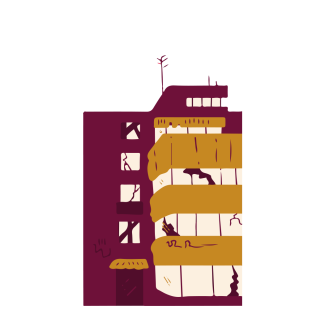
Bâtiments abandonnés/vacants

Illustration of an abandoned, run down building to depict the housing crisis

Personnes vivant dans la rue


31,000


40.000

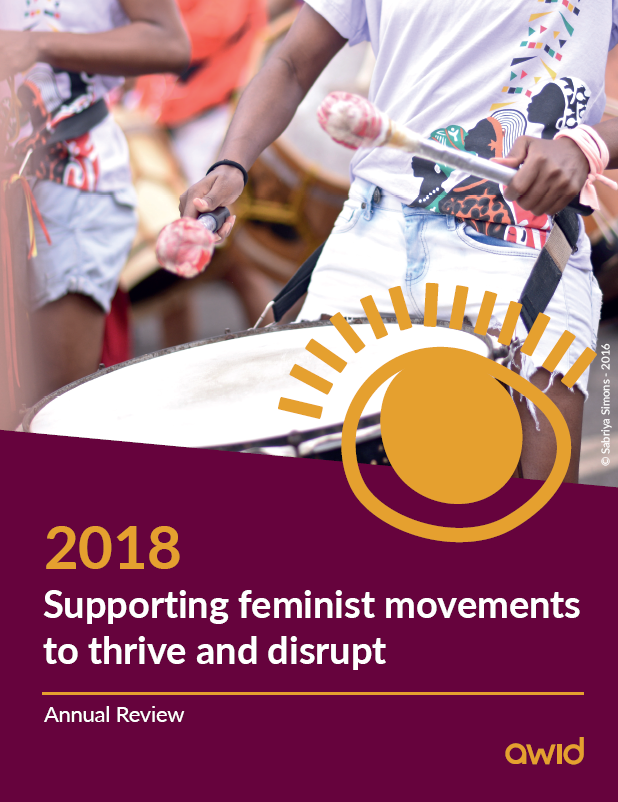
2018: Supporting feminist movements to thrive and disrupt

This report looks back and celebrates the first year of AWID’s new strategic plan as we took our first steps towards our desired outcomes of supporting feminist movements to thrive, challenging anti-rights agendas and co-creating feminist realities.

Download the full report


We worked with feminists to disrupt anti-rights agendas, achieving important victories fought and won within the United Nations system when ground-breaking language on structural discrimination, sexual rights, and states’ obligations were included in a number of resolutions. Yes, the multilateral system is in crisis and in need of serious strengthening but these victories are important as they contribute to the legitimacy of feminist demands, providing feminist movements with more pressure points and momentum to advance our agendas.

We tried and tested different ways to build knowledge with feminist movements through webinars, podcasts and ‘live’ conversations. We developed facilitation guides with popular educators to reclaim knowledge in the interest of social and gender justice, even about a topic as seemingly opaque as illicit funding flows. We commissioned blogs and opinions about how feminist groups fund and resource themselves and threw light on the threats facing our human rights systems.

Within AWID, we practiced and learned from our shared leadership approach, and told the story of the trials and tribulations of co-leading a global, virtual organization. We don’t have a definitive answer to what feminist leadership looks like, but we know, a year on, that a continued commitment to collective experimentation and learning has enabled us to keep building an organization that we are all excited to contribute to.

As we look back on this year, we want to thank all our friends and supporters, colleagues and companions, who have given their time and shared their wealth of knowledge and wisdom with us. We want to thank our members who helped frame our strategic plan and joined us to make feminist demands. We could not do this work without you.

Download the full report

Snippet - Resources to rally - FR

Ressources à mobiliser en vue de la CSW69

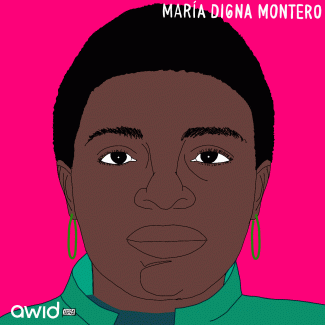
María Digna Montero

María Digna Montero was a Garifuna (Afro-descendent and indigenous) land defender and a member of the National Black Fraternal Organization of Honduras (OFRANEH), a grassroots organization working to protect the Garifuna communities, their ancestral rights, culture, resources and territory.

María also taught in the local school and was a member of the OFRANEH Intercultural Bilingual Education working group.

On the Day of Indigenous Resistance, October 12, 2019, unknown assailants shot María multiple times in the backyard of her house.  

She was one of six Garifuna women defenders murdered between September and October 2019 and according to OFRANEH, there was no investigation by the authorities into these crimes. In an official statement, the organization also highlighted the connection between the violence against Garifuna leaders and the increase in extractive industries which exploit natural resources in their communities calling this violence part of a “strategy of intimidation and systematic expulsion” by the Honduran State. 

“The heightened tension and growing risks to the security and human rights of the leaders in the communities and ancestral territories is a product of the dispossession, displacement and criminalization of the communities and of the extractive mega projects promoted by the State together with the national and international corporations.” - OFRANEH communique, October 12, 2019

Snippet FEA Housing is a right (EN)

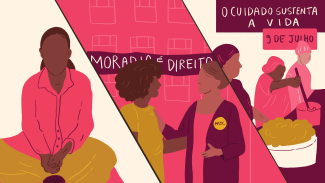
Three-fold horizontal graphic: 1st of a brown-skinned woman on the right side, she is sitting on a pink carpet and is wearing a pink shirt and yellow dress; 2nd two women of color looking at each other and touching their shoulders, they are on a pink background; 3rd - graphic version of three women cooking.

Housing is a right | Care sustains Life

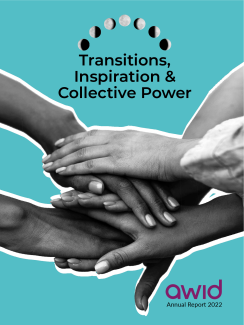
2022: Transitions, Inspiration & Collective Power

Our strategic plan “Feminist Realities” completed its final year at the end of 2022. For the past five years, this bold framework pushed us to go beyond feminist futures and to recognize the feminist solutions and ways of life that already exist in the here and now. Realities that must be uplifted, celebrated, and popularized. The Feminist Economies We Love multimedia story project and Our:Resource knowledge hub on autonomous ways to resource feminist activism are just two examples of this visionary work, always deeply collective with diverse feminist movements.

Download the full 2022 Annual review


Cover for AWID's 2022 Annual Report. The cover is light blue and shows a group of people joining hands. Over the text "Transitions, Inspiration and Collective Power" there is a semi circle formed by little moons, representing the transtions.

2022 was a year of transitions in AWID.

With this reflection on the year, we invite you to celebrate with us beautiful closures and promising beginnings. Change and transitions are an inseparable part of life and movements, which we seek to embrace with intention and care.

Download the full 2022 Annual review